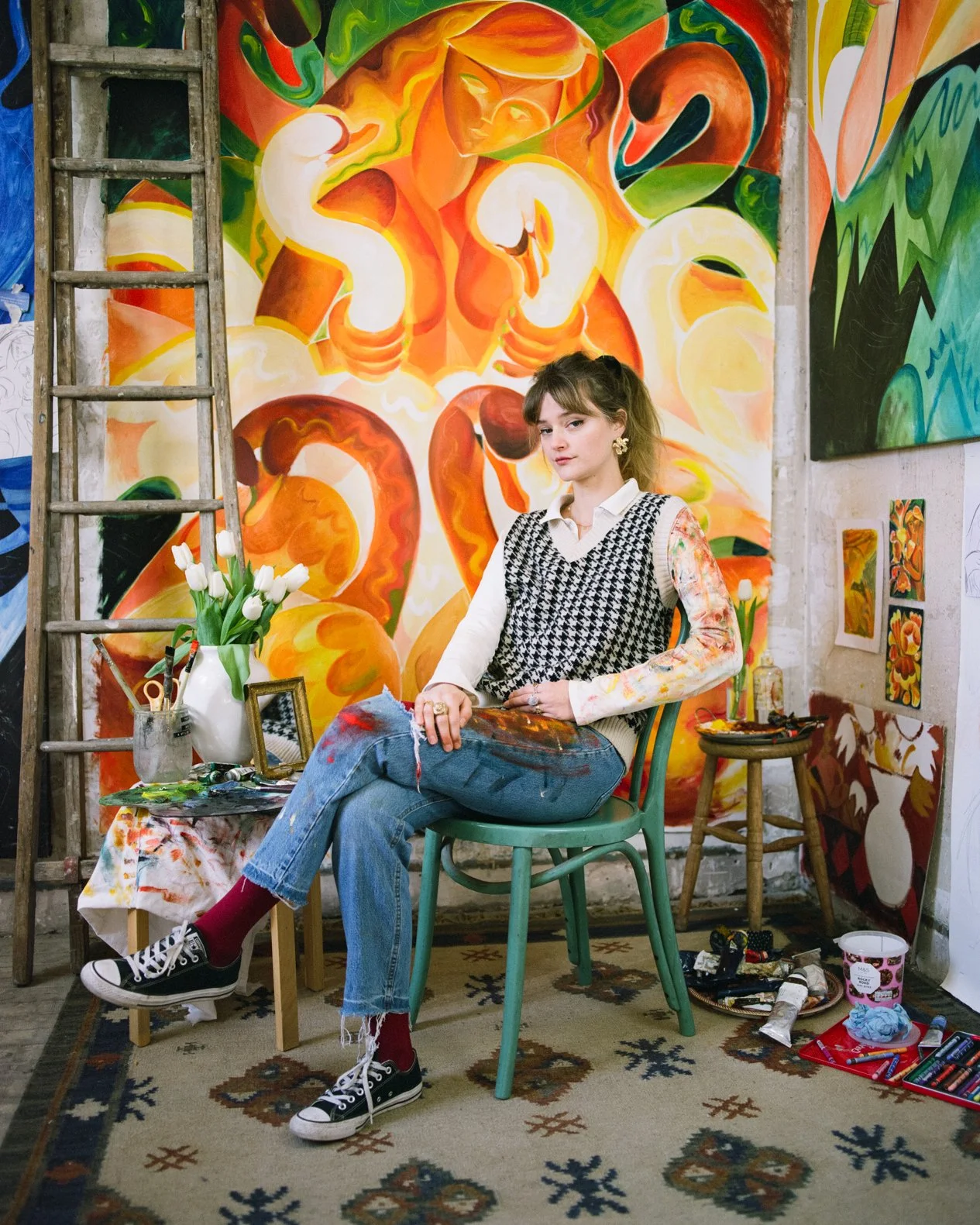
“Anaïs Maar is a multidisciplinary artist living and working between Paris and Hyères. Her practice navigates the intimate thresholds between identity, mythology, and the body, creating a universe where personal experience and collective memory converge. Through layered narratives that explore themes such as sexuality, dysphoria, love, violence, and loss, Maar challenges traditional representations of femininity and selfhood with vulnerability, defiance, and poetic force.
Often anchored in recurring self-portraits and hybrid figures, her work unfolds as a form of visual autobiography—simultaneously introspective and mythological. These figures, rendered in lush, vibrant palettes, are caught in cryptic, emotionally charged scenes that resist resolution. They evoke both strength and fragility, joy and unease, inviting viewers into a psychological space charged with symbolic resonance.
Trained in illustration and animation, Maar brings a kinetic energy and graphic sensitivity to her compositions.
Her work spans multiple media, including painting, drawing, and large-scale murals, and oscillates between figuration and abstraction, control and chaos. Influences range from Fauvism and Cubism to Russian avant- garde, Japanese graphic culture, and medieval iconography—fused into a singular aesthetic that is both instinctive and highly constructed.
Recurring animal motifs—swans, serpents, lambs, seashells—form a personal and symbolic bestiary. These creatures operate as emotional extensions or alter-egos of the artist, carriers of myth, archetype, and trauma. They imbue her practice with a sacred, almost ritualistic dimension, exploring transformation, protection, seduction, and surrender.
For Maar, painting is both eruption and meditation—an elemental, bodily act she likens to the Mediterranean Sea: at once tranquil and violent, lyrical and raw. Her canvases pulse with urgency, weaving personal and archetypal stories into a visual language that is visceral, complex, and deeply human.”
Few words from Nil Gallery
📷 ©Cédric Brun
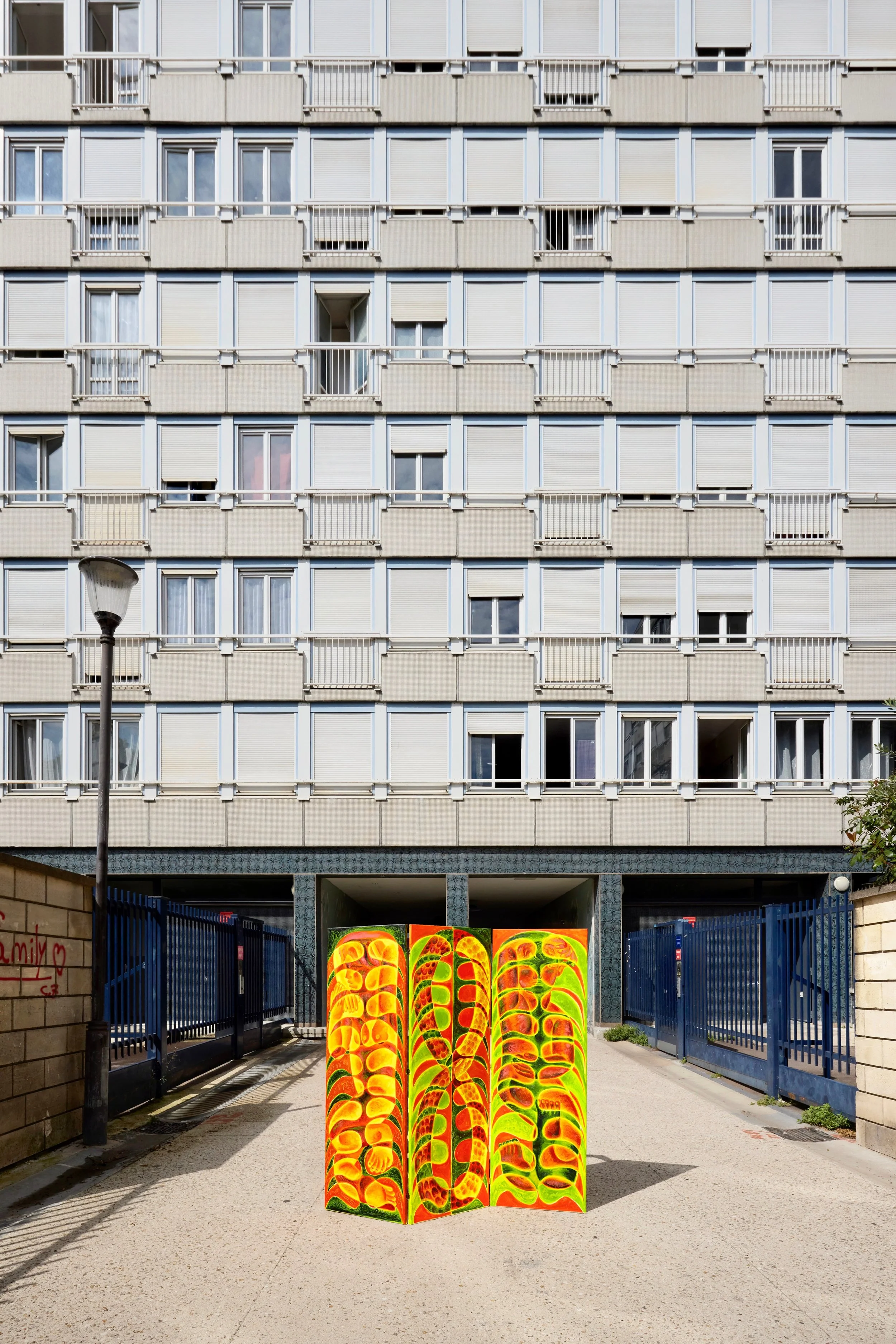
📷 ©Valentin Fougeray
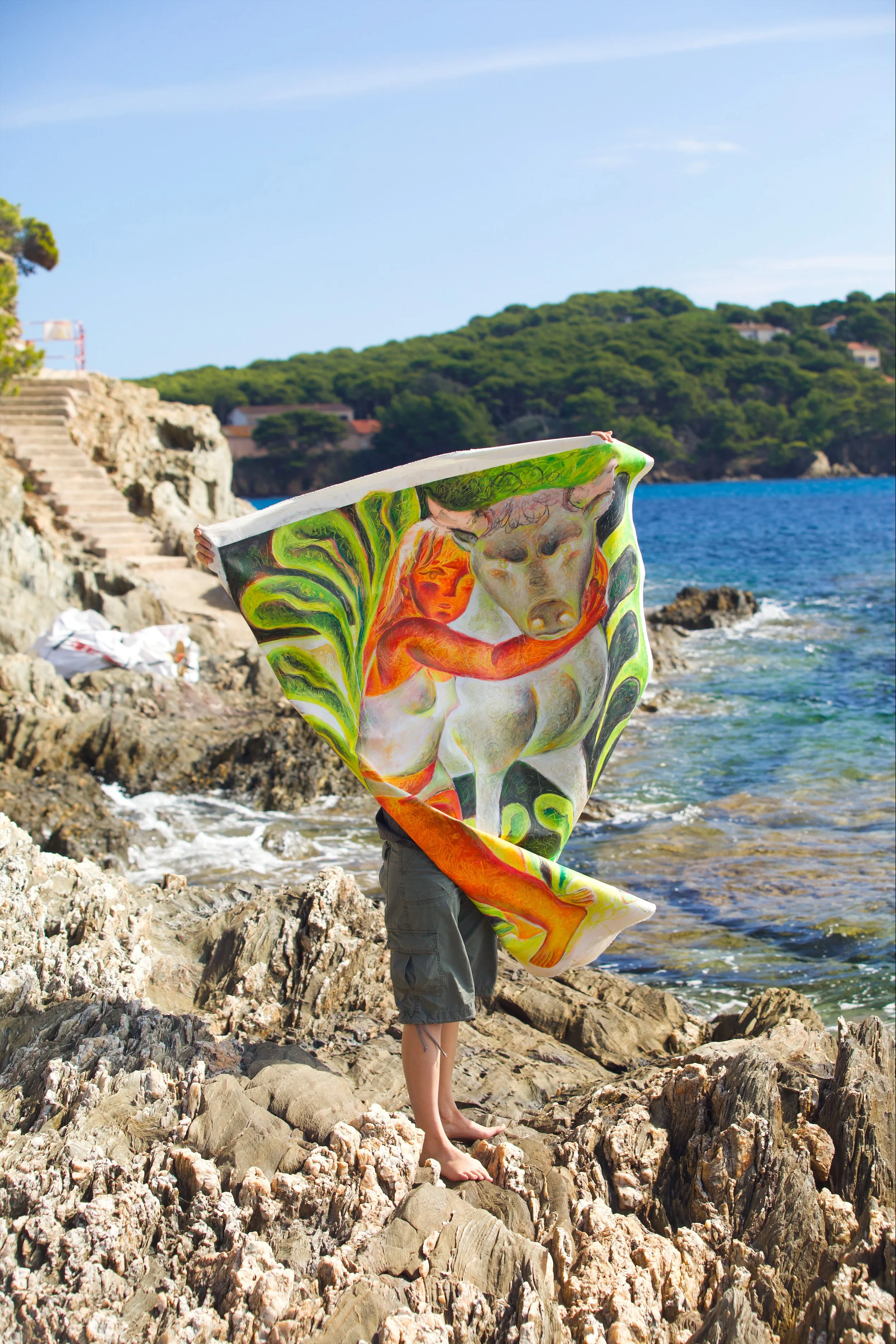
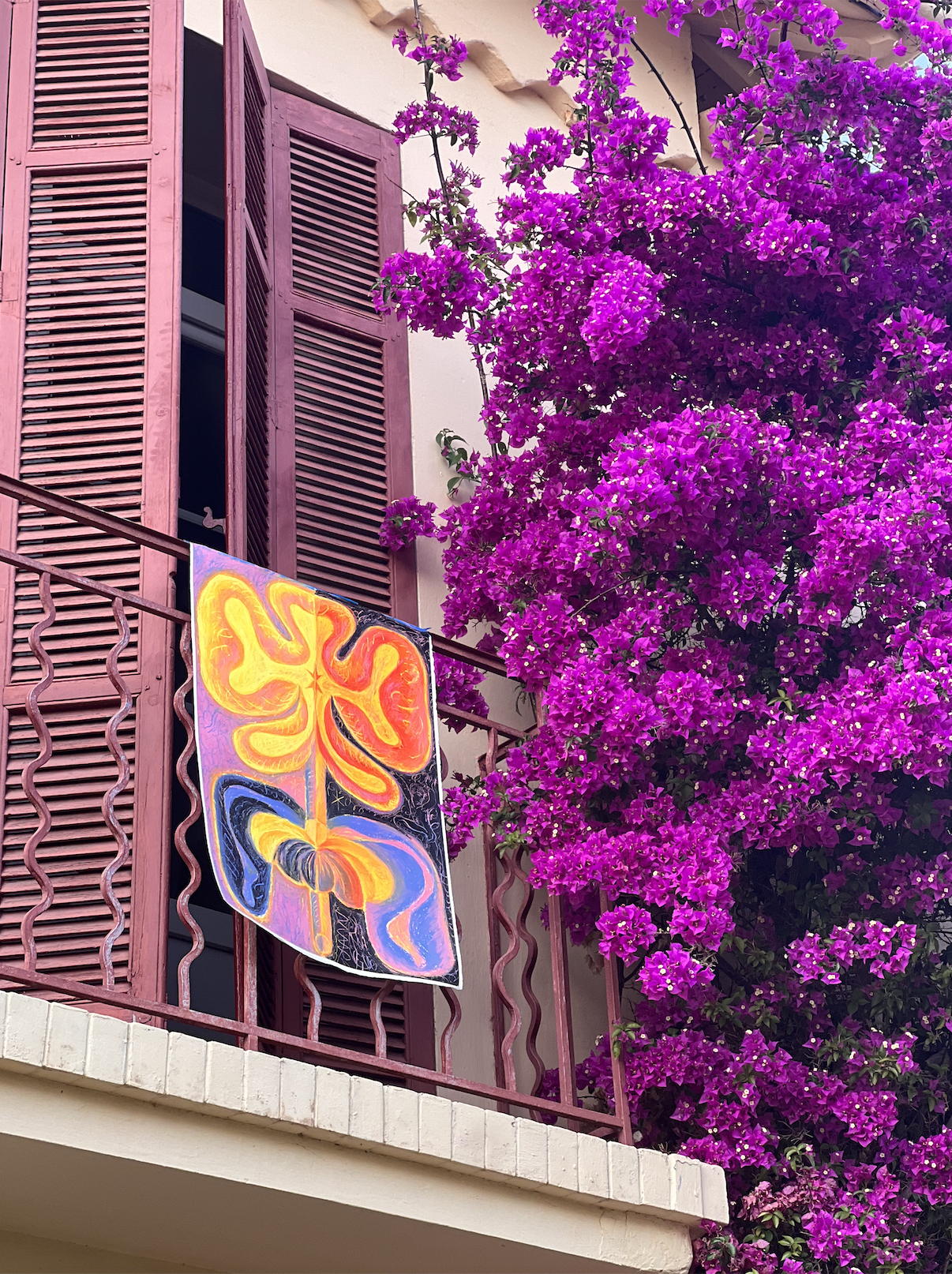
A painting shot at Hyères, a painting shot in Paris. Both places where I live and work
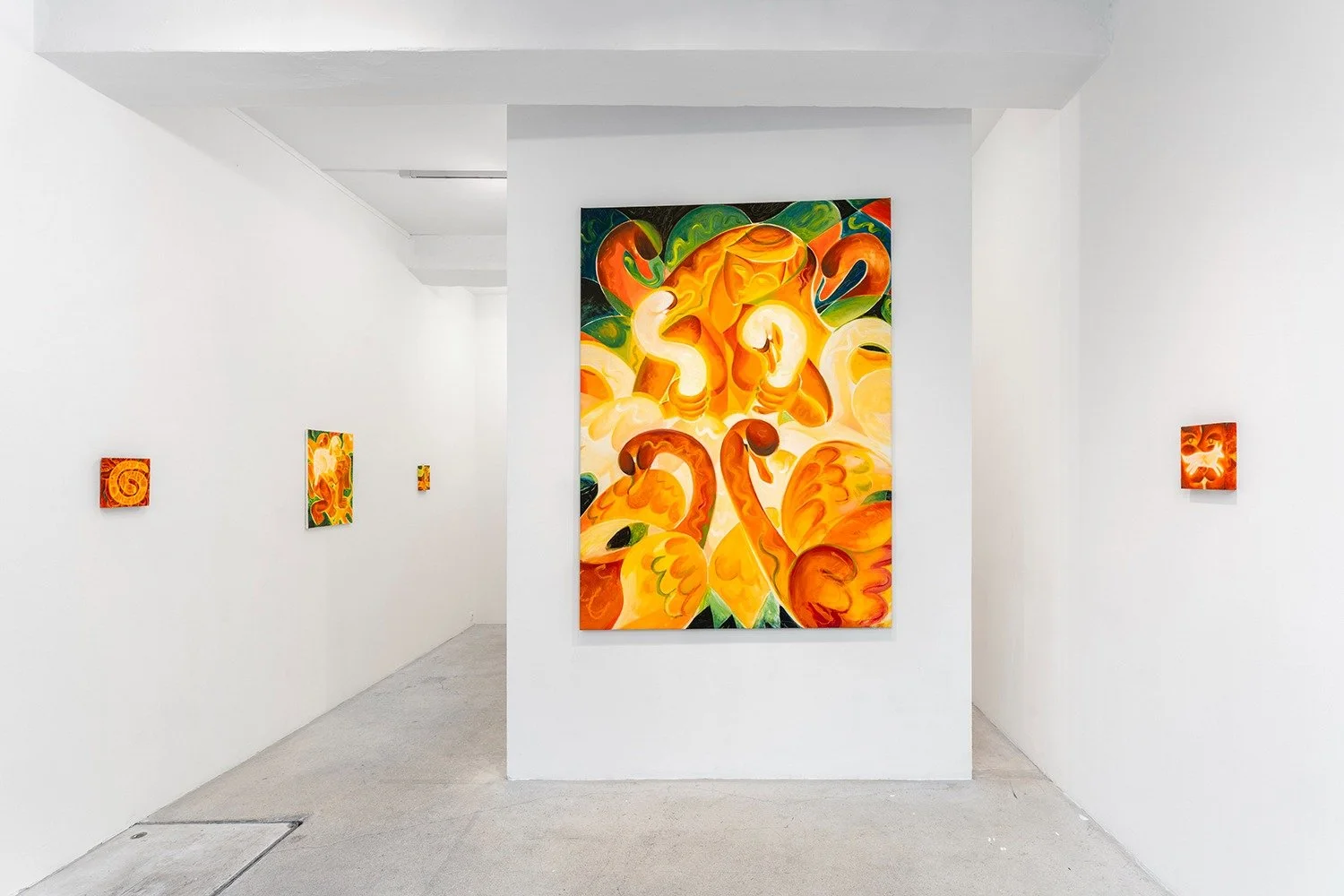
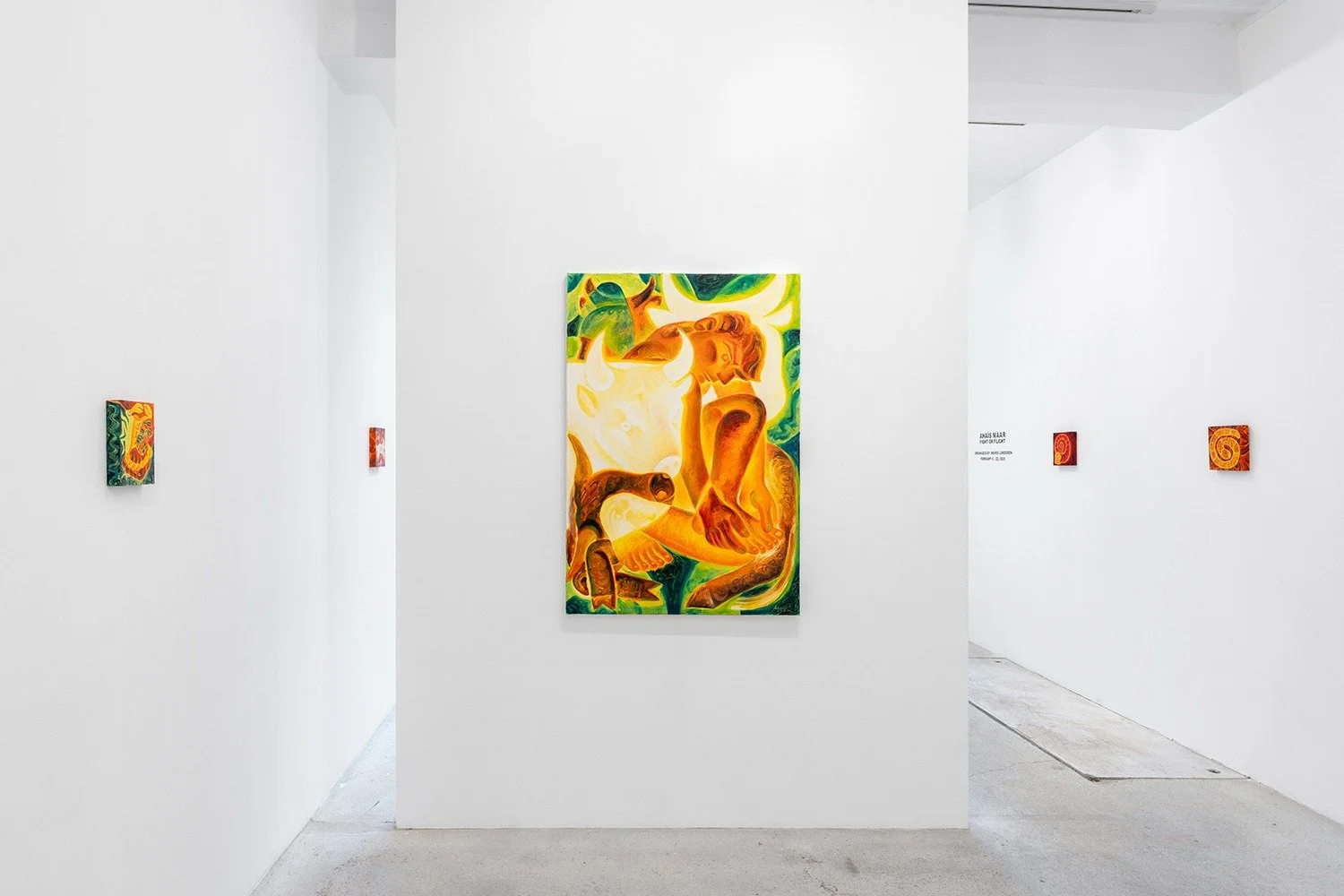
📷 ©Nicolas Brasseur
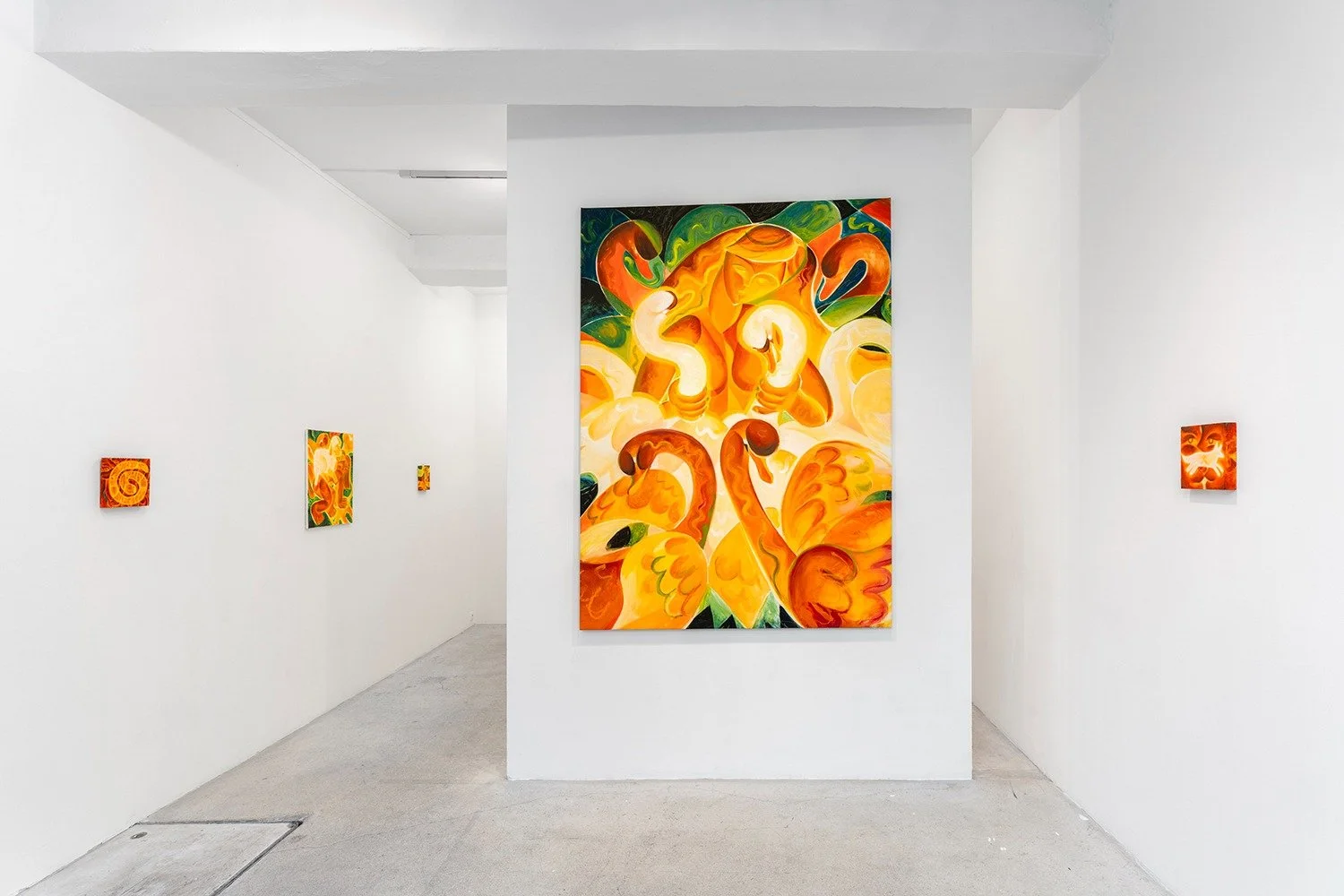
In her first solo exhibition in Paris, Fight or F/light, Anaïs Maar doesn’t simply paint with color—she paints with transformation. There is an almost paradoxical beauty in her work, where darkness and light, struggle and growth, exist side by side. Her canvases are alive with vibrant yellows, fiery reds, and bold oranges, as though each hue is fighting to emerge from the shadows. It’s a celebration of light, but not the kind that simply radiates from above—it’s the kind that rises slowly, almost painfully, from within. The paintings are full of symbols—variously animals, figures, objects—that speak of strength, defiance, and the quiet power that can come after turbulence. Take PURE, for example, where a woman holds two swans by the neck. Traditionally symbols of grace and purity, these swans are captured here—reclaimed. There’s an assertion in the way the woman holds them. A power over what was once untouchable. It’s a delicate defiance, an act of regaining control when it seems like everything else may have slipped through her grasp.
In Is this what you want, a woman devours a snake—a bold, sly move, turning a twisted power dynamic on its head. Nearby, in another painting, a dog rests between two figures locked in an embrace, its presence both a warning and a promise. A symbol of danger, yes, but also of freedom—of the raw, untamed aspects of ourselves that we are constantly trying to reconcile with love, with connection. There’s an underlying tension here: what do we risk when we choose freedom? And what do we sacrifice when we choose love? These paintings don’t demand answers, but they do ask us to look more deeply at the light we seek and the shadows that inevitably accompany it. In Fight or F/light, Maar doesn’t promise an easy resolution, but she offers a glimpse of the complexity of healing and the fierce tenderness that can emerge when we choose to rise from the darkness that shapes us and find transformation in the small, yet profound, understandings that so surface.
Ingrid Lundgren, NYC based curator & Slip House gallery owner
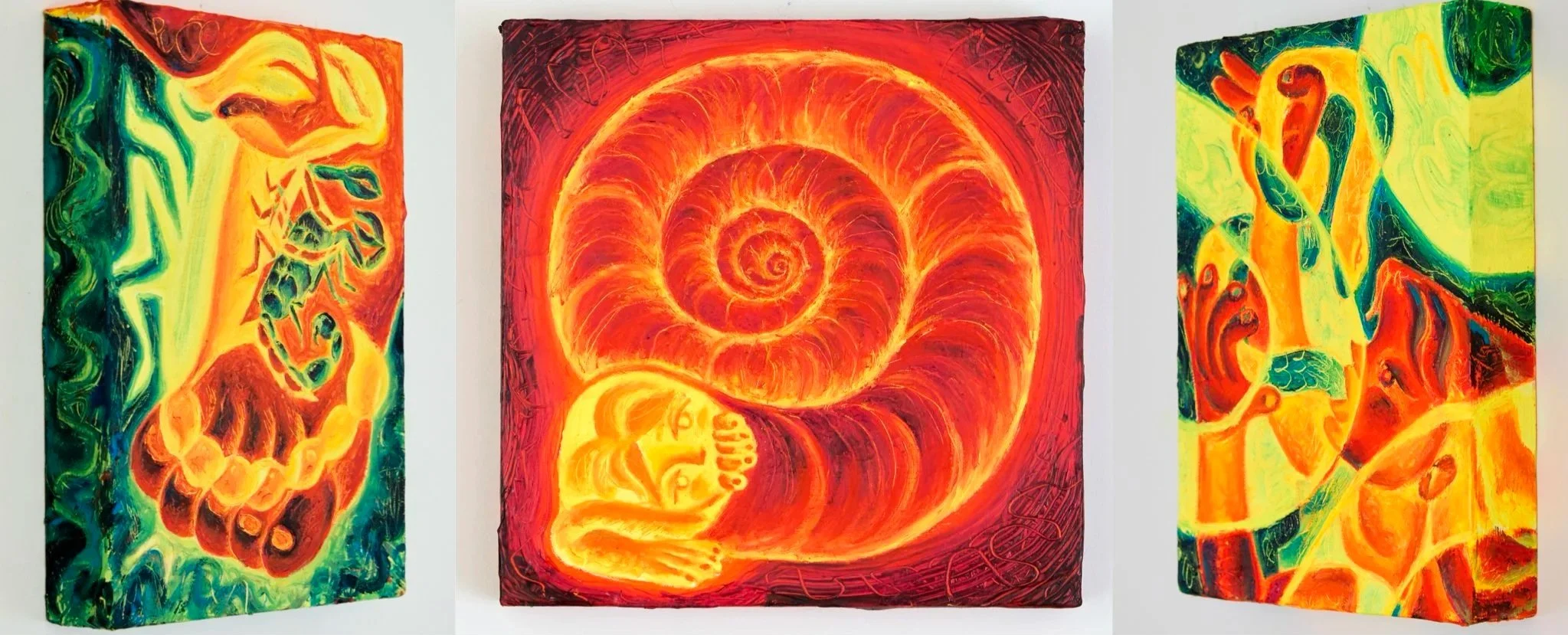
I'll carry you with me / to my father / oil on wood / 2024 / cm. 20,3 x 15,24 / in. 8,0 × 6,0, / sold during Fight F/Light at Nil Gallery with Ingrid Lundgren
A Maar is born / oil on wood / 2025 / cm. 20,3 × 20,3 / in. 8,0 × 8,0 / showcased and sold during Fight F/Light at Nil Gallery withIngrid Lundgren
This is what you want / oil on wood / 2024 / cm. 20,3 x 15,24 / in. 8,0 × 6,0, / showcased during Fight F/Light at Nil Gallery with Ingrid Lundgren
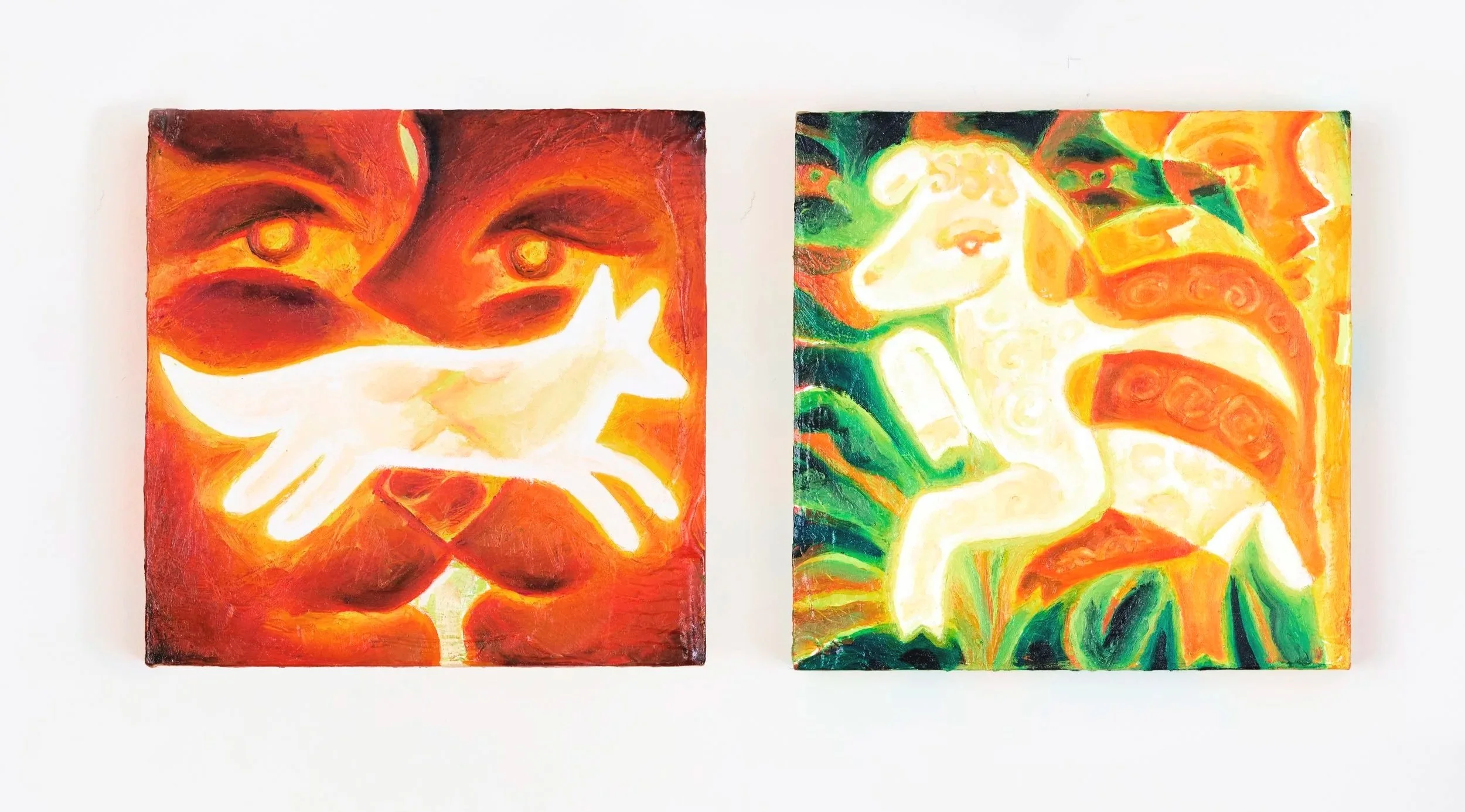
The dogs and the lamb/ 2024 / oil on wood/ cm. 20,3 x 20,3 / The Dogs was sold during Fight F/Light at Nil Gallery with Ingrid Lundgren photo ©Valentin Fougeray
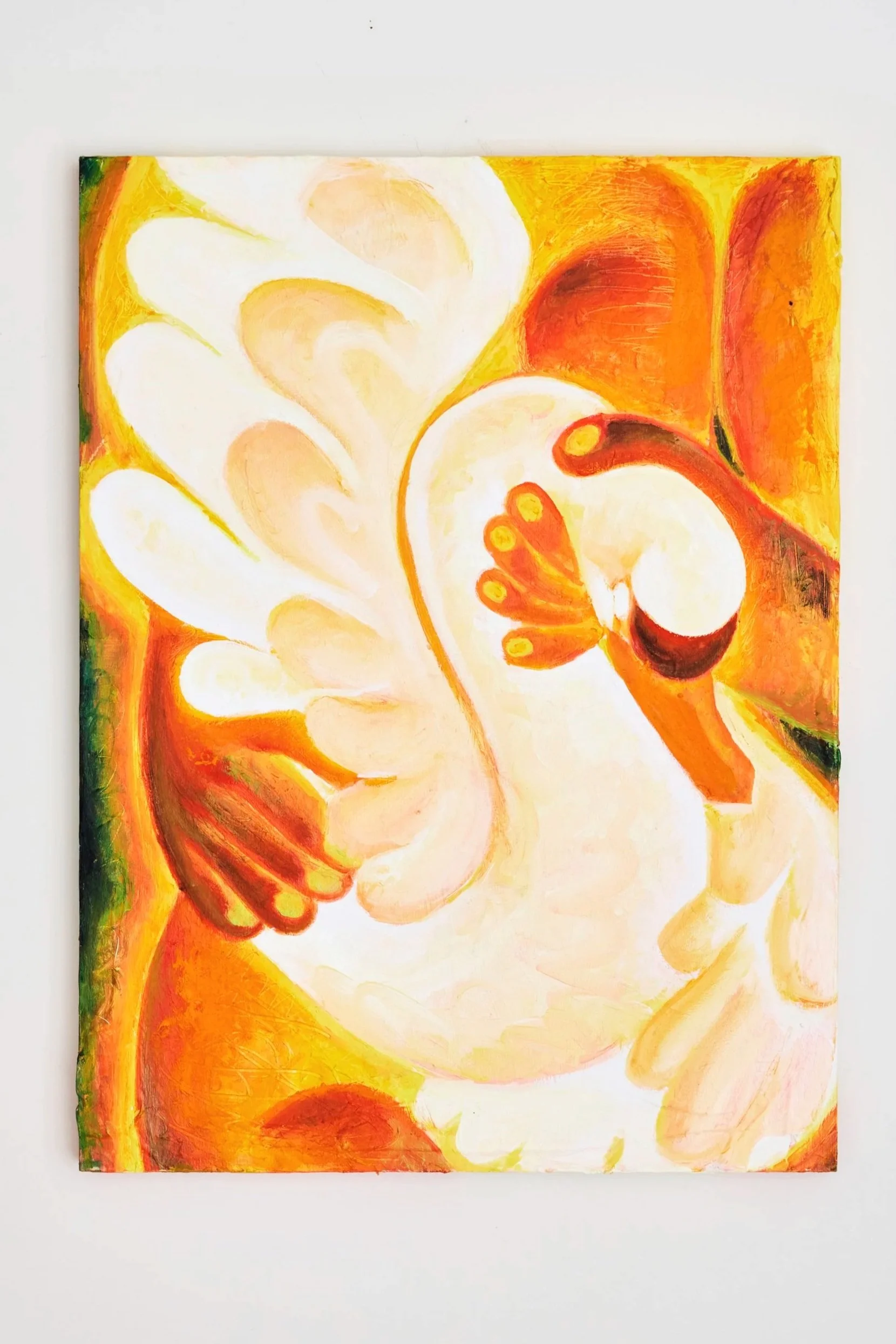
Shield / 2024 / oil on wood / cm. 40x30 photo ©Valentin Fougeray
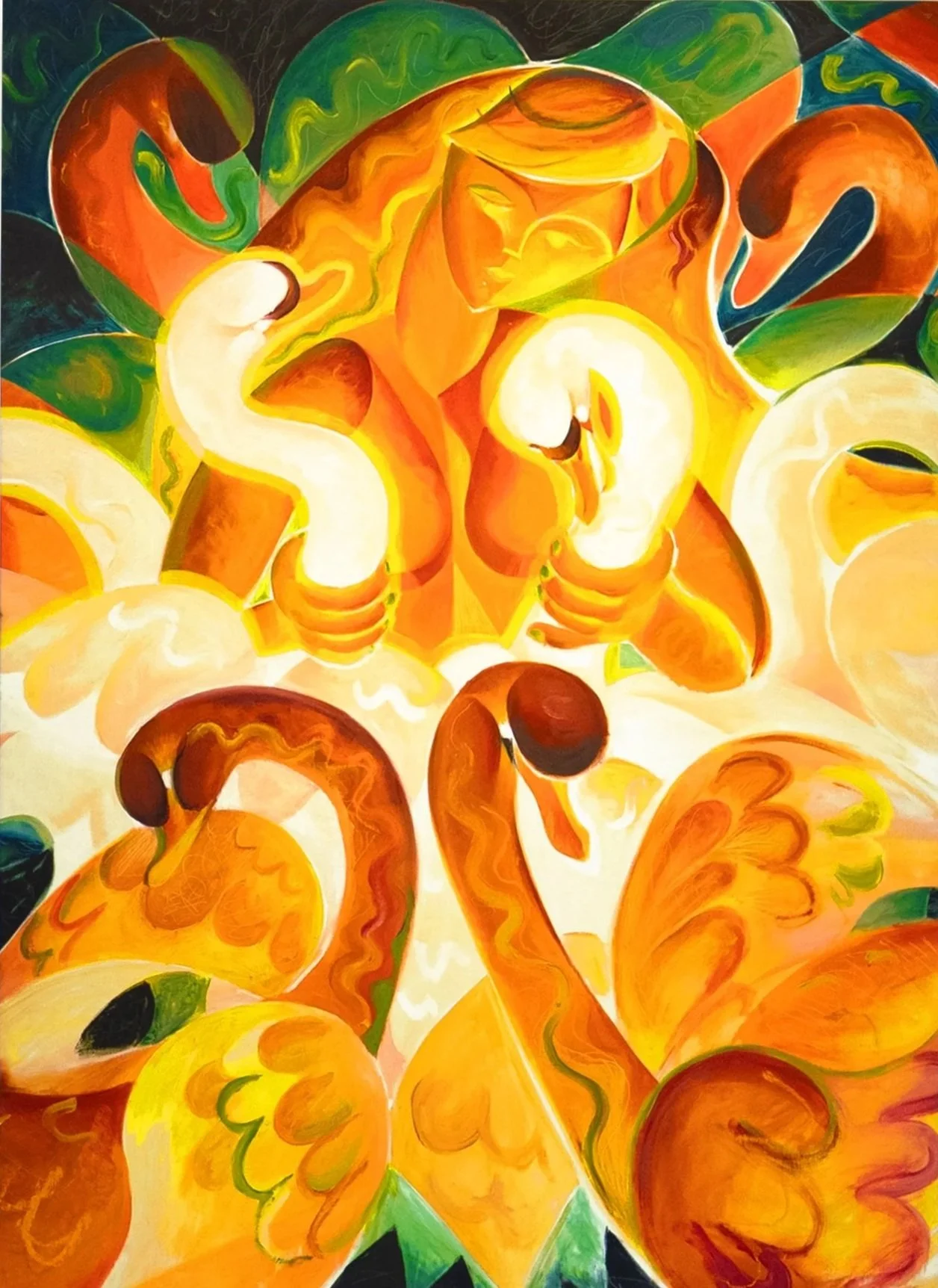
Pure / oil on canvas / 2022 / cm. 200 x 146 photo / Showcased during the show, sold with MCNP Art Advisory Paris ©Valentin Fougeray
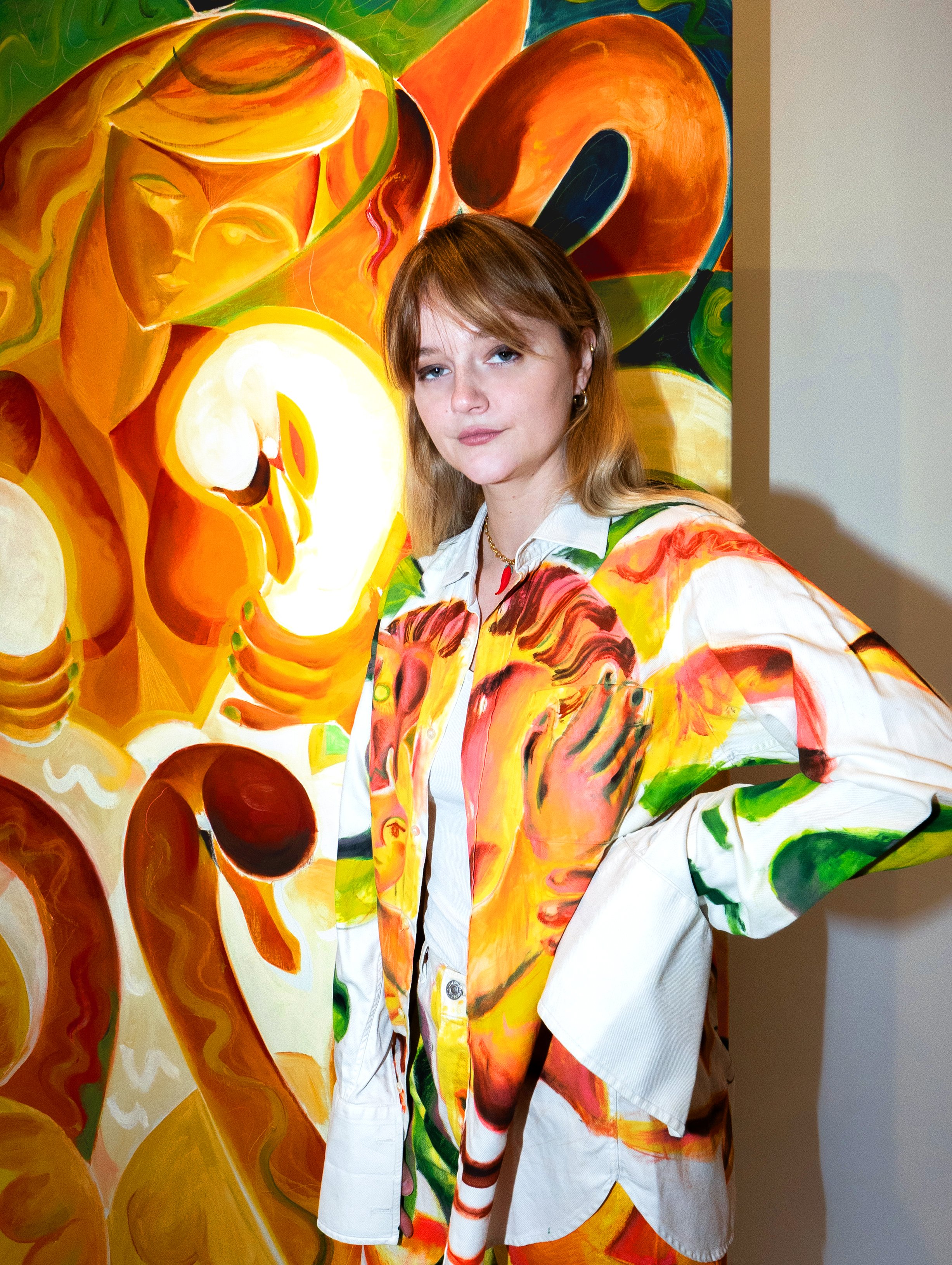
Portrait exhibition, photo ©Blanche Tripoteau
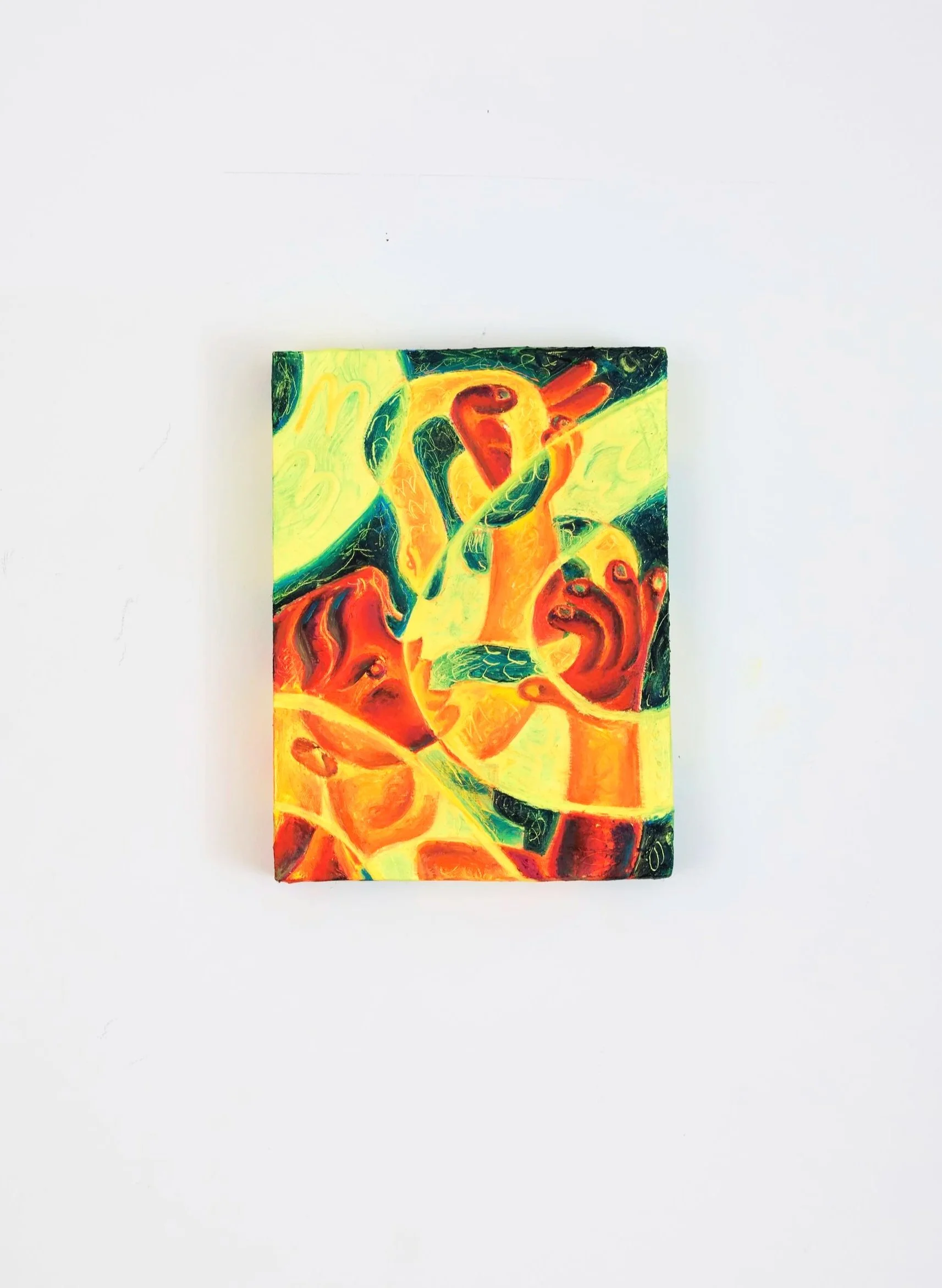
This is what you want/ 2024 / oil on wood / 20,3 x 15,24 cm / photo ©Valentin Fougeray
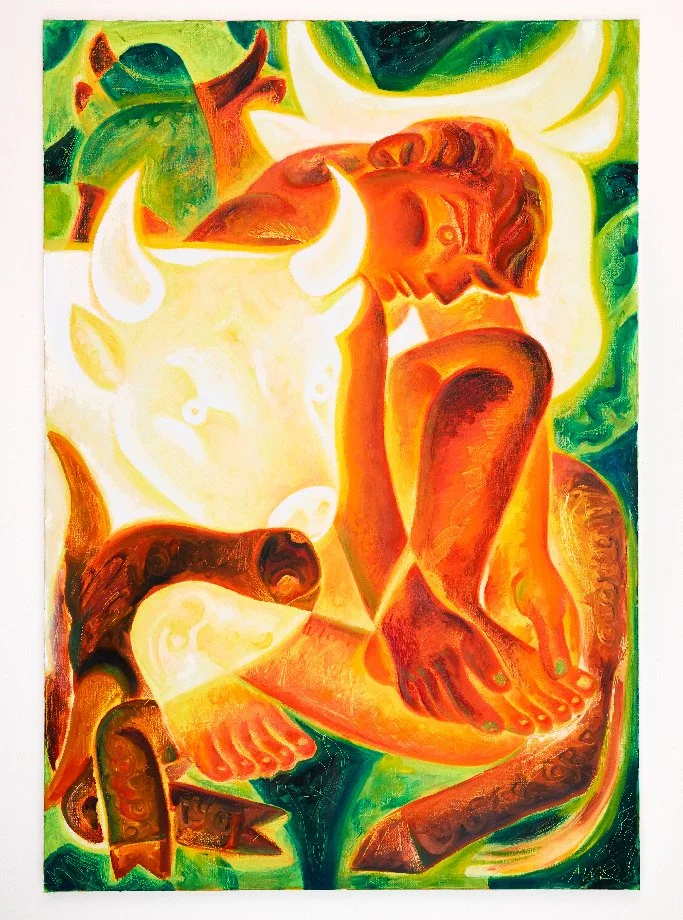
Fall has come and I'm still angry/ oil on wood/ 2024/ cm. 40 x 30 / sold during Fight F/Light at Nil Gallery with Ingrid Lundgren / photo ©Valentin Fougeray
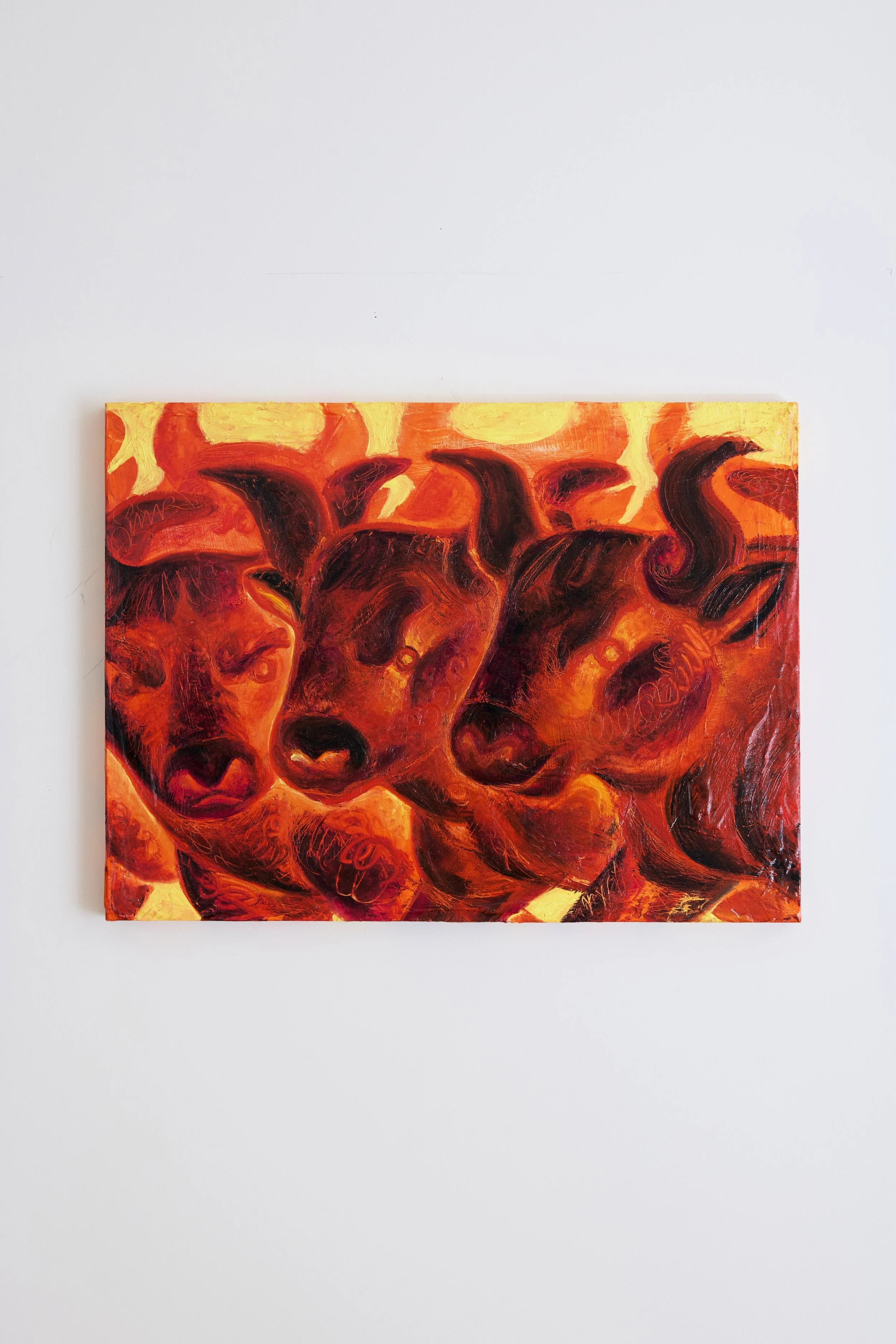
Les bêtes à cornes / oil on canvas /2025 /cm. 130x89 cm / sold during Fight F/Light at Nil Gallery with Ingrid Lundgren /photo ©Valentin Fougeray
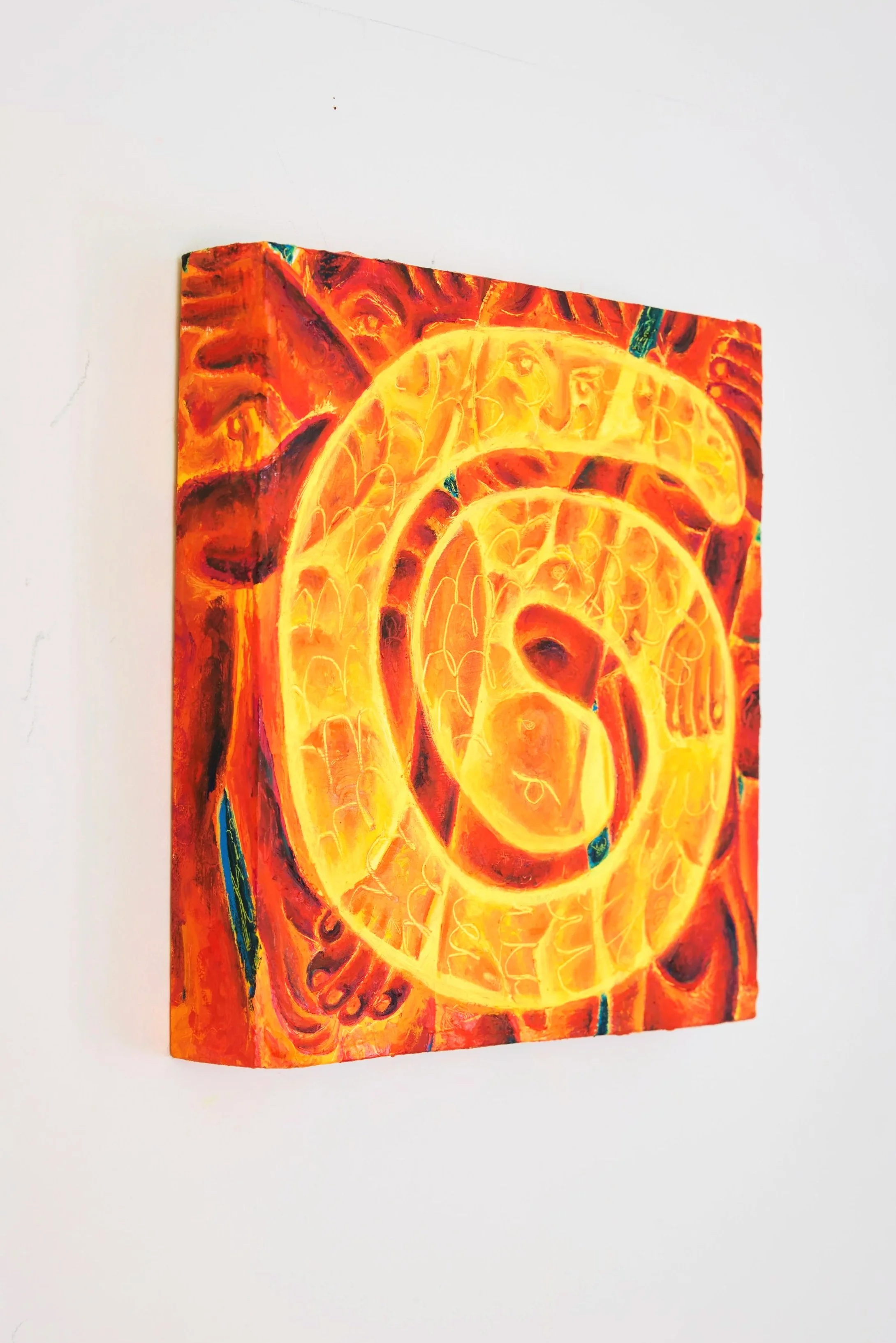
Adams / 2025 / oil on wood/ cm. 20,3 x 20,3 ©Valentin Fougeray
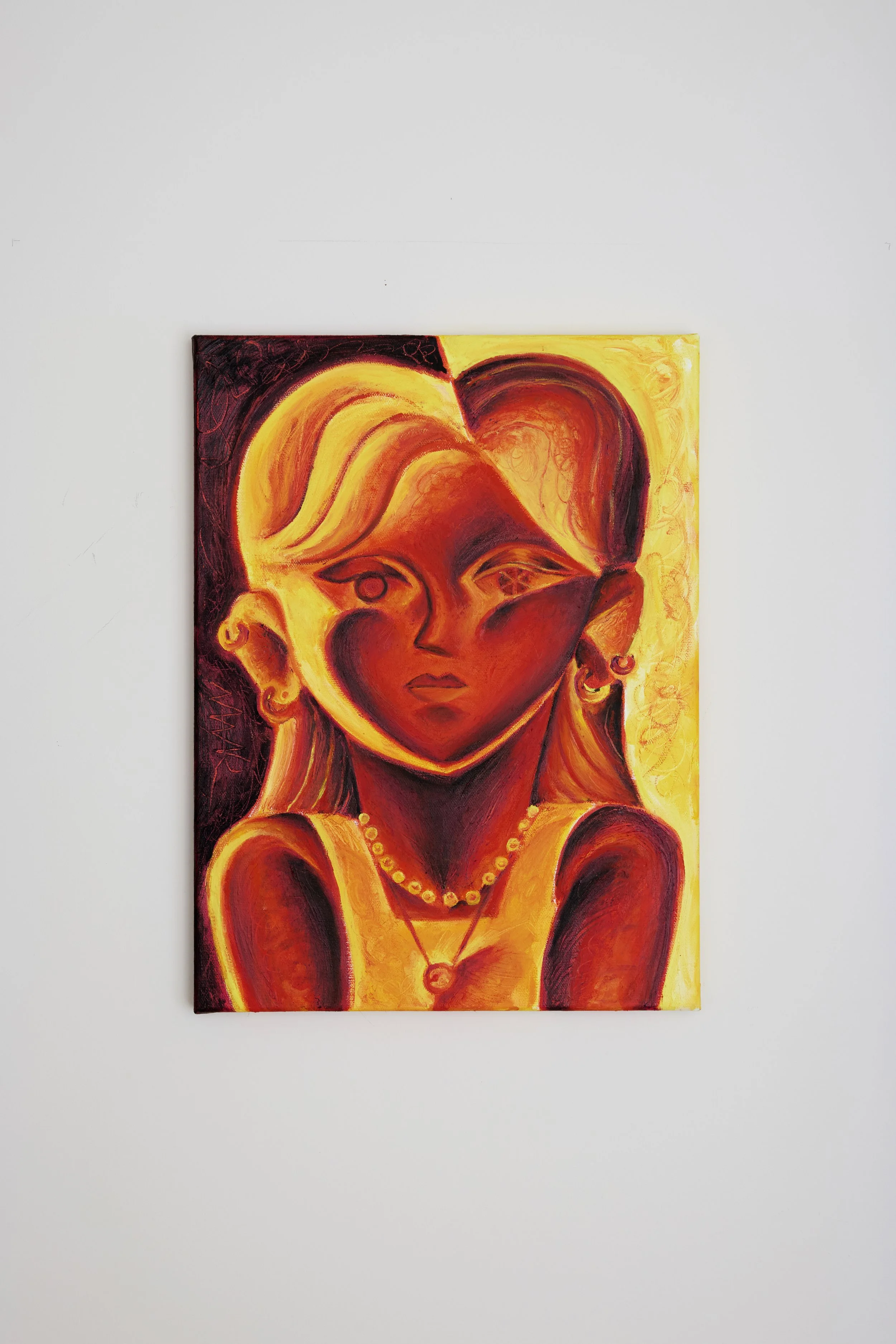
Paraphernalia, oil on canvas, 2024, cm. 40 x 30 photo ©Valentin Fougeray
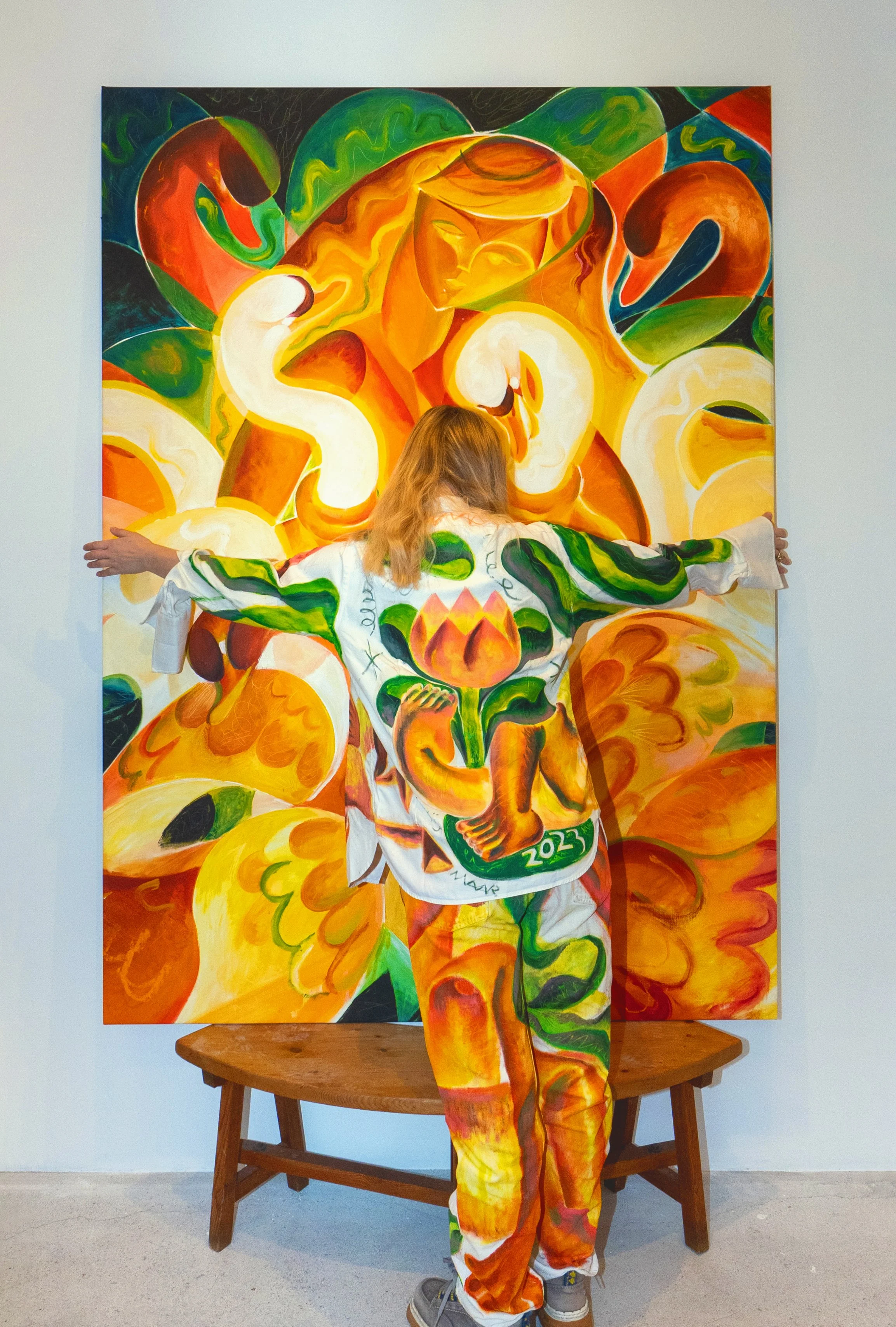
photo ©Blanche Tripoteau
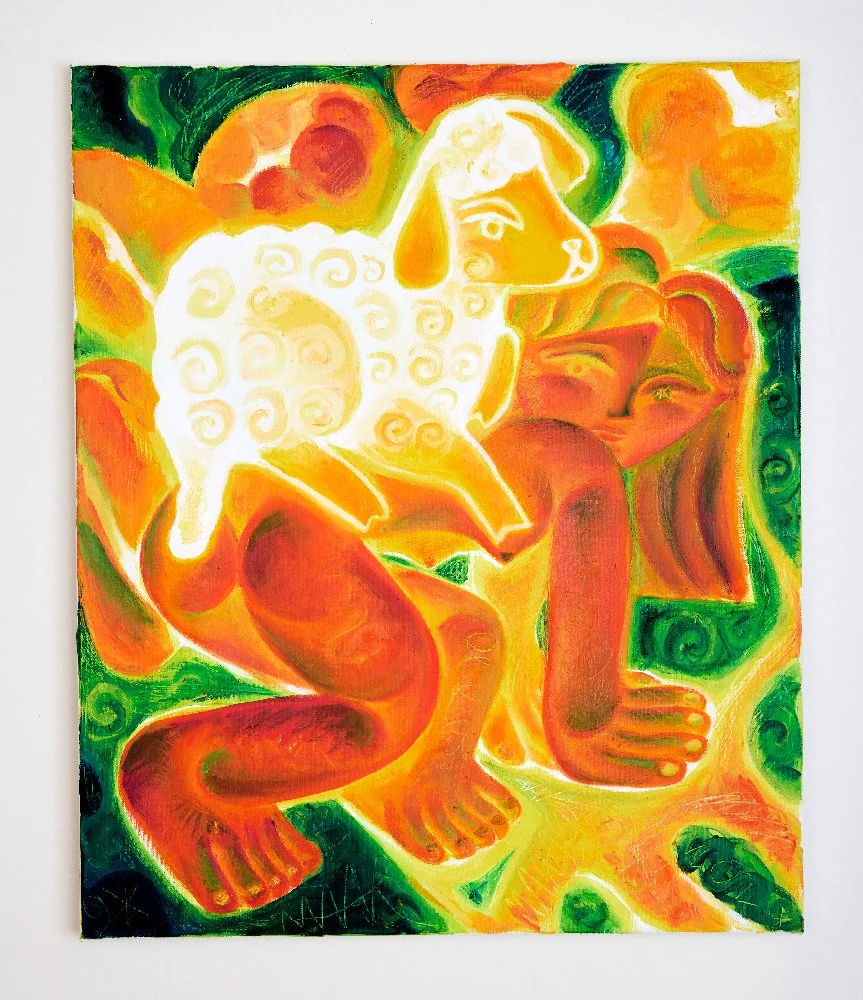
Got your back ! / oil on canvas / 2024 / cm. 60x50 / photo ©Valentin Fougeray
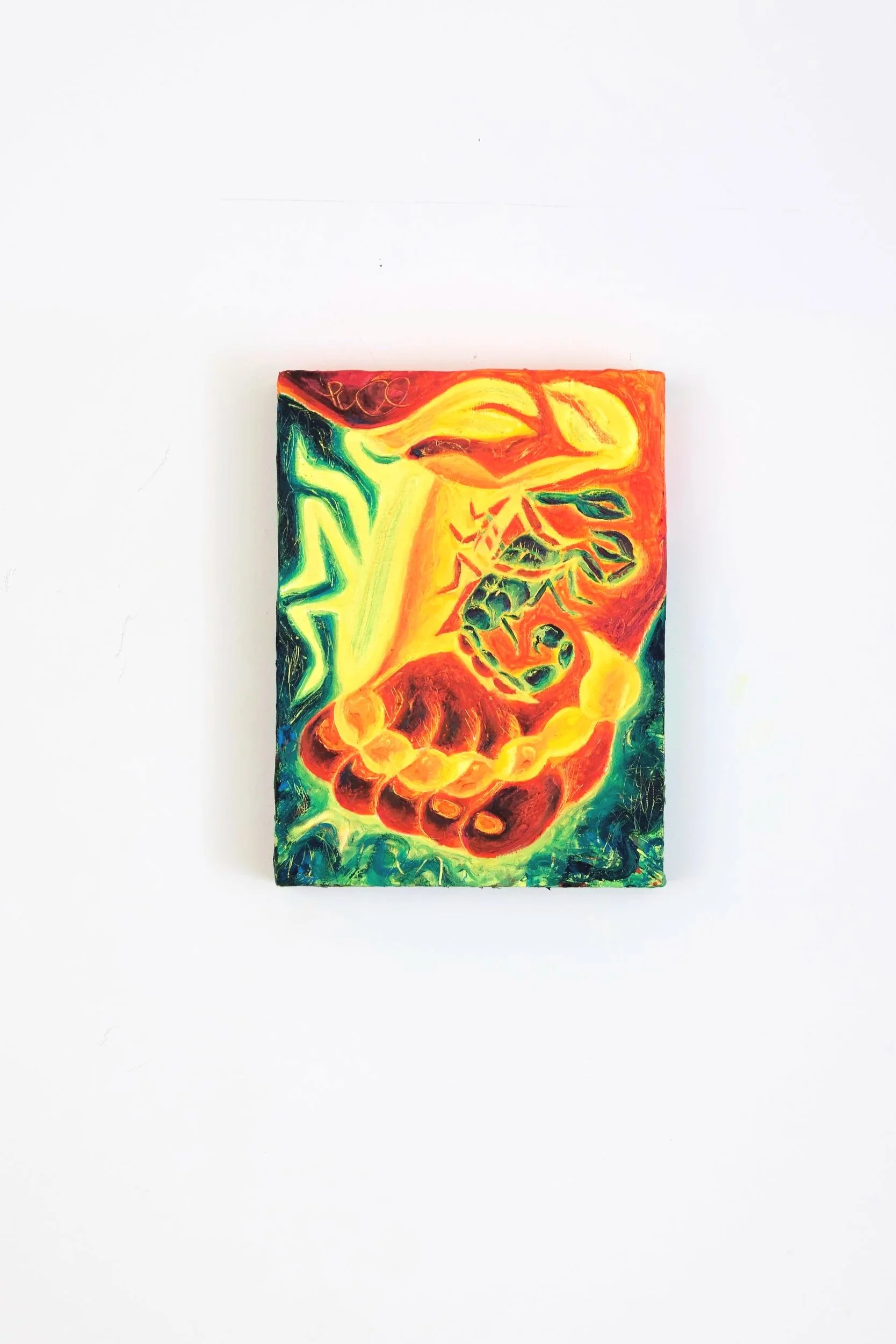
I'll carry you with me - to my father / 2024 / oil on wood / 20,3 x 15,24 cm / sold during Fight F/Light at Nil Gallery with Ingrid Lundgren / photo ©Valentin Fougeray
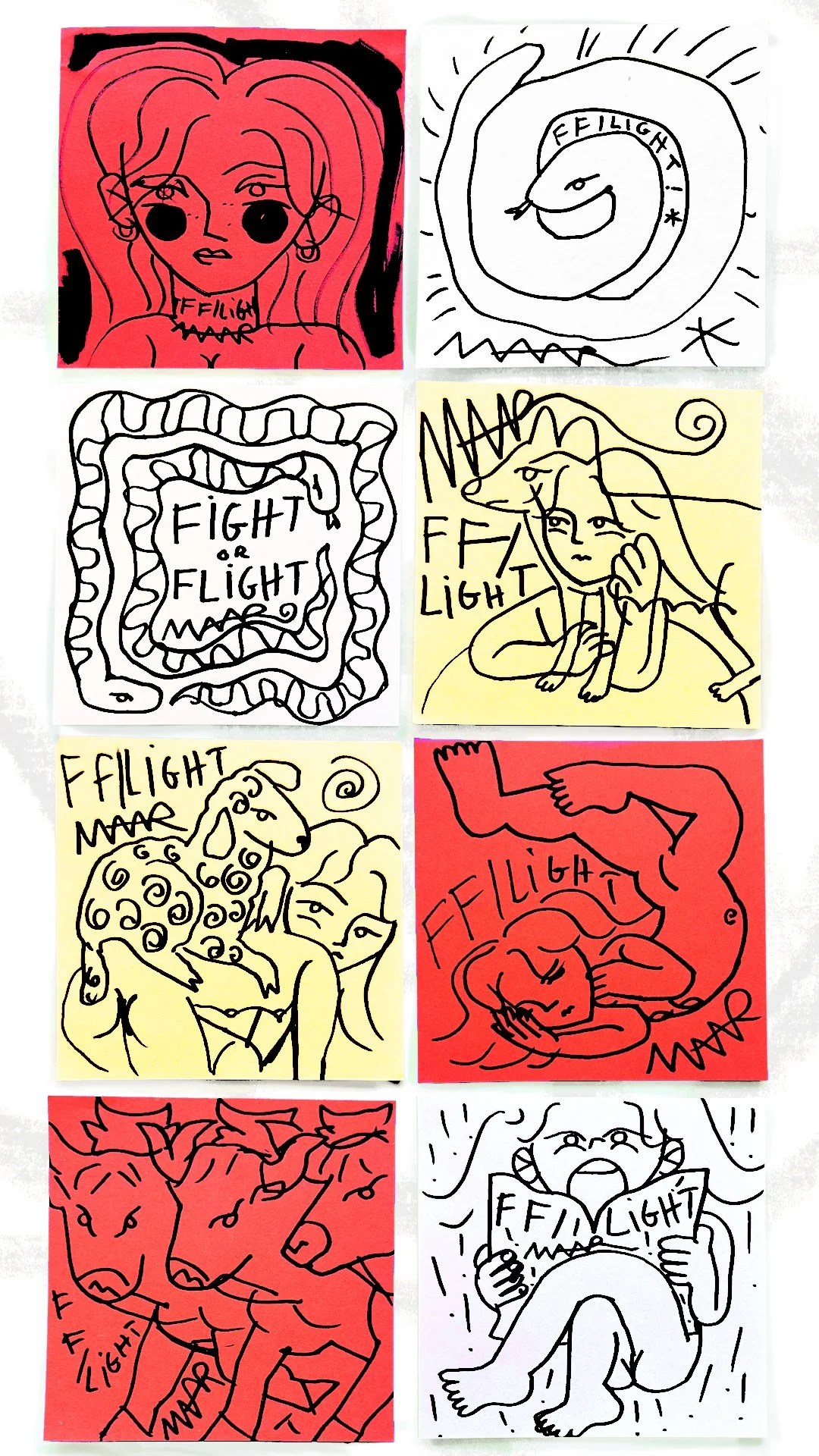
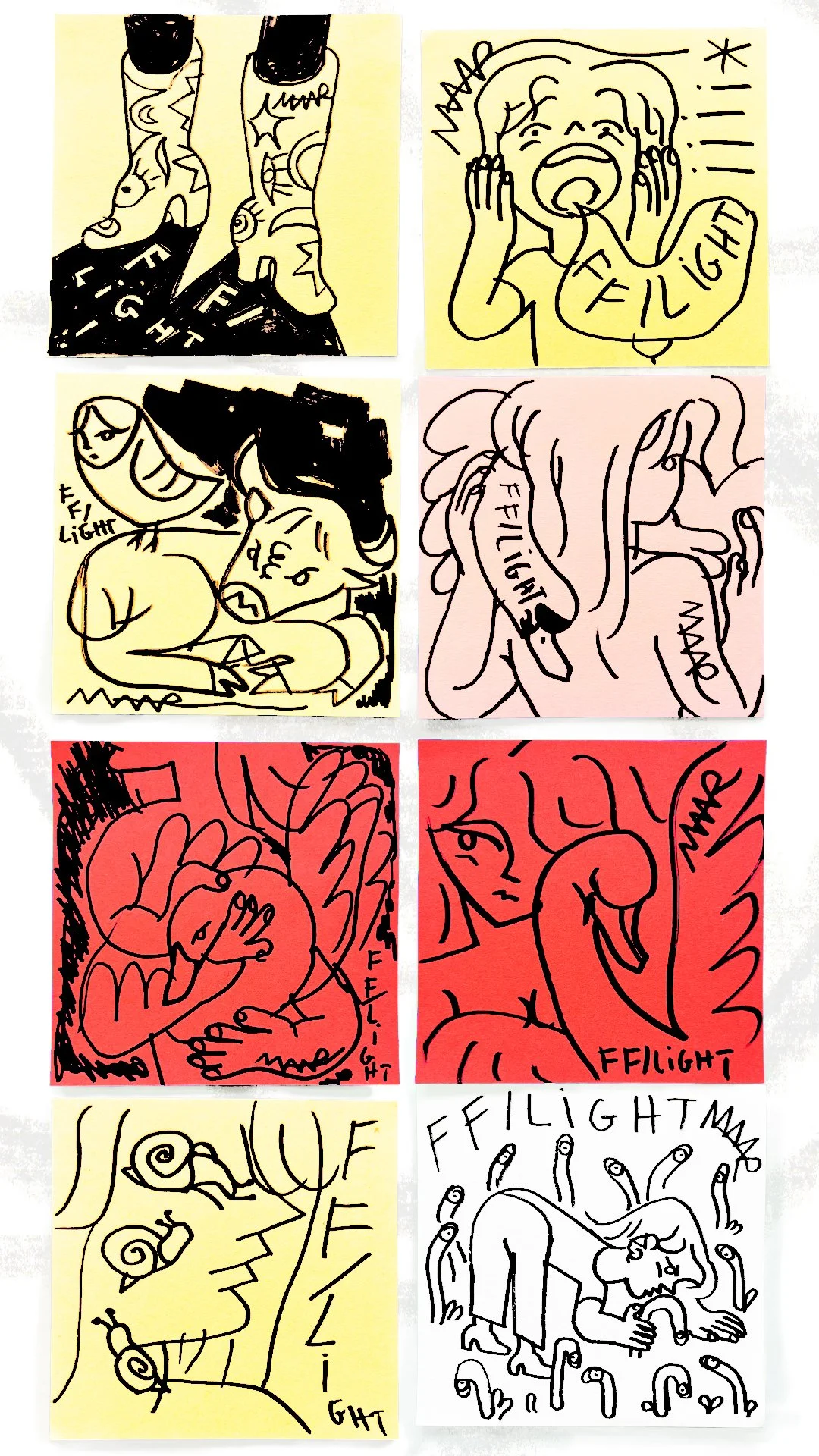
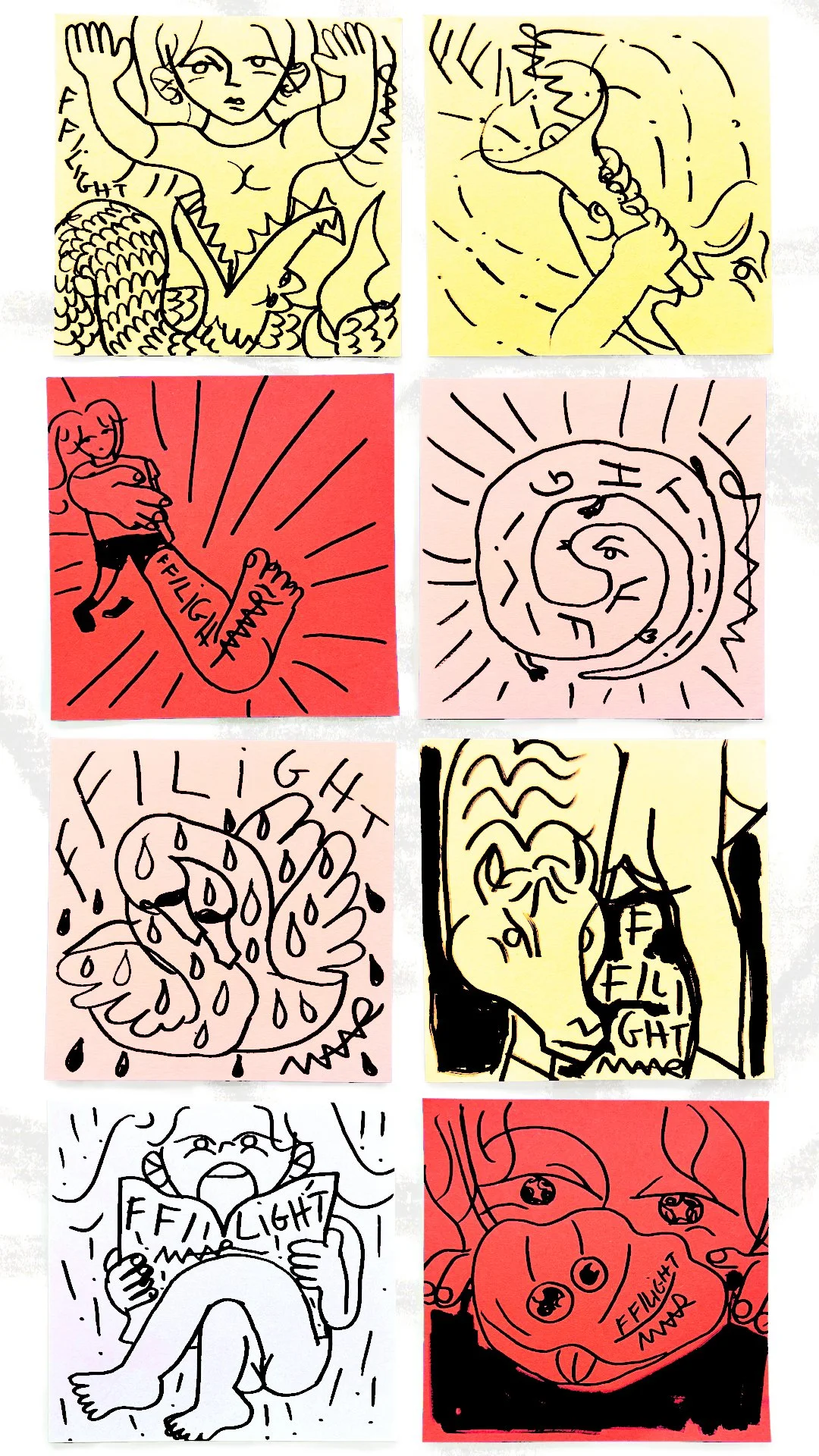
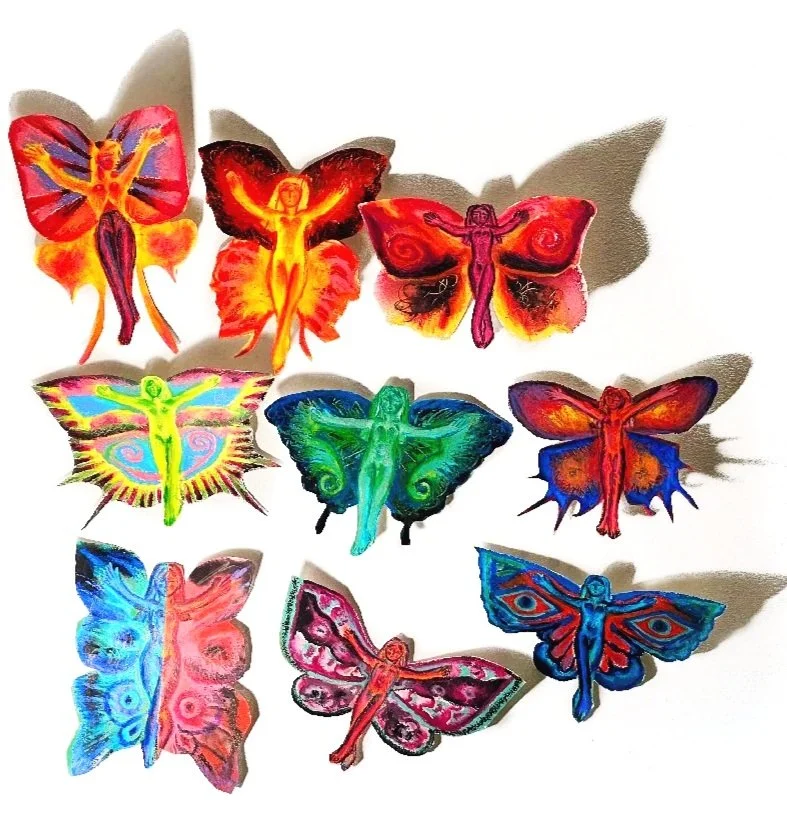
Some little drawings available for visitors to take during the exhibition - I sketch a lot on post-it
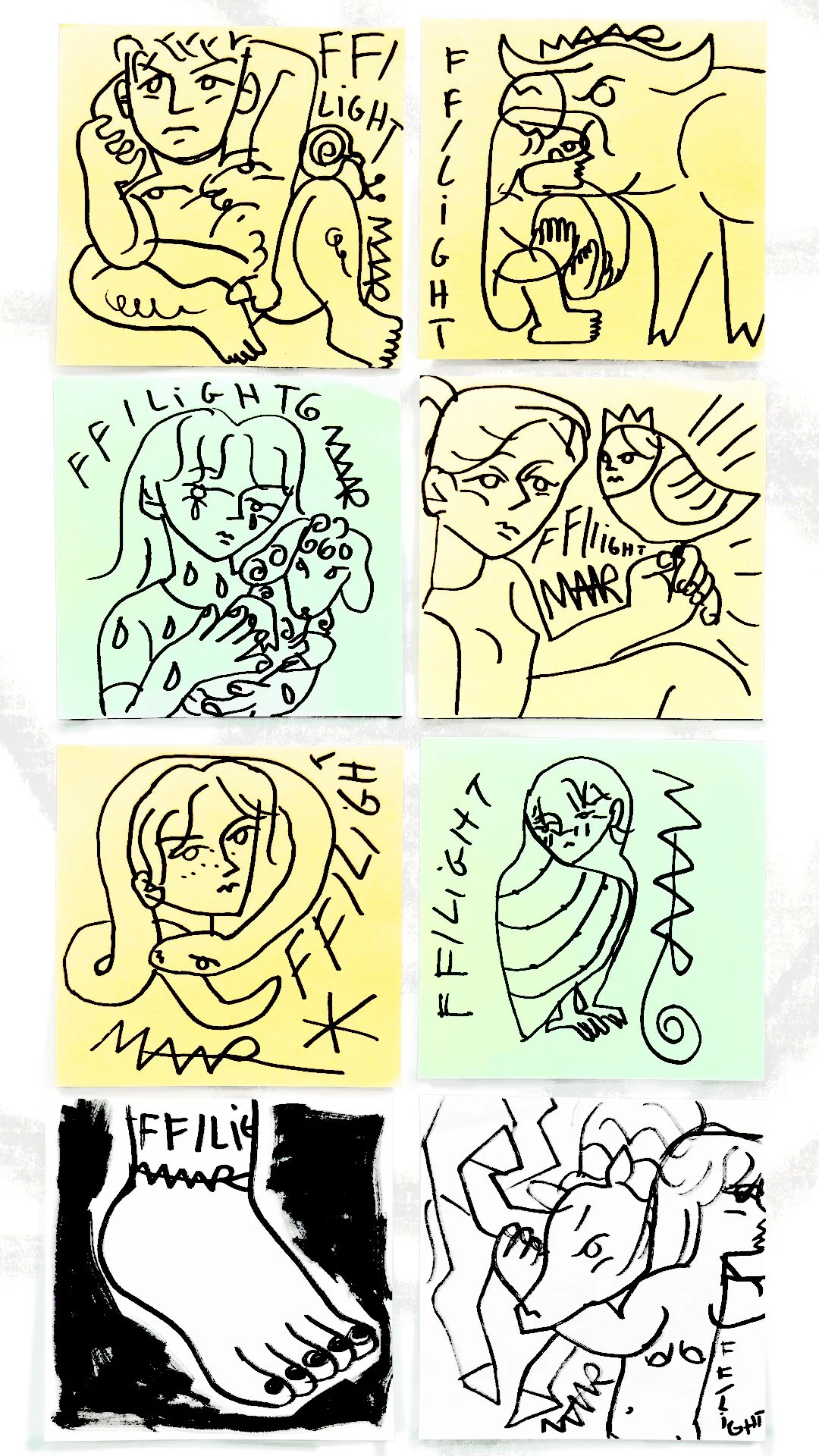
Some little drawings available for visitors to take during the exhibition - I sketch a lot on post-it
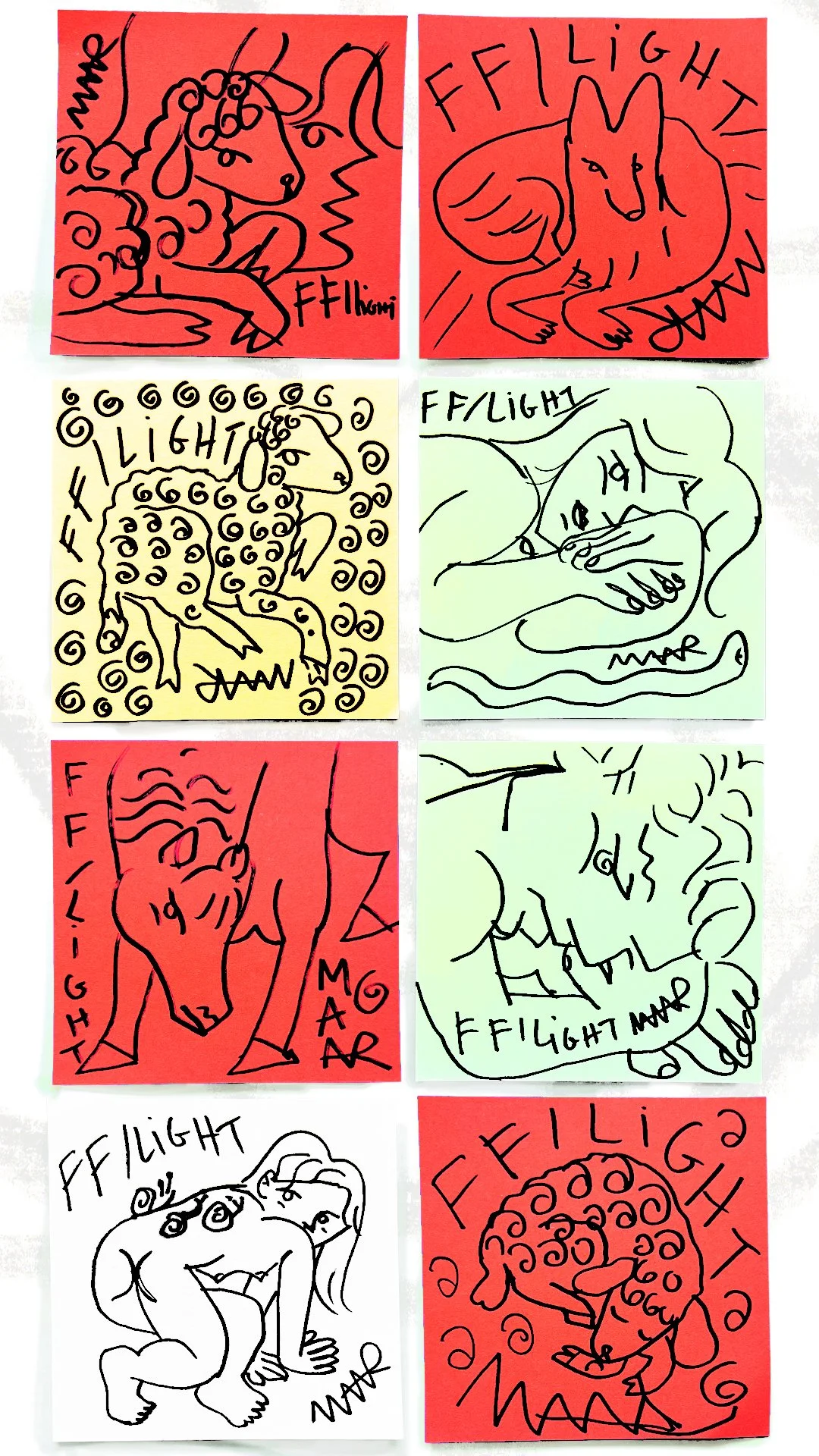
Some little drawings available for visitors to take during the exhibition - I sketch a lot on post-it
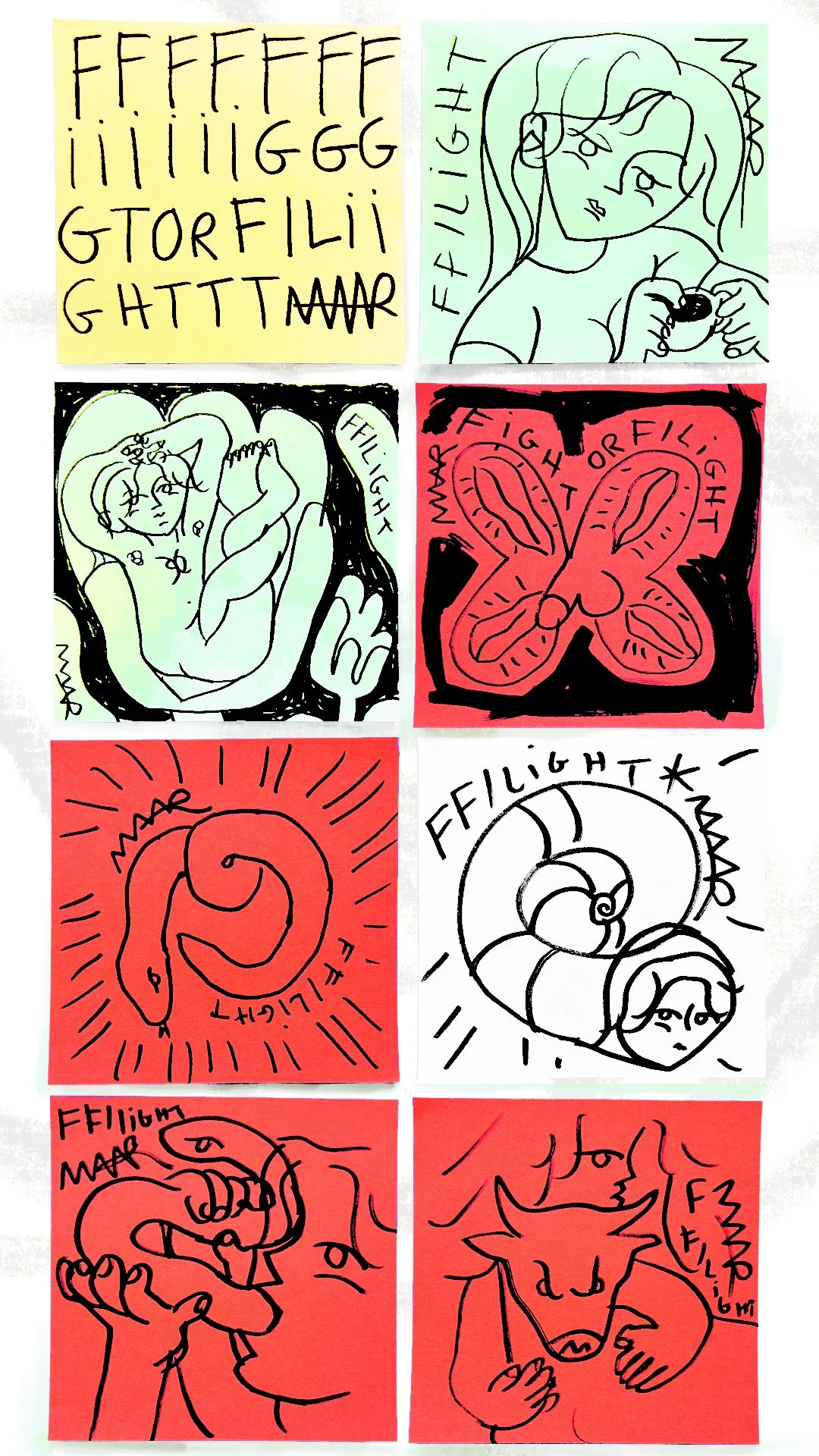
Some little drawings available for visitors to take during the exhibition - I sketch a lot on post-it
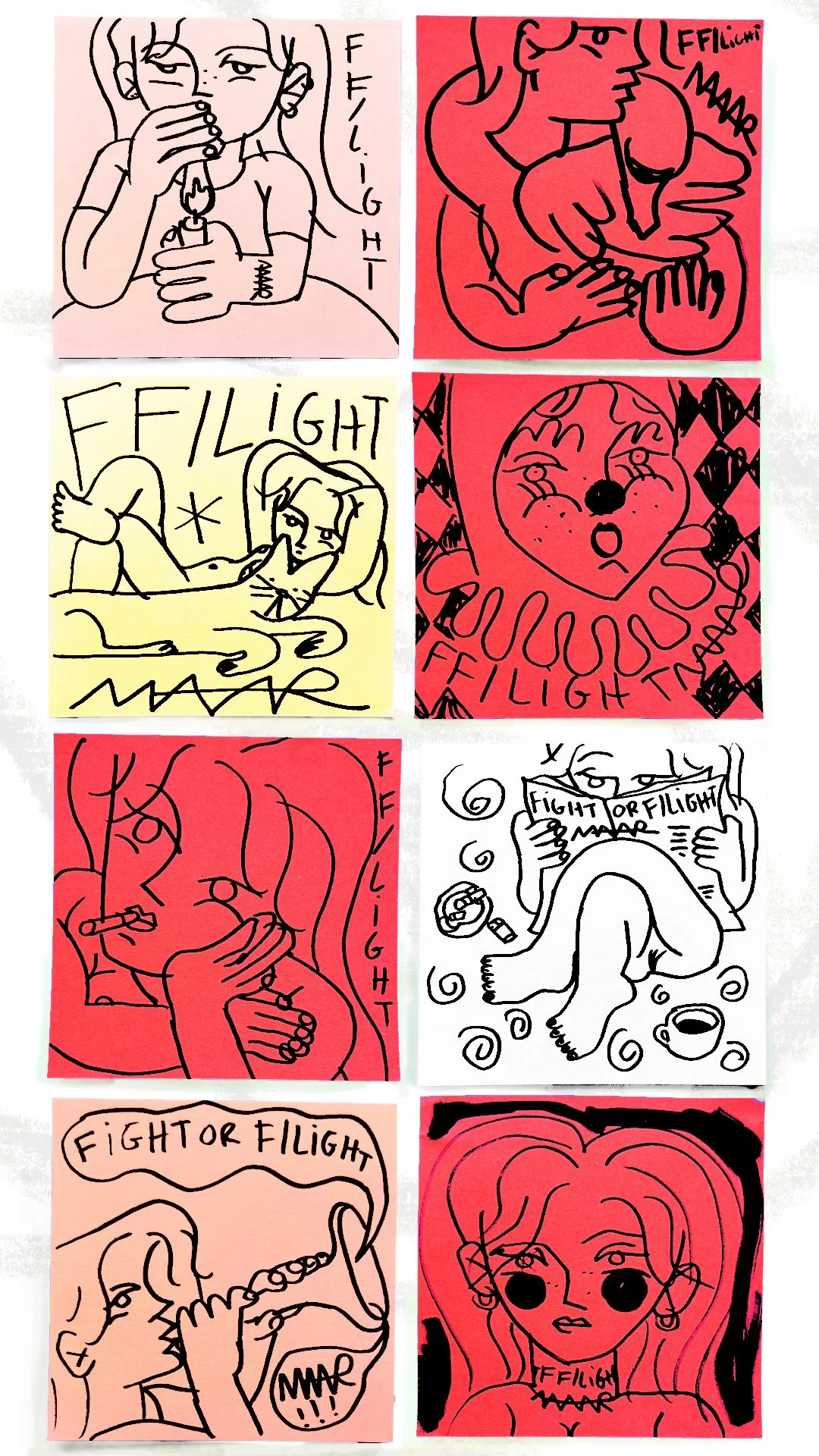
Some little drawings available for visitors to take during the exhibition - I sketch a lot on post-it
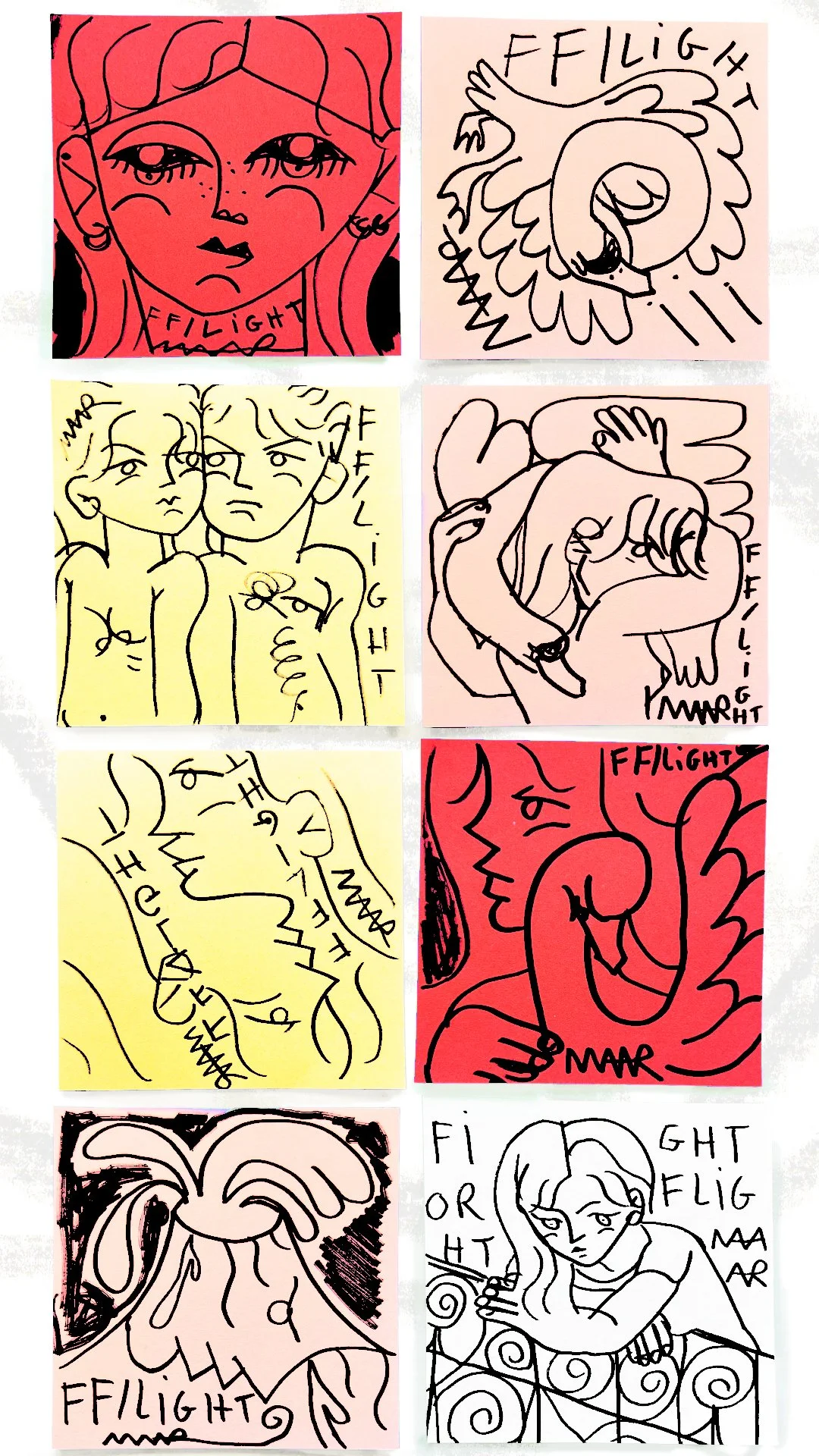
Some little drawings available for visitors to take during the exhibition - I sketch a lot on post-it
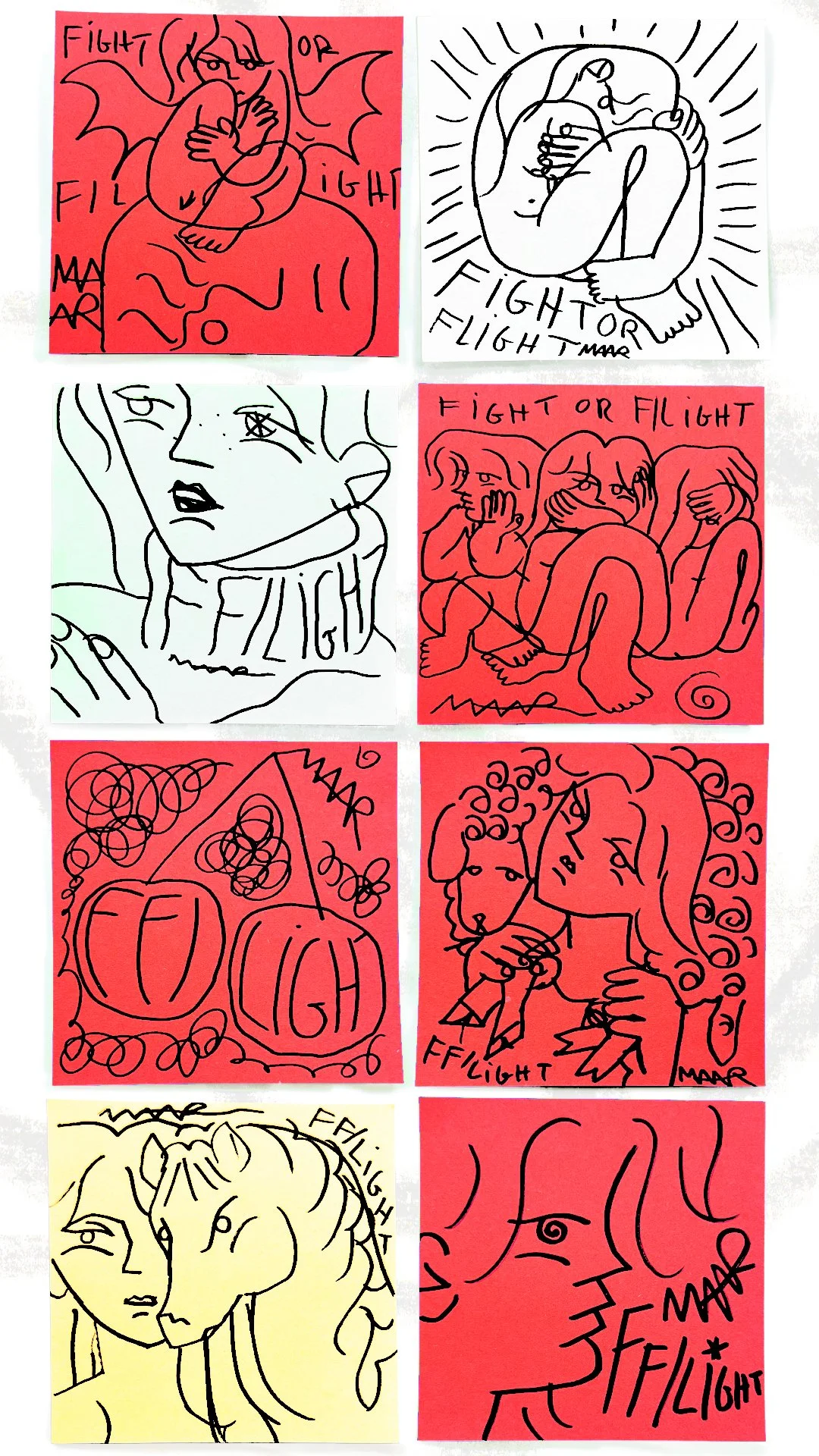
Some little drawings available for visitors to take during the exhibition - I sketch a lot on post-it
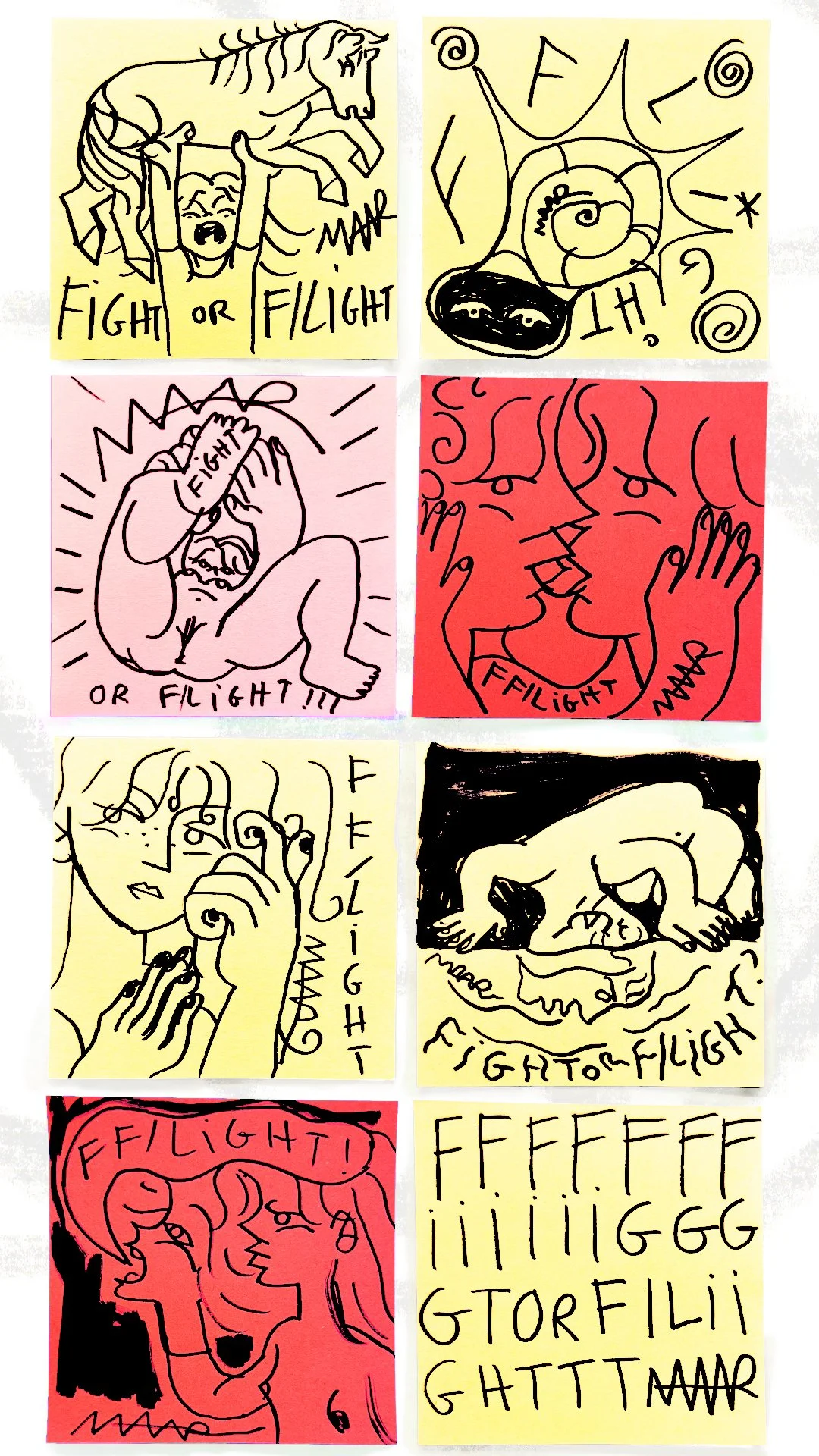
Some little drawings available for visitors to take during the exhibition - I sketch a lot on post-it
Some little drawings available for visitors to take during the exhibition - I sketch a lot on post-it
Some little drawings available for visitors to take during the exhibition - I sketch a lot on post-it
Can you describe your practice in a few words?
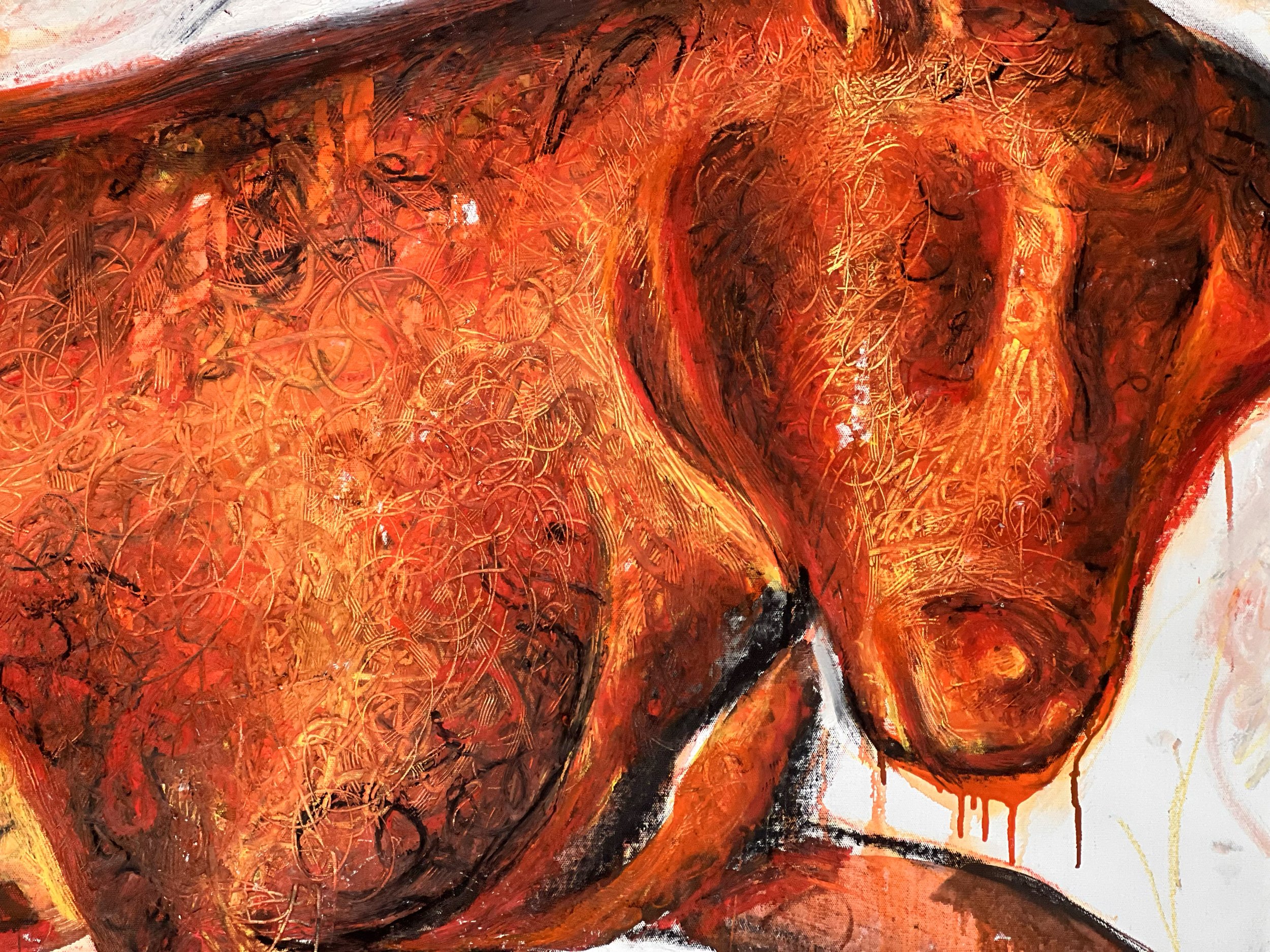
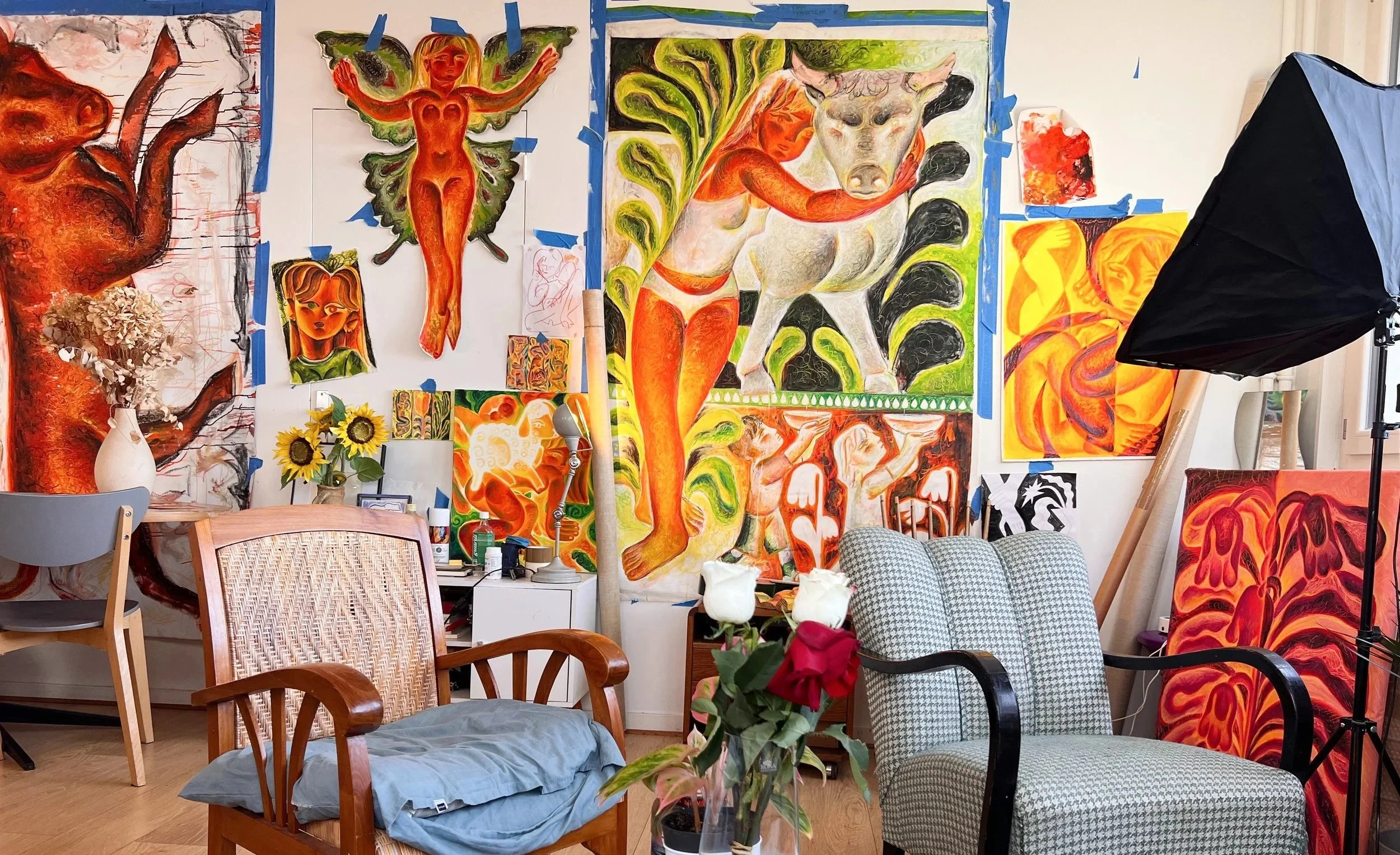
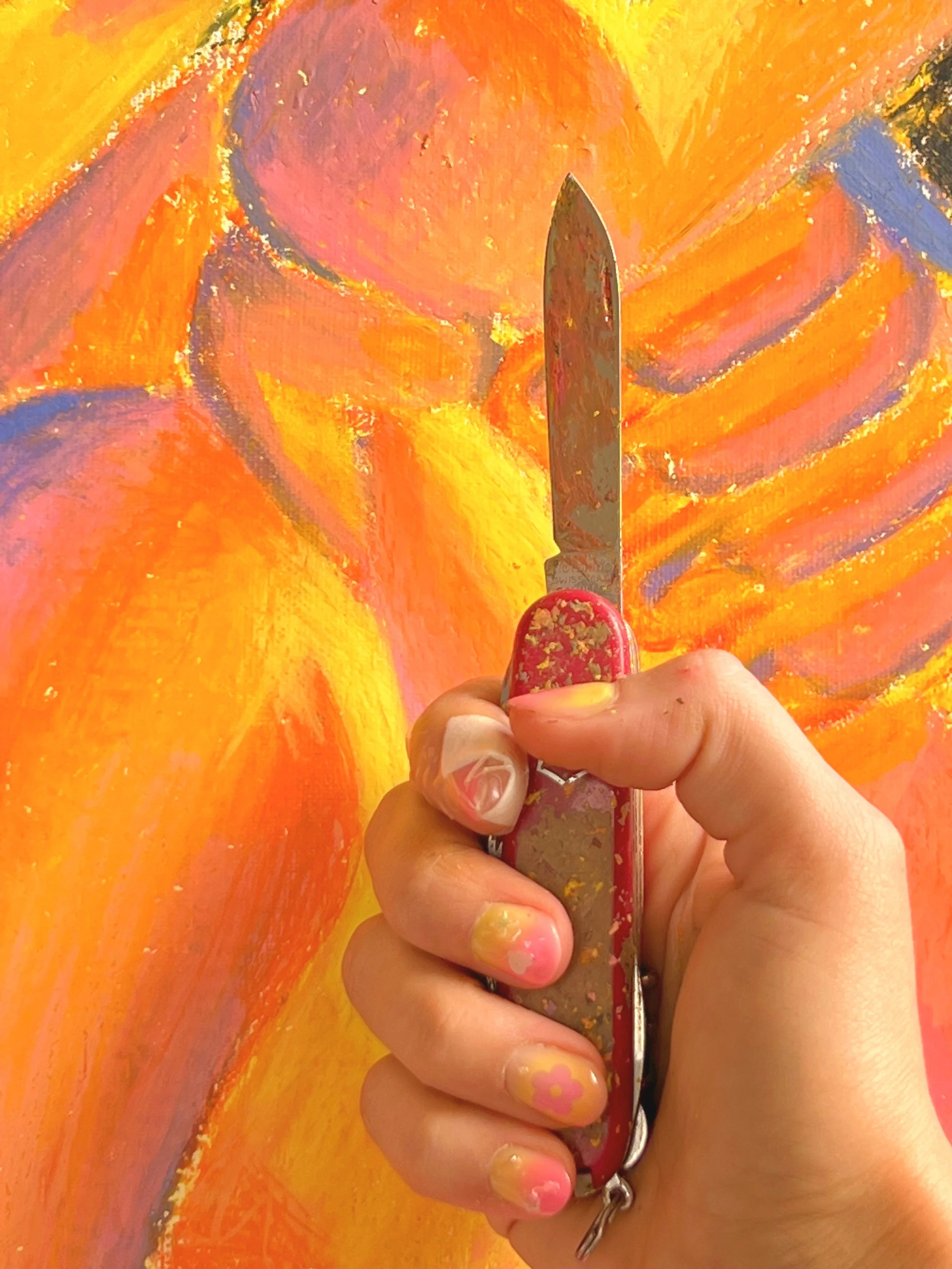
« I’m a painter, and I mainly work with oil and pastels. Since texture is essential to me, these mediums offer the widest range of possible combinations. I work in multiple, alternating layers of oil and pastel ; often using both at once. I scrape and rescrape my paintings with a knife once they’ve reached a certain stage, and then I start again, aiming for a precise level of density and vibration through the accumulation of layers and pigments. In that sense, my work is closer to sculpture than to painting, as I spend my time building large masses only to carve back into them. »
«… I did not choose to become a painter; I simply felt the need to paint, and from that moment on, I no longer had a choice. It became my reason for living, my way of expressing through images the things I could only speak about once I had processed them through this medium. What I think and what I show or say are no longer in contradiction. At one point in my life, for deeply personal reasons, the emptiness in my heart was so vast that it swallowed every impulse toward life. Then, through painting, light began to appear. Light literally burst forth in my work, and a month later, my voice finally returned after ten years of « silence ». »
Extract from the OBJECTSOBJECTSOBJECTSOBJECTS interview, by Sarah Al Rashid
CUT FLOWERS
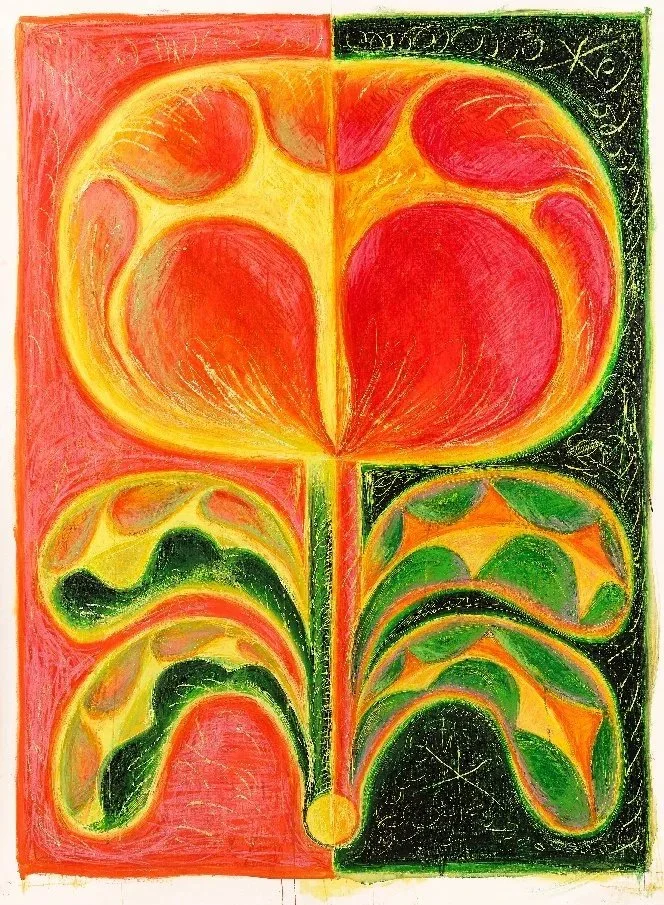
📷 ©studio sebert, Nil Gallery Paris
Morte en vie, huile et pastel sur toile, 2025, cm. 200× 140 / 78,7″ × 55,1″ / Showcased and sold at Zonamaco with Nil Gallery
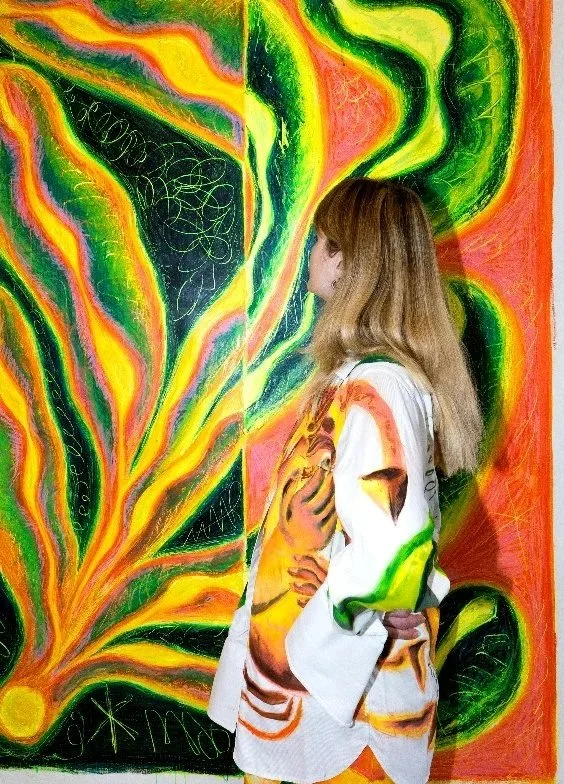
📷 ©Blanche Tripoteau, Nil Gallery Paris
À toi, huile et pastel sur toile, 2025, 175 × 125 cm / 68,9″ × 49,2″/ Showcased at Zonamaco with Nil Gallery
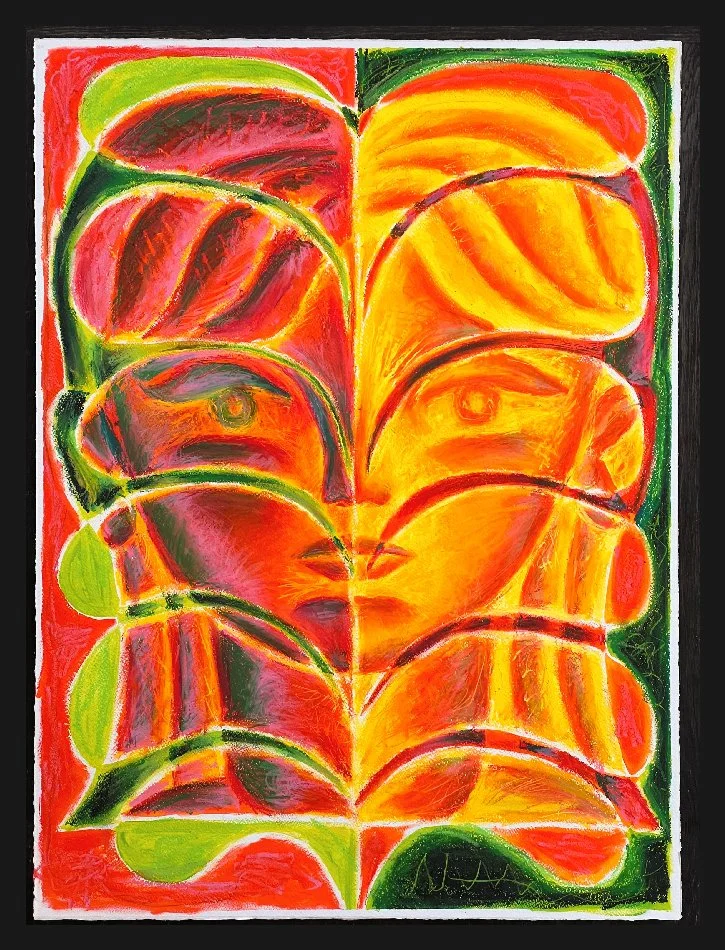
“Cut” flowers are a recurring theme in my work. They function as an allegory drawn from a contemporary reading of the myth of Persephone and its non-Manichean duality. Cut at the height of their beauty and youth, flowers are already promised to a certain death.
Before embracing her role as Queen of the Underworld, she was Kore, the young maiden, who spent her time inventing new species of flowers… for what could be more useless yet more essential than flowers?
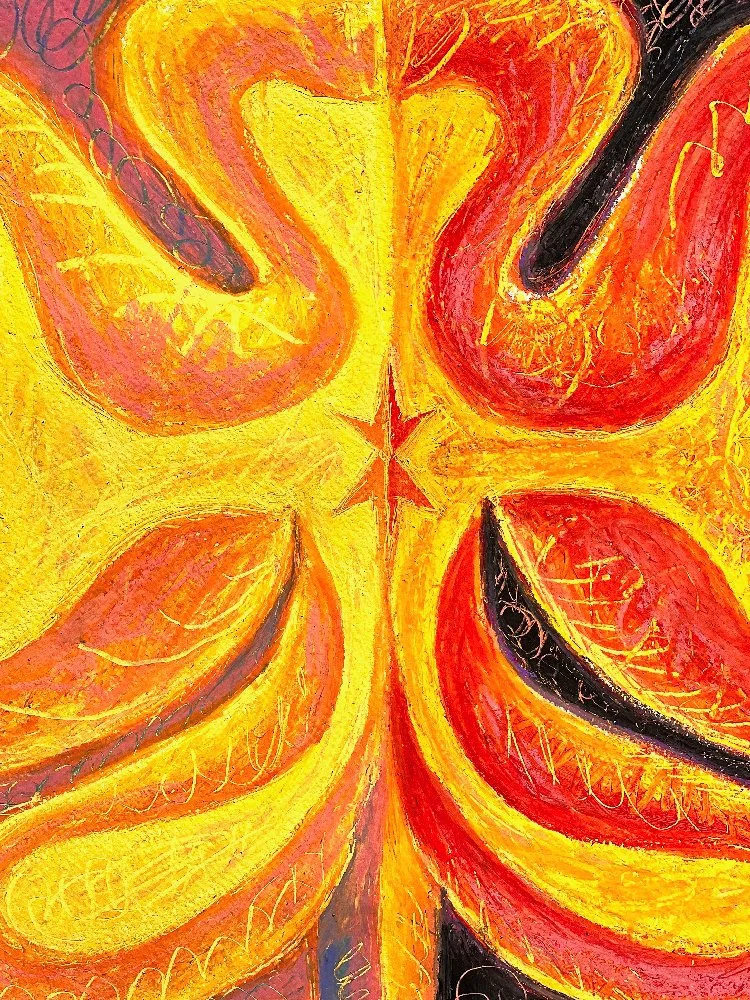
As a recurring motif in my practice, they are often treated « symmetrically ».
Duality, the colors between black and white, are a recurrent theme of mine.When I paint, it feels as though I can finally reassemble fragments that remain incomprehensible on their own. While painting, I no longer feel divided.
Yet duality remains a central theme in my work: naive forms alongside darker themes, love and violence, color against emptiness.
Hunt / Oil and pastels on paper / 2025 / cm. 77 x 56 | in. 30 1/4 x 22 / Showcased and sold at Dallas art fair with Nil Gallery
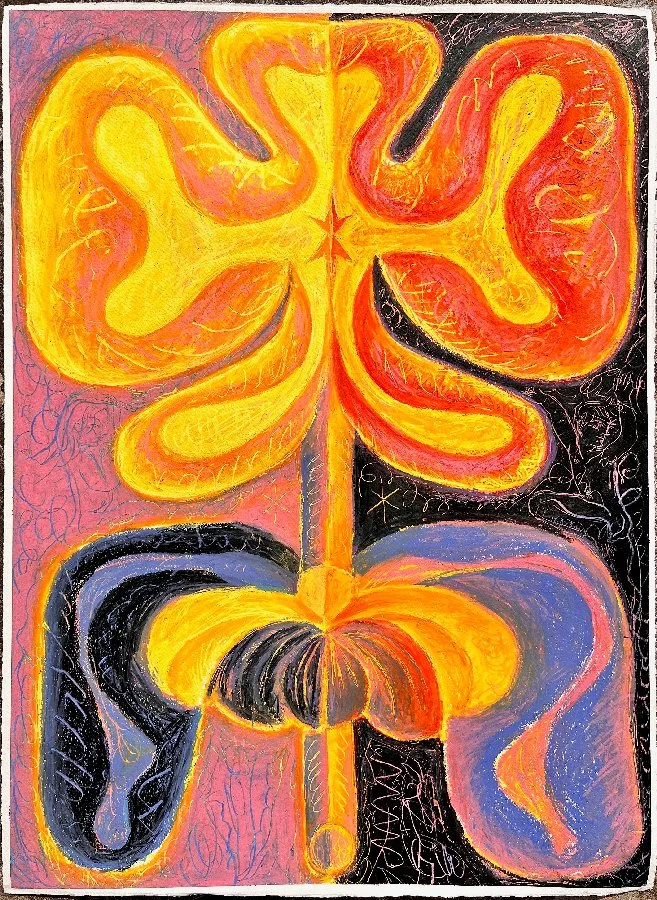
Twilight Flower - oil and pastels on paper, cm. 77 x 57 / in. 30.3 x 22.4 - showcased & sold at Can Art Ibiza with Nil Gallery
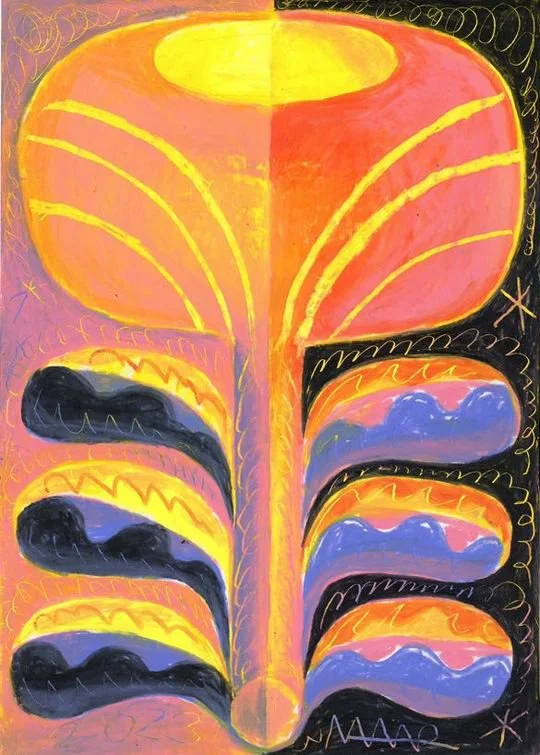
A flower for each stroke/battements serie - pastels on paper / 2023 / cm. 21 x 14,8 / in. 8,3 × 5,8 - showcased at Can Art Ibiza with Nil Gallery
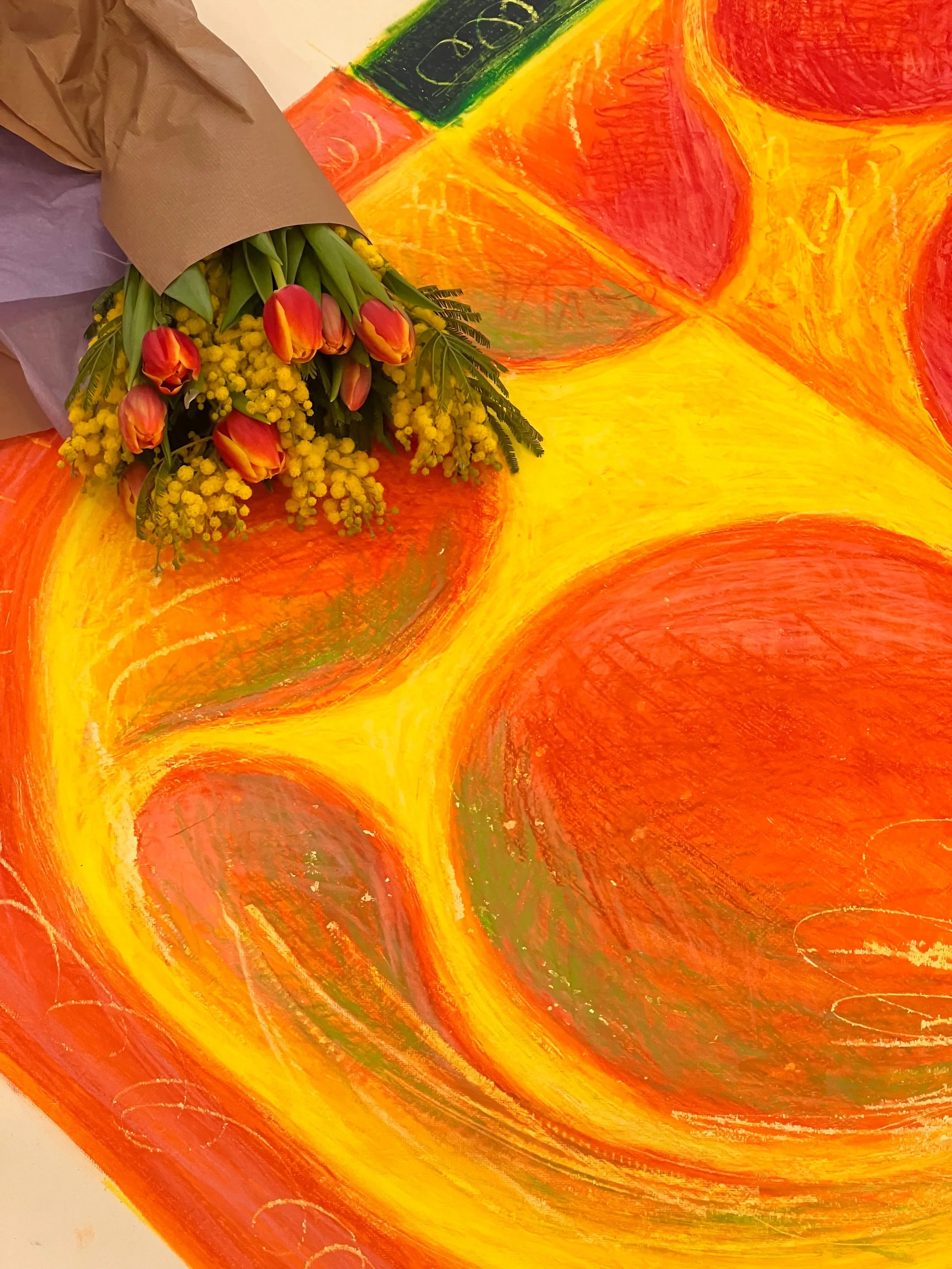
Morte en vie/ detail / Pastel on linen canvas / cm. 200 × 140, in. 78 7/10 × 55 1/10 showcased and sold at Zonamaco with Nil Gallery
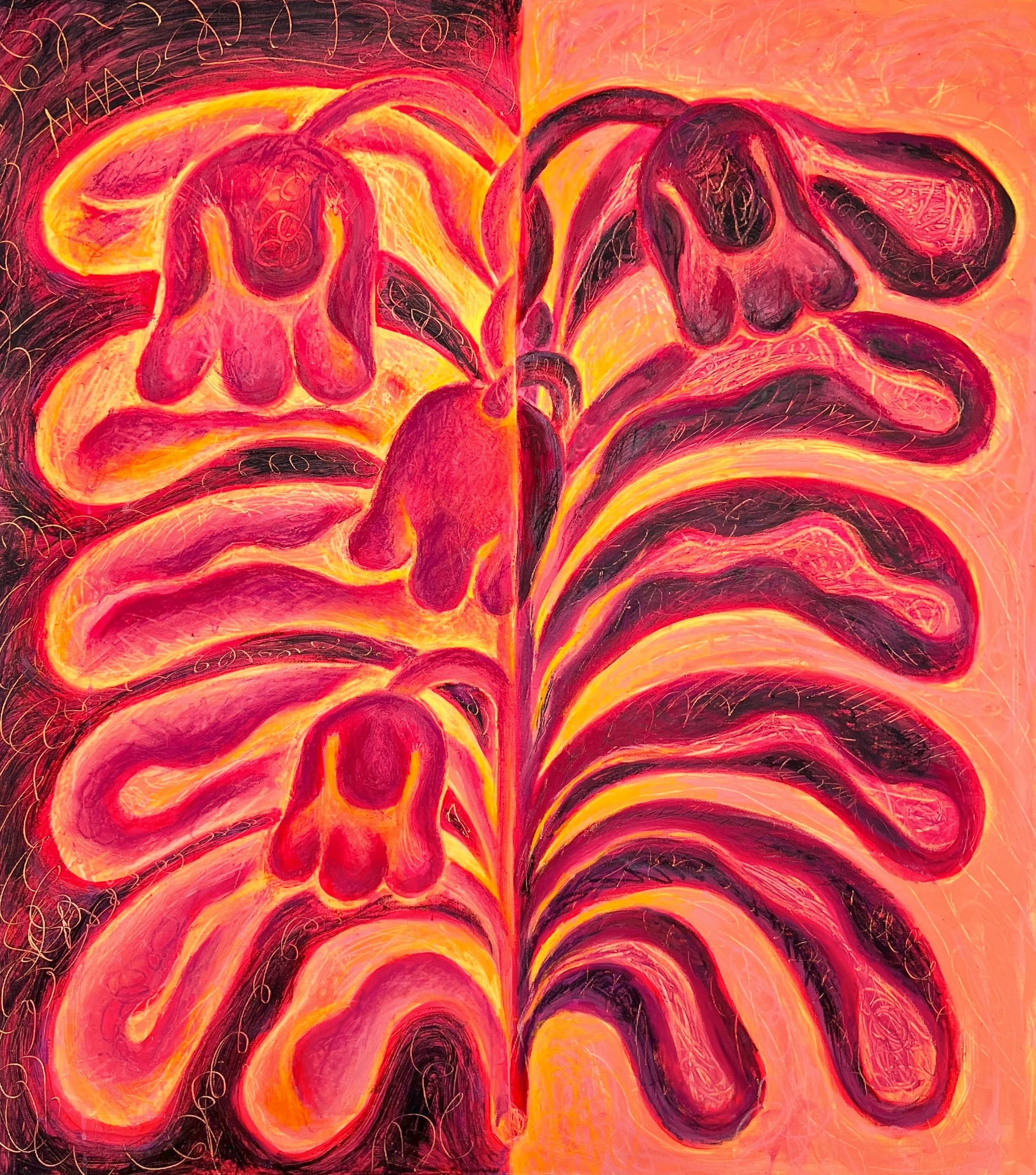
Sunset Flower/ pastels and oil painting on linen/ 2025/ cm. 93 x 84, in. 36,6 × 33,1, showcased at Galerie Zberro
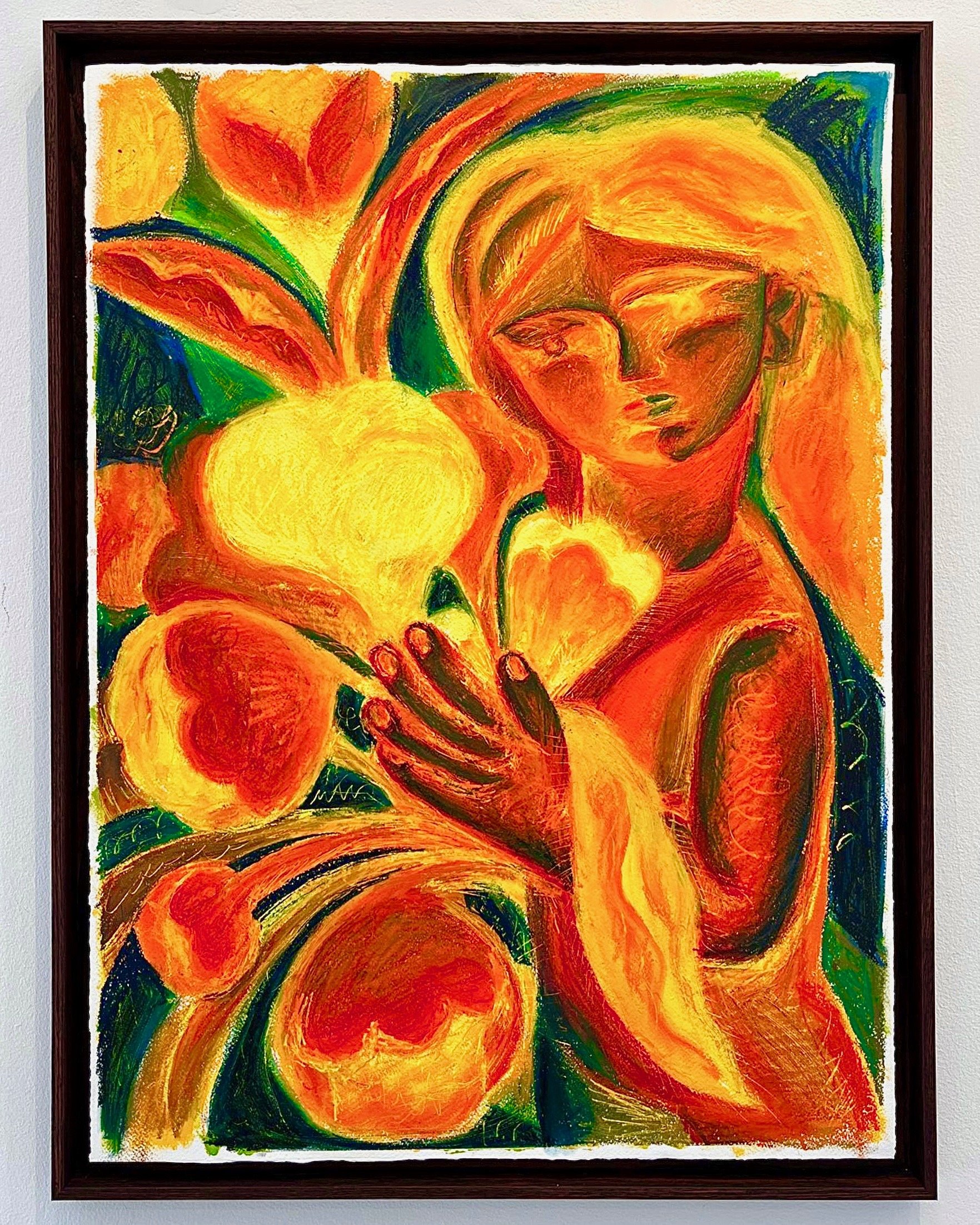
Gentle Reminder / Oil and pastels on paper 31 1/2 × 23 3/5 in | 80 × 60 cm with frame included, Showcased at Dallas art fair, San Fransisco art fair with Nil Gallery
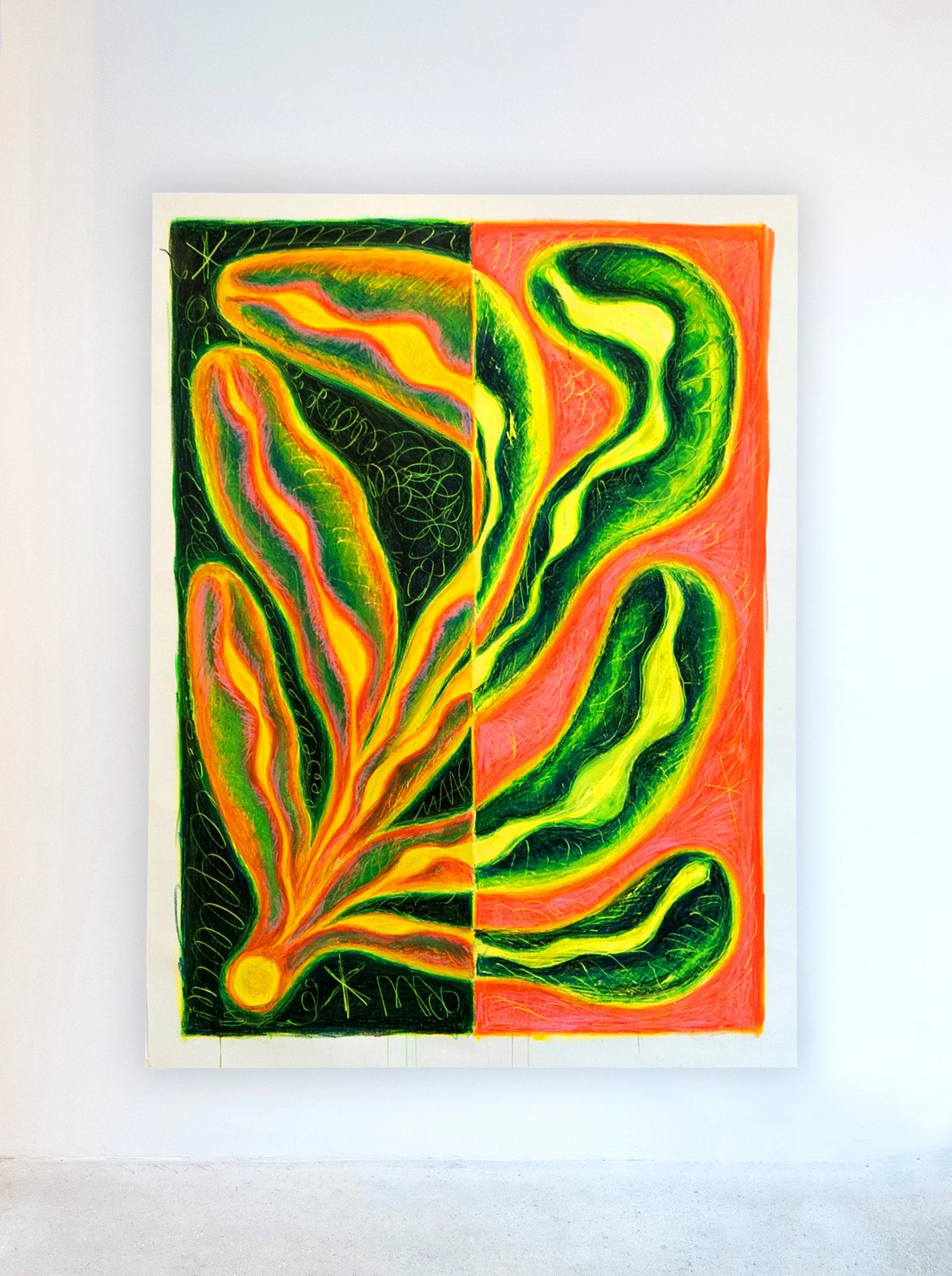
A toi - From the series A Flower for Each Stroke - Battements/ Oil and pastel on linen canvas in. 68 9/10 × 49 1/5 | cm. 175 × 125 cm
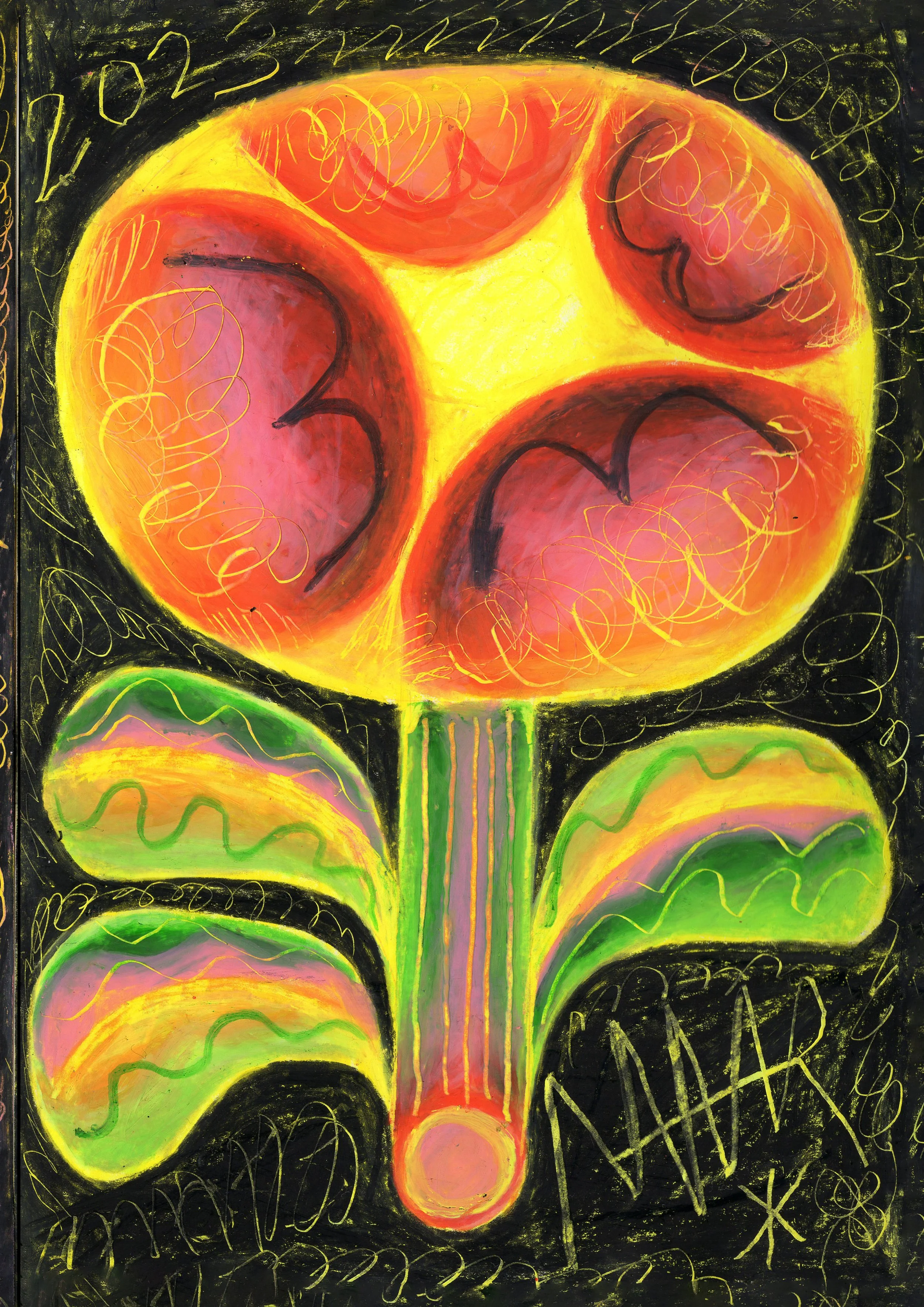
A flower for each stroke/battements serie - pastels on paper, cm. 21 x 14,8 / in. 8,3 × 5,8 - 2023/ showcased at Can Art Ibiza with Nil Gallery
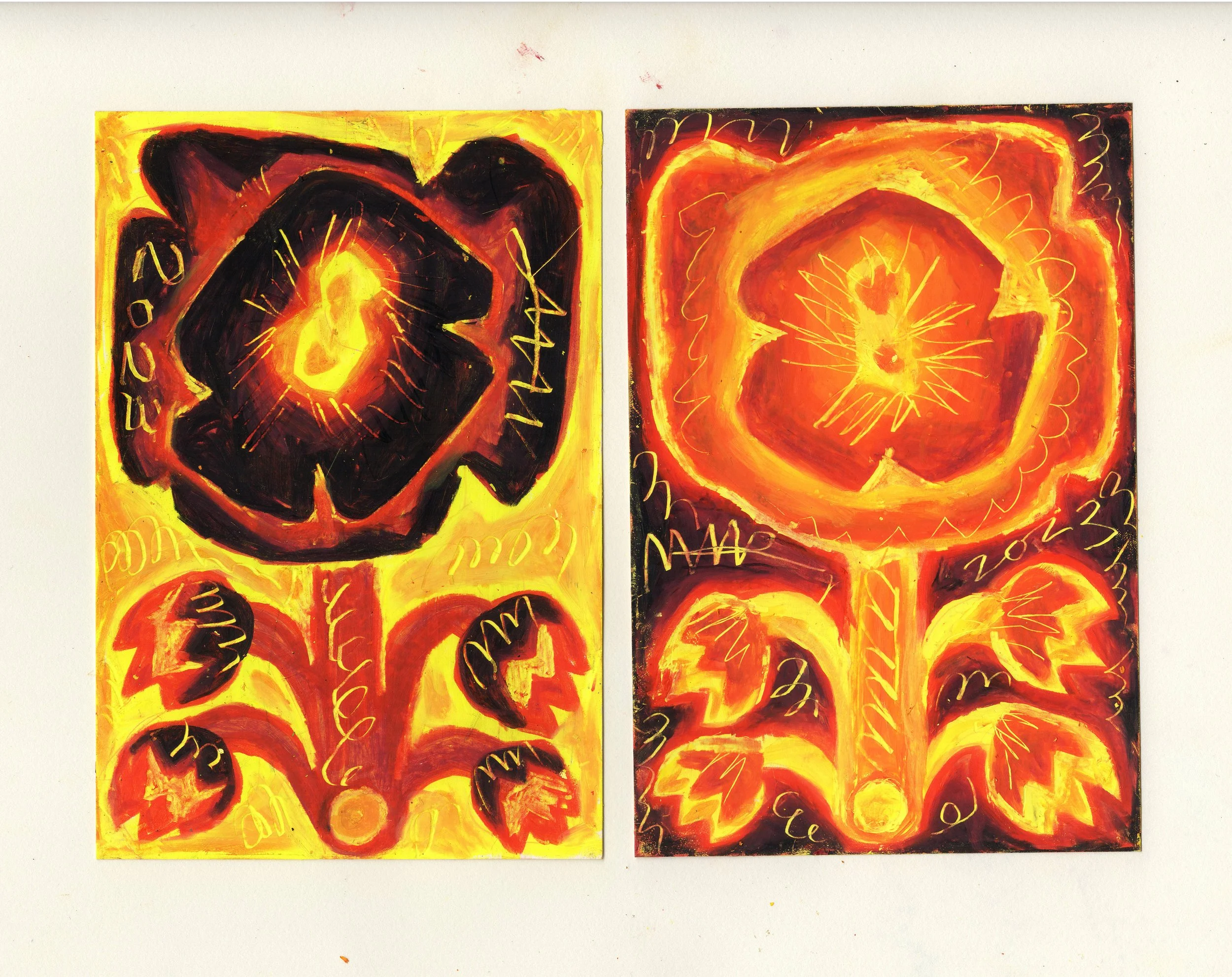
A flower for each stroke/battements serie - pastels on paper / 2023/ cm. 21 x 14,8 / in. 8,3 × 5,8 - showcased and at Galerie Tracanelli
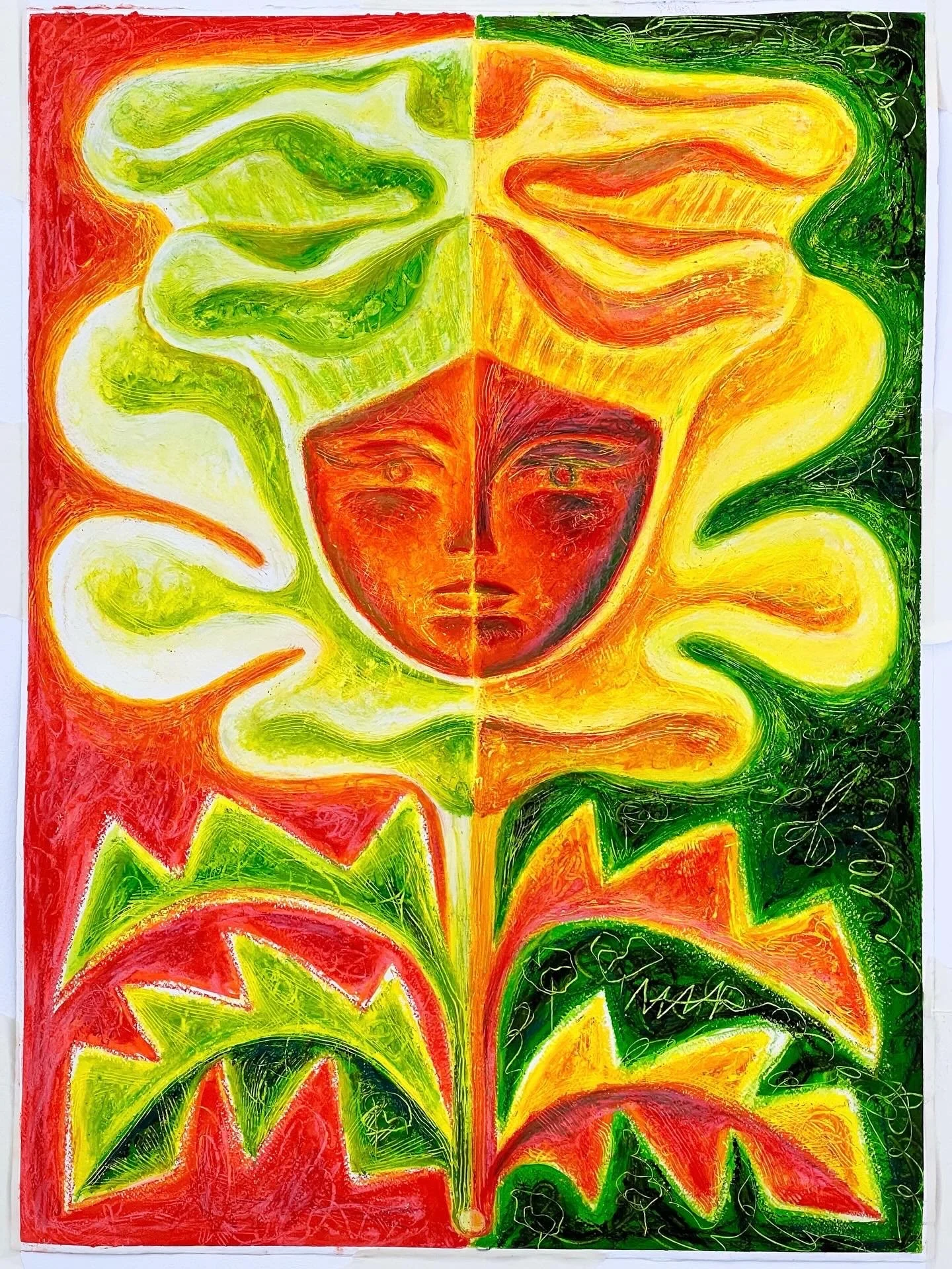
Femme-fleur 1 / oil painting and pastels on paper / 2025 / cm. 77x56,5, in. 30,3″ × 22,2″/ showcased at galerie Zberro
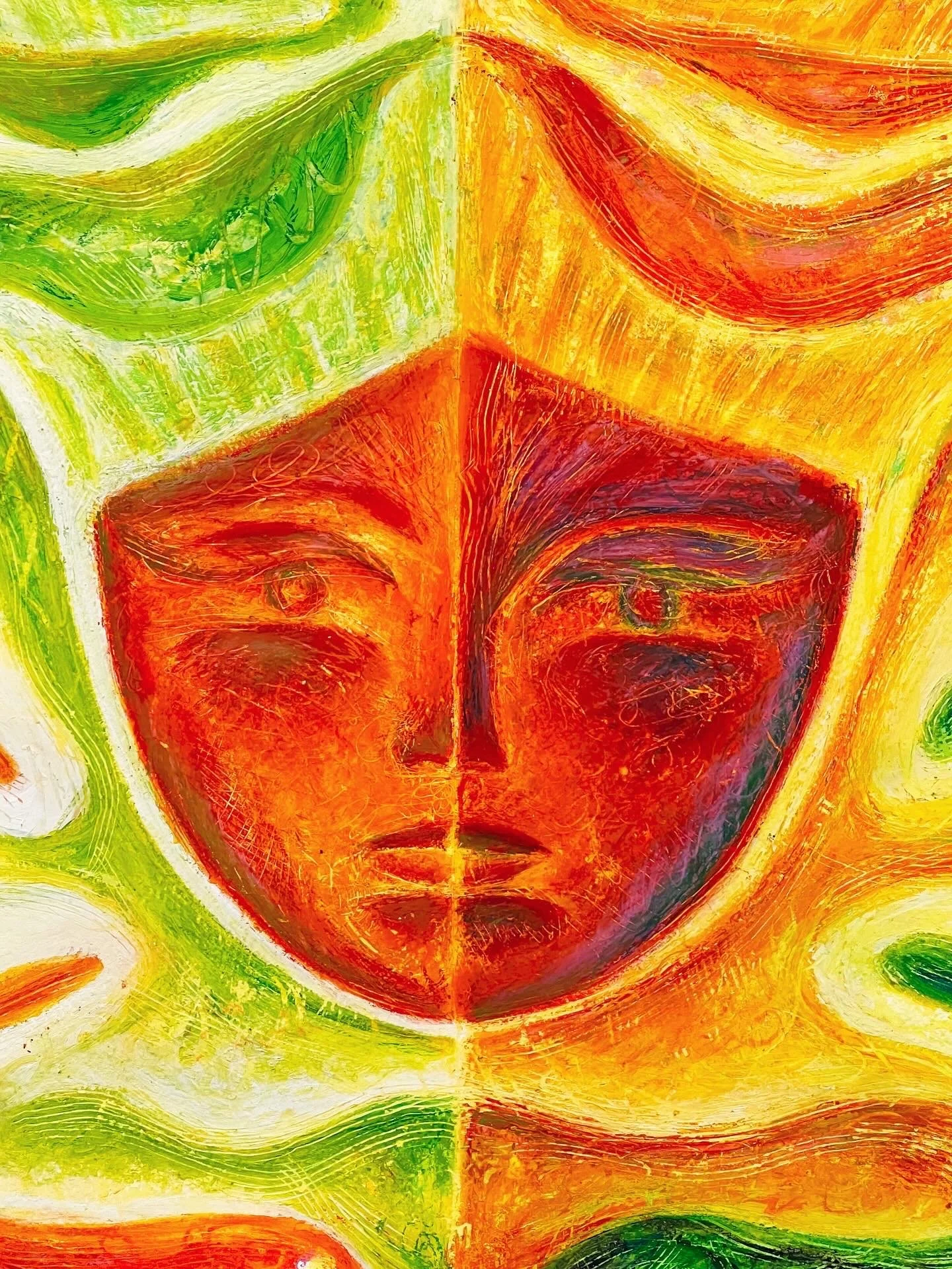
Femme-fleur 1 / Detail / oil painting and pastels on paper / 2025 / cm. 77x56,5, in. 30,3″ × 22,2″/ showcased at galerie Zberro
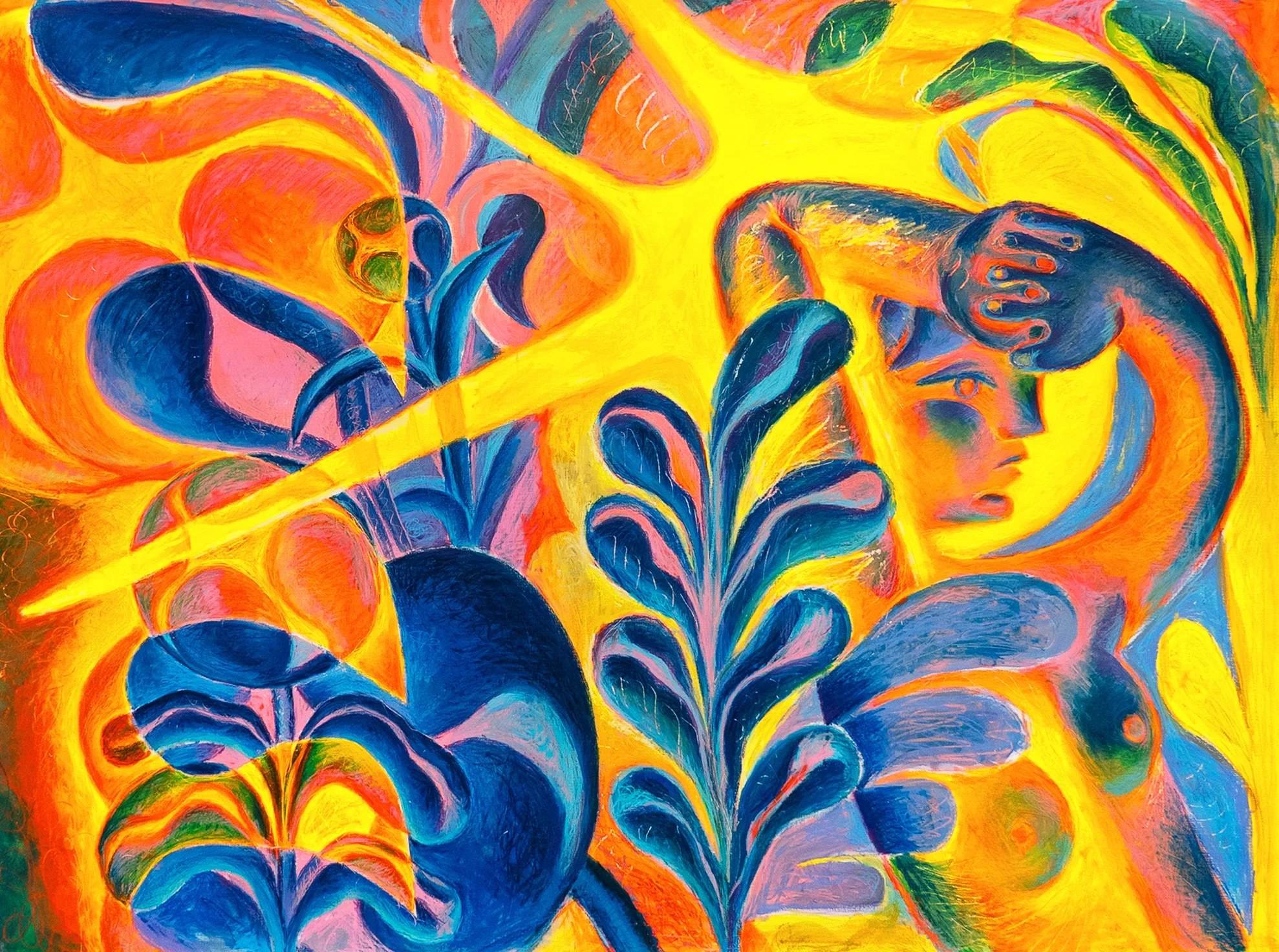
Icare, Oil painting and pastels on linen canvas / cm. 144x202, in. 56,7 × 79,5 / Showcased during San Fransisco and Chicago Art fair with Nil Gallery/ sold via MCNP art advisory Paris
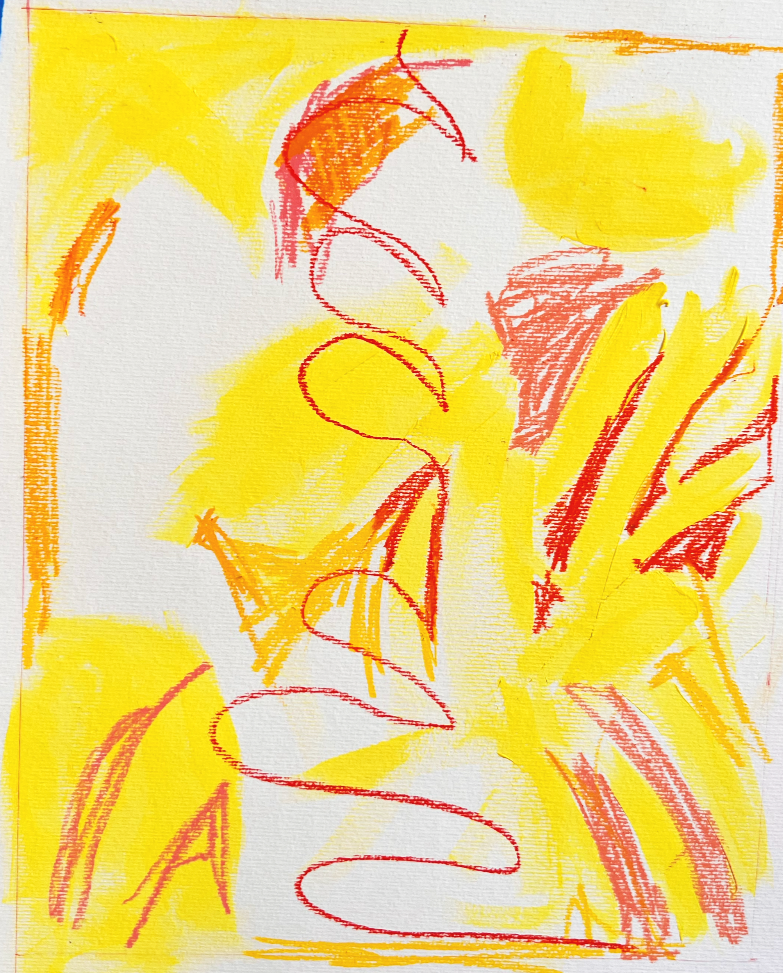
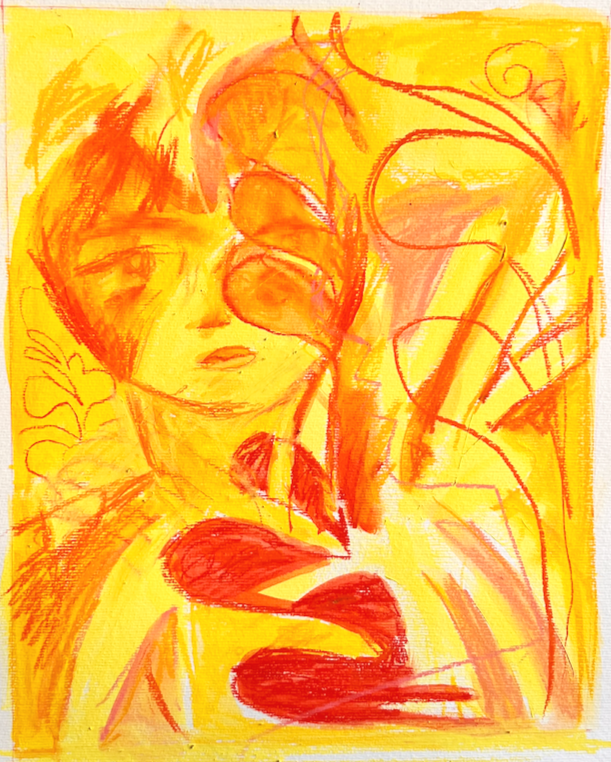
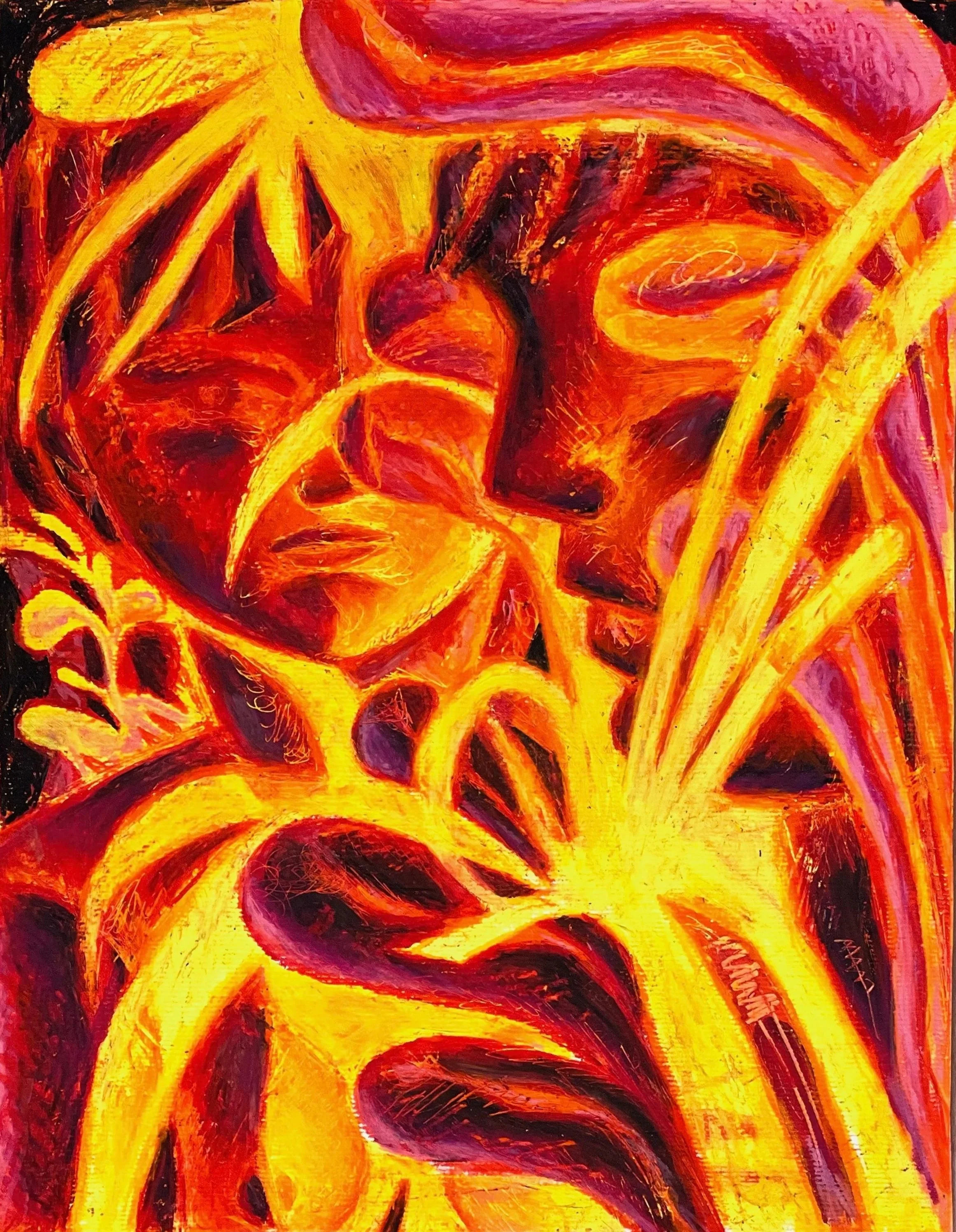
An example of how I navigate between abstraction and figuration. Figures and lights slowly emerge from abstract shapes.
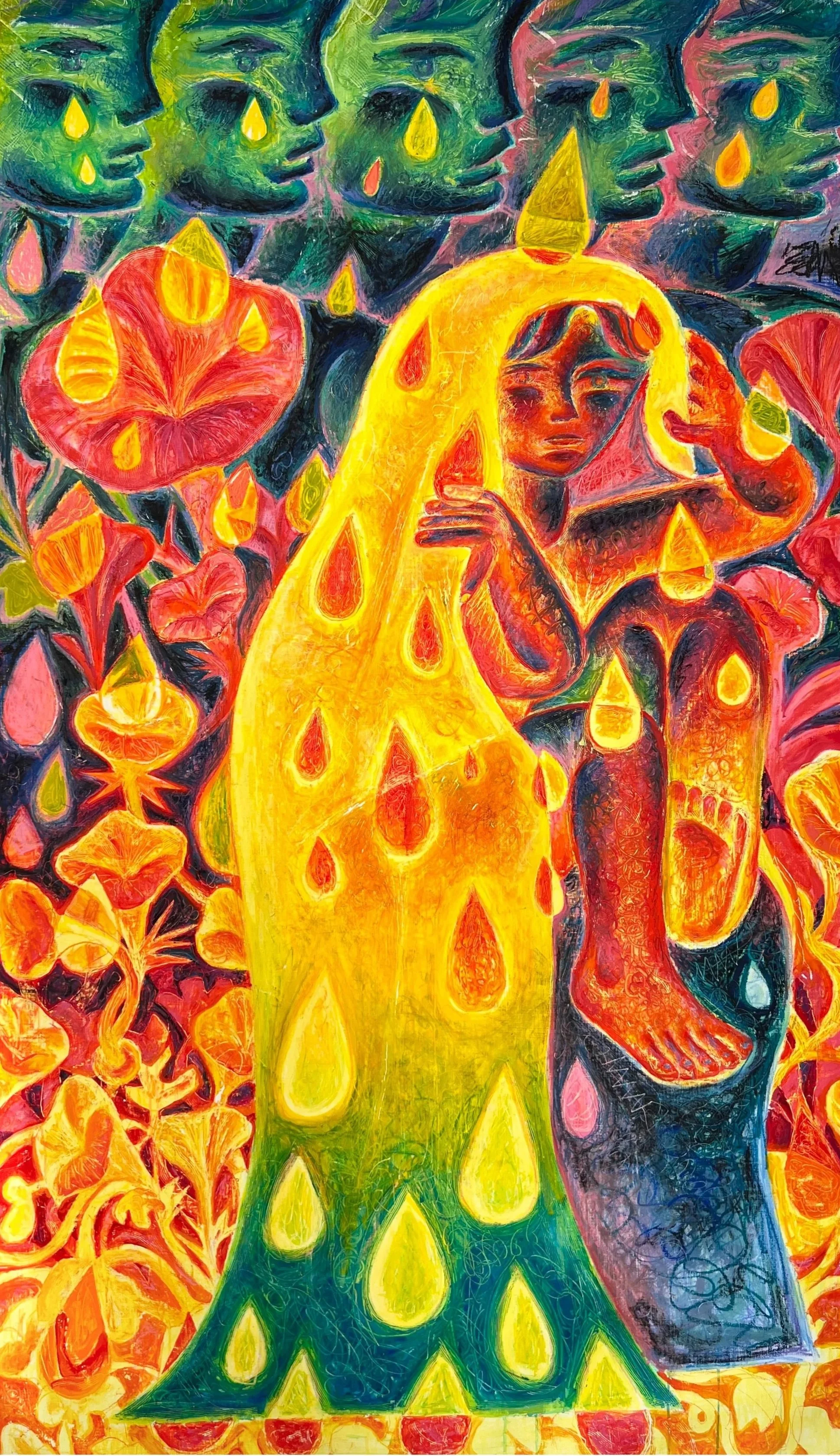
Les Volubilis/la couverture, oil and pastels on linen, 2026, cm. 204 x 115 / 80,3″ × 45,3″
« There are recurring figures such as swans, serpents, and seashells and more in your work. Do they arrive instinctively, or do you approach them with symbolic intentions? »
There is definitely a symbolic intention. All of these are codes I have inherited from religion, from the myths and tales of my childhood, and from the Roman and Etruscan symbols that were part of my surroundings. But like all myths, I see these symbols in a contemporary and evolving way, shaped by the world and the time I live in. None of the animals carry a purely positive or negative symbolism. For me, they often represent the synthesis of one of our contradictions, one of our dualities.
Extract from the OBJECTSOBJECTSOBJECTSOBJECTS interview, by Sarah Al Rashid
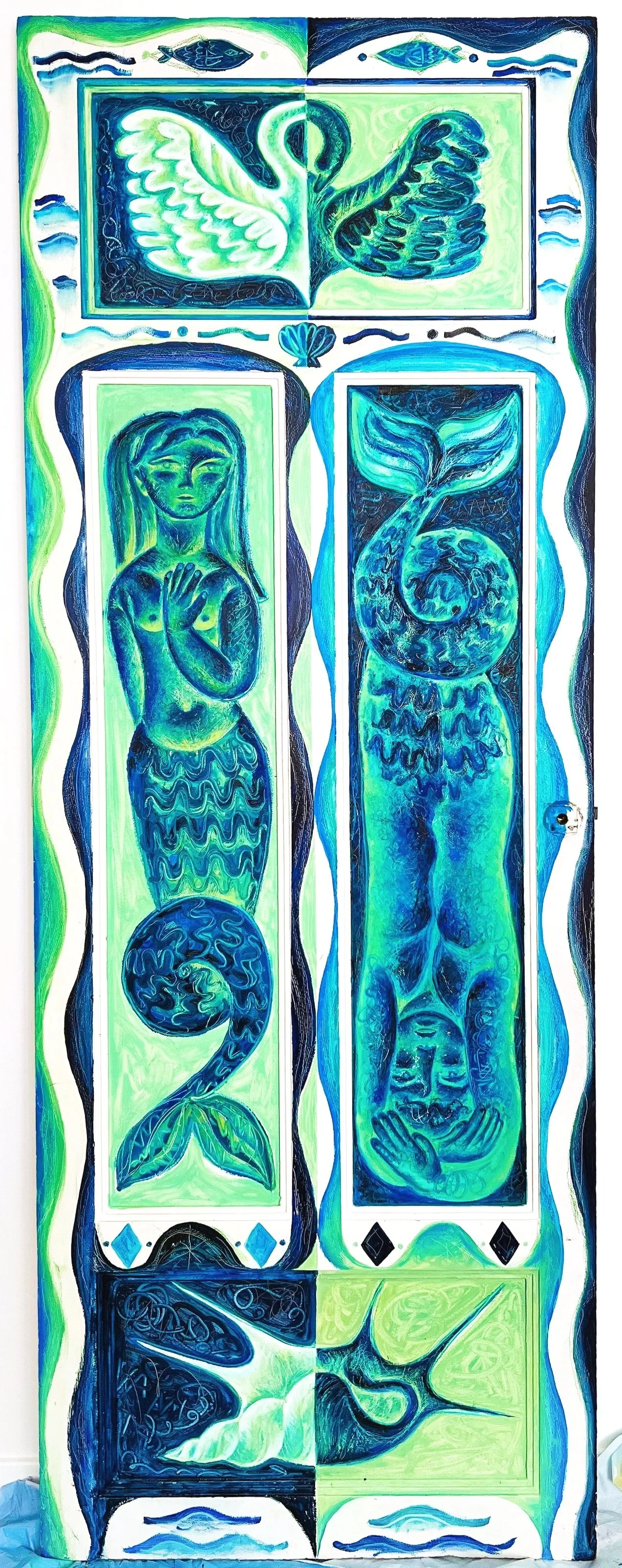
Tail from another time, oil painting on old door, 2026, cm. 223x 77,3 / 88″ × 30,5″
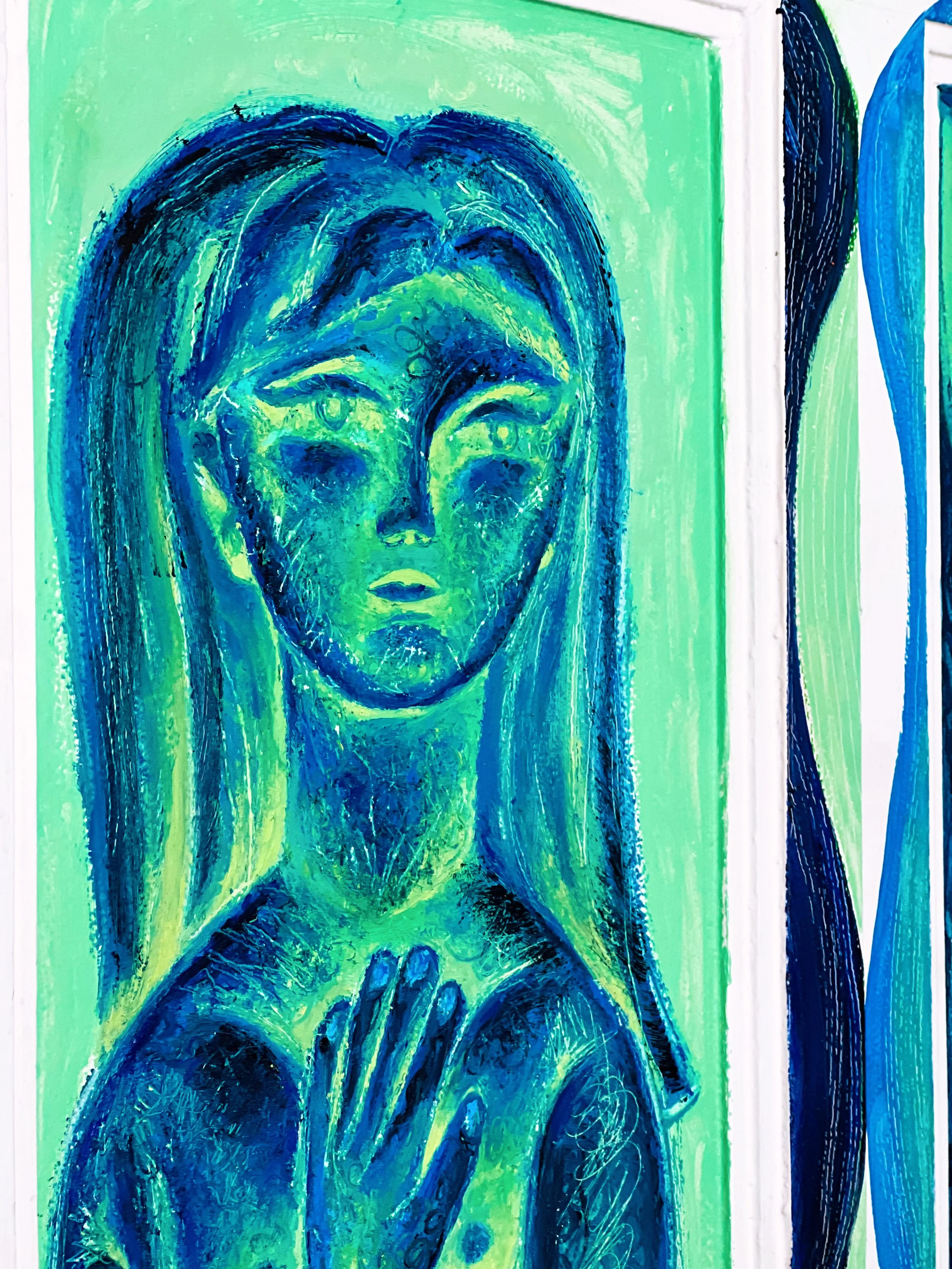
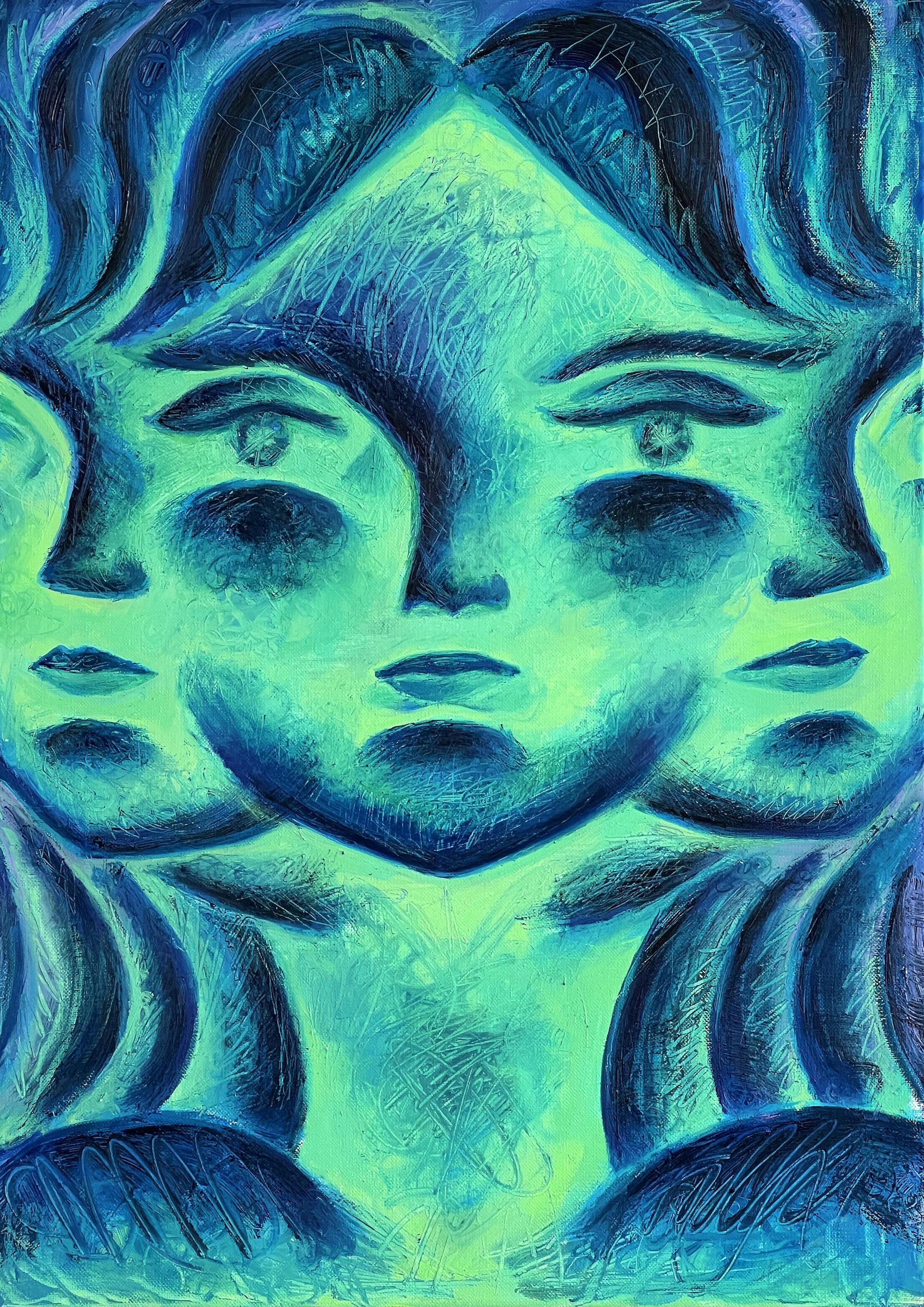
The point and the line, detail, oil on canvas, 2025, cm. 70x50 / 27,6″ × 19,7″ / Showcased and sold at Galerie Romero Paprocki with Galerie Dauphine, A charity exhibition in support of La Source Garouste
The gesture is free, although there's a lot of theoretical work in terms of layering color and intensity. Each level of color is designed to give the best possible vibration.
By your own desire, pastels on paper, 2025, cm. 112 × 76 / 44″ × 30″ / Showcased and sold at Can Art Ibiza with Nil Gallery
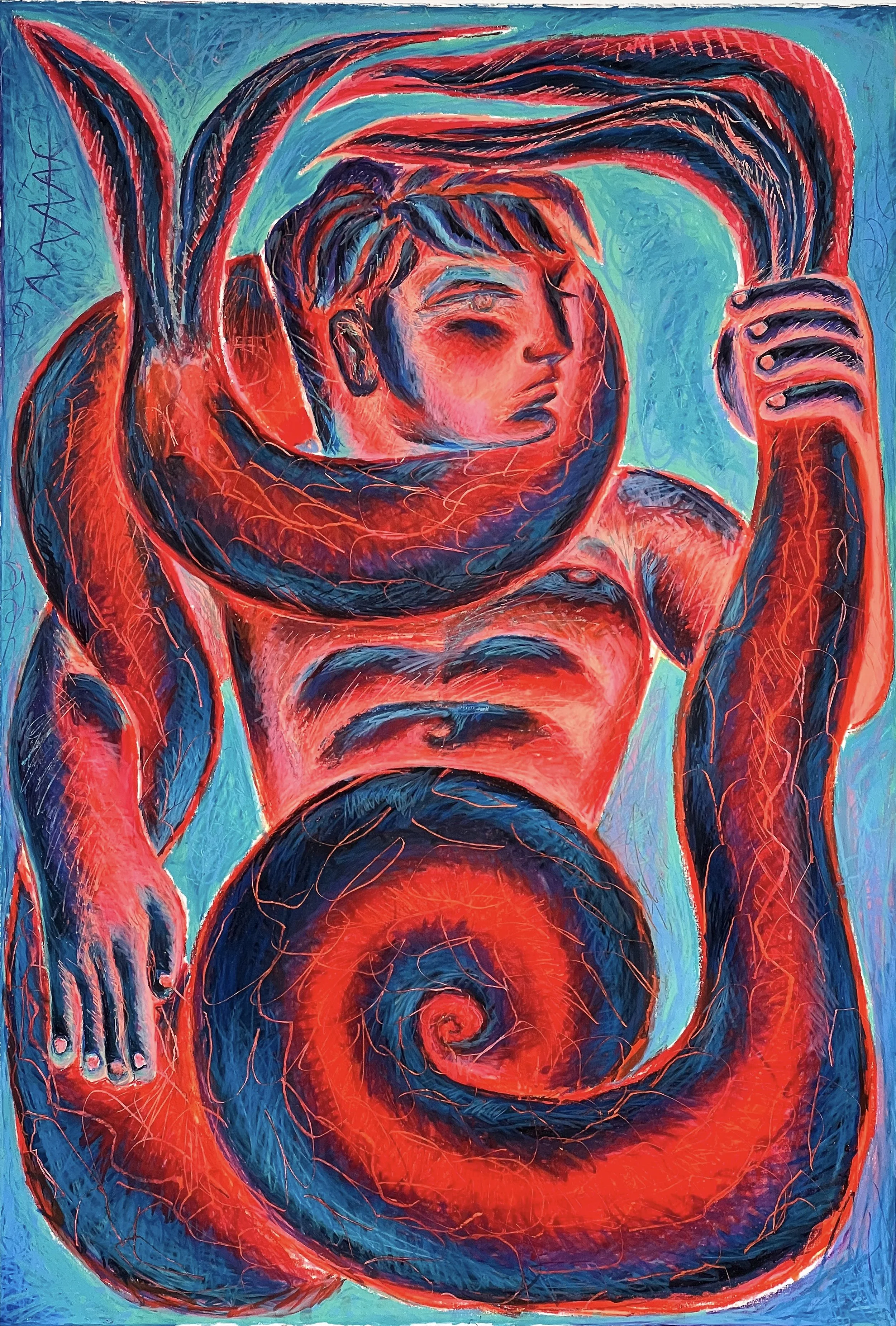
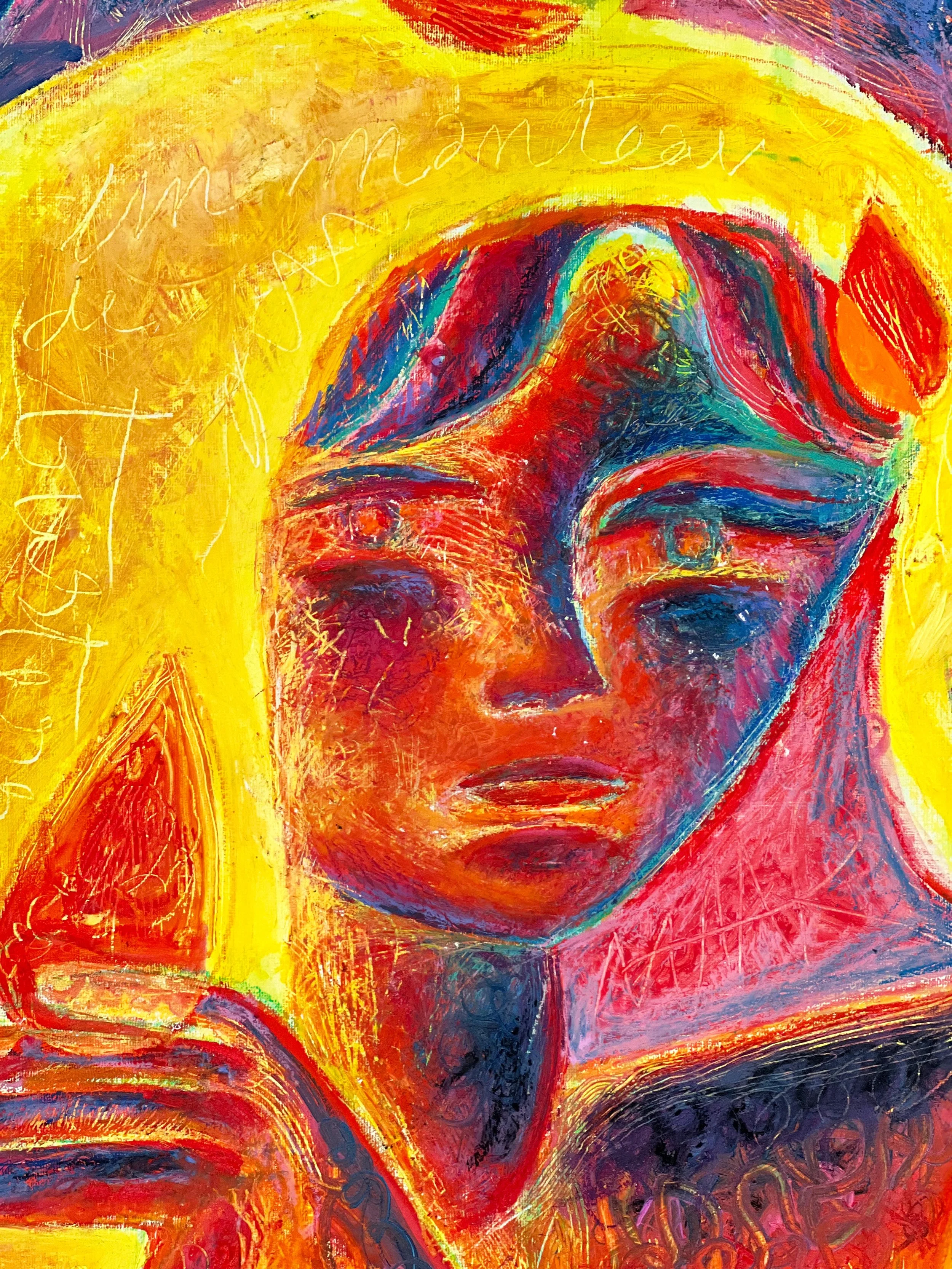
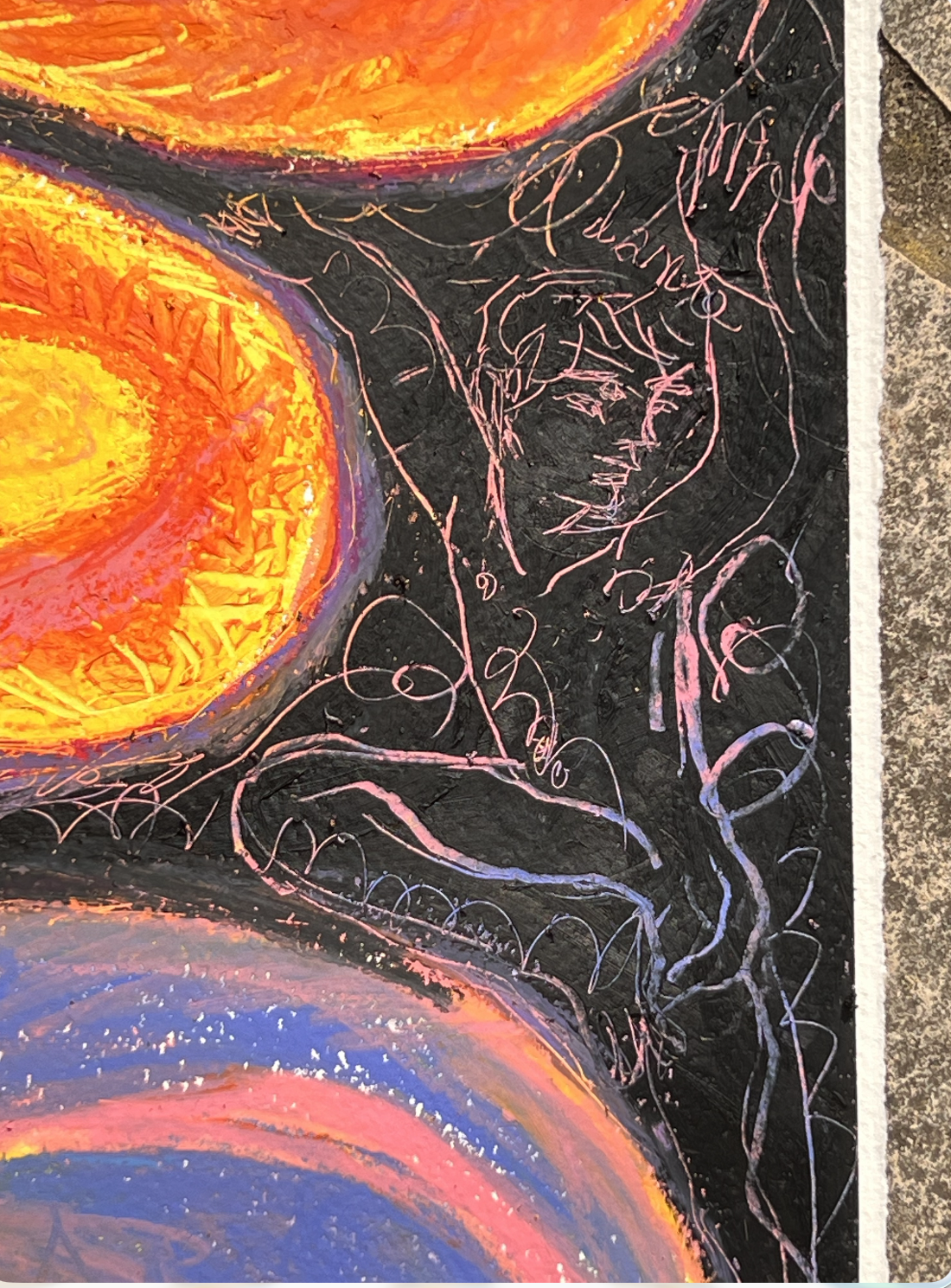
When everything is in place, I scratch the work with a knife and the different levels of color appear to give this effect of light and burnt colors. I scratch to reveal the light, which has a special meaning for me, a feeling of relief. It's all about vibrations and emotions going through the flesh texture of pastels.
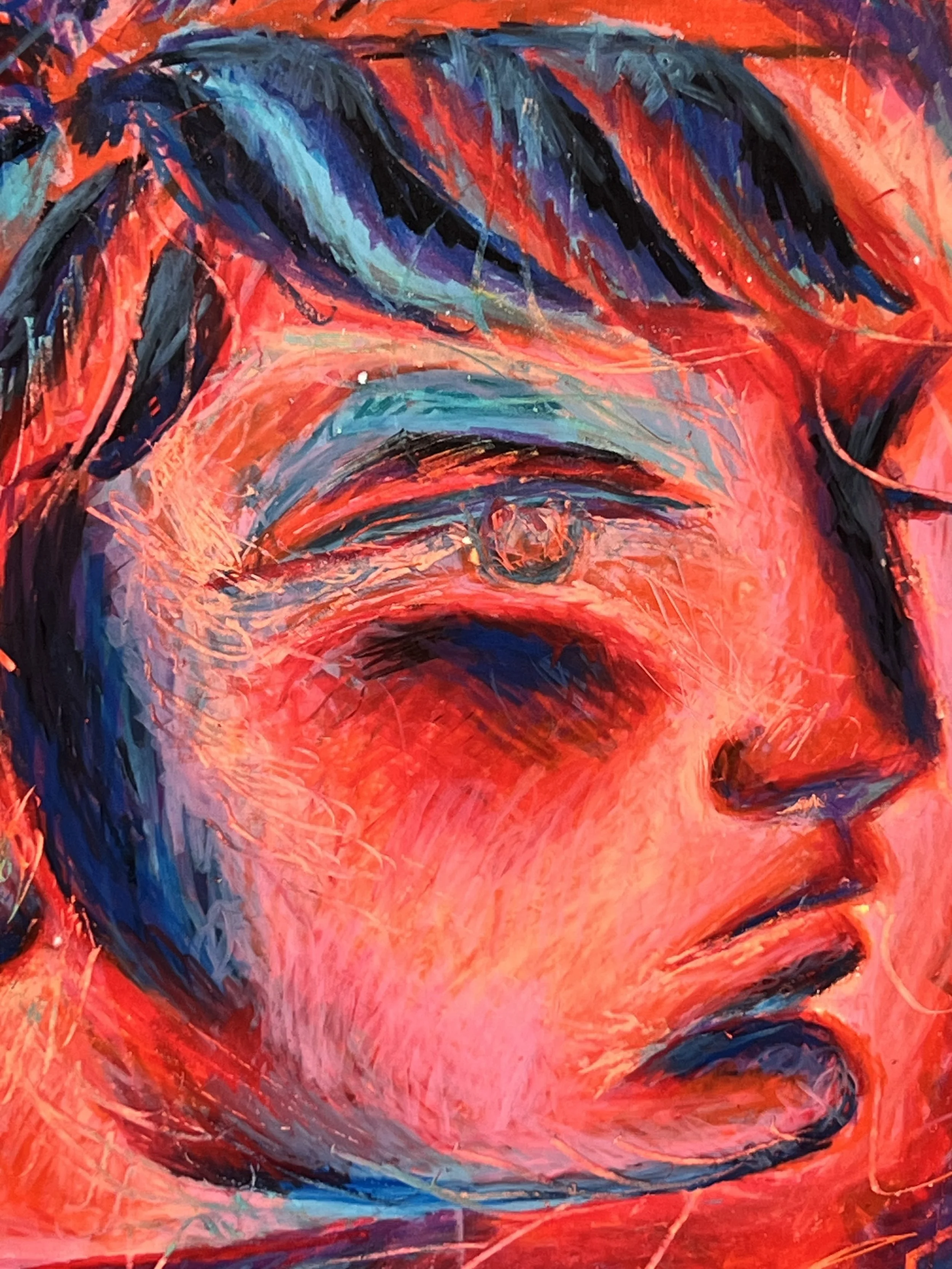
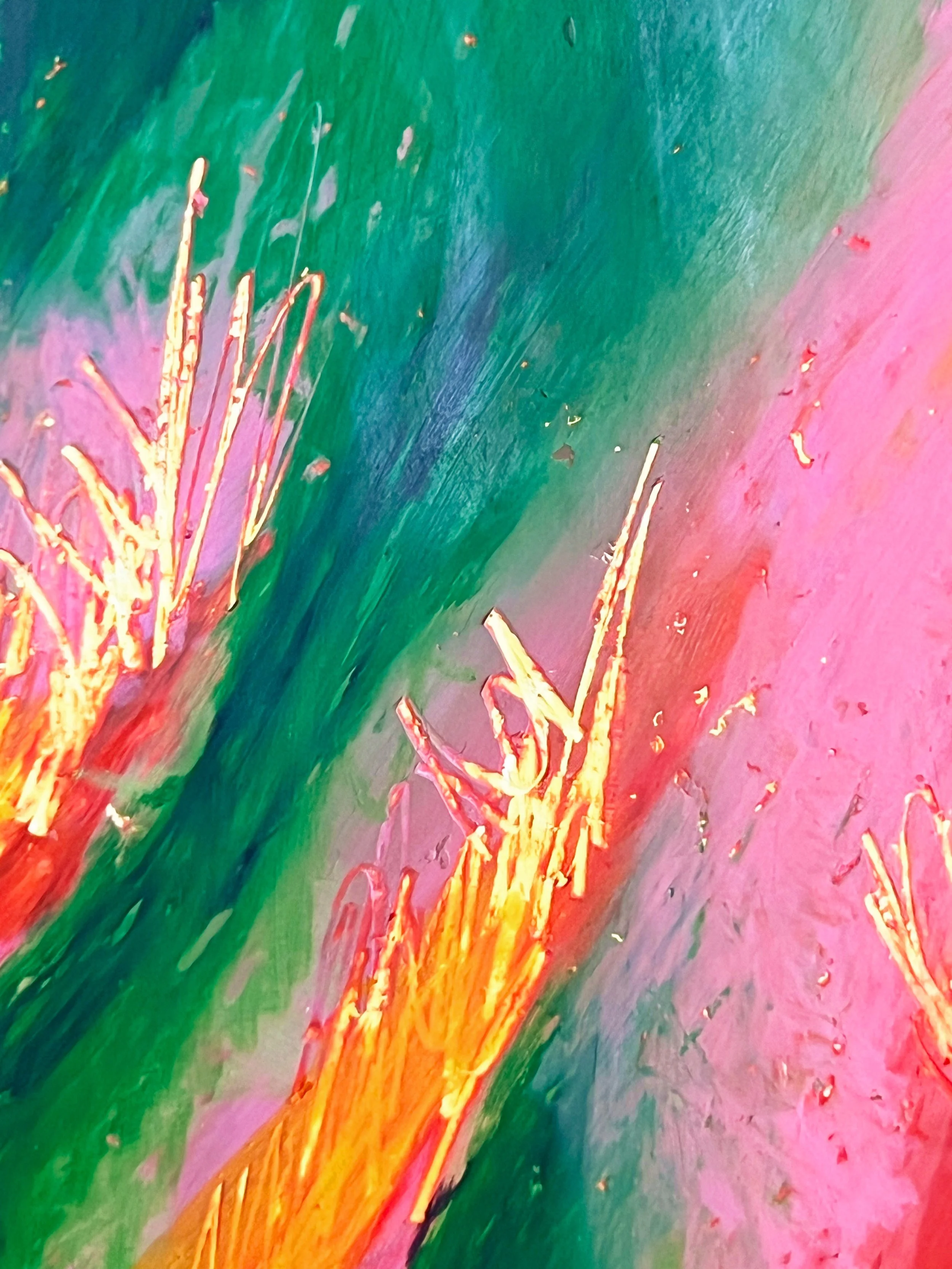
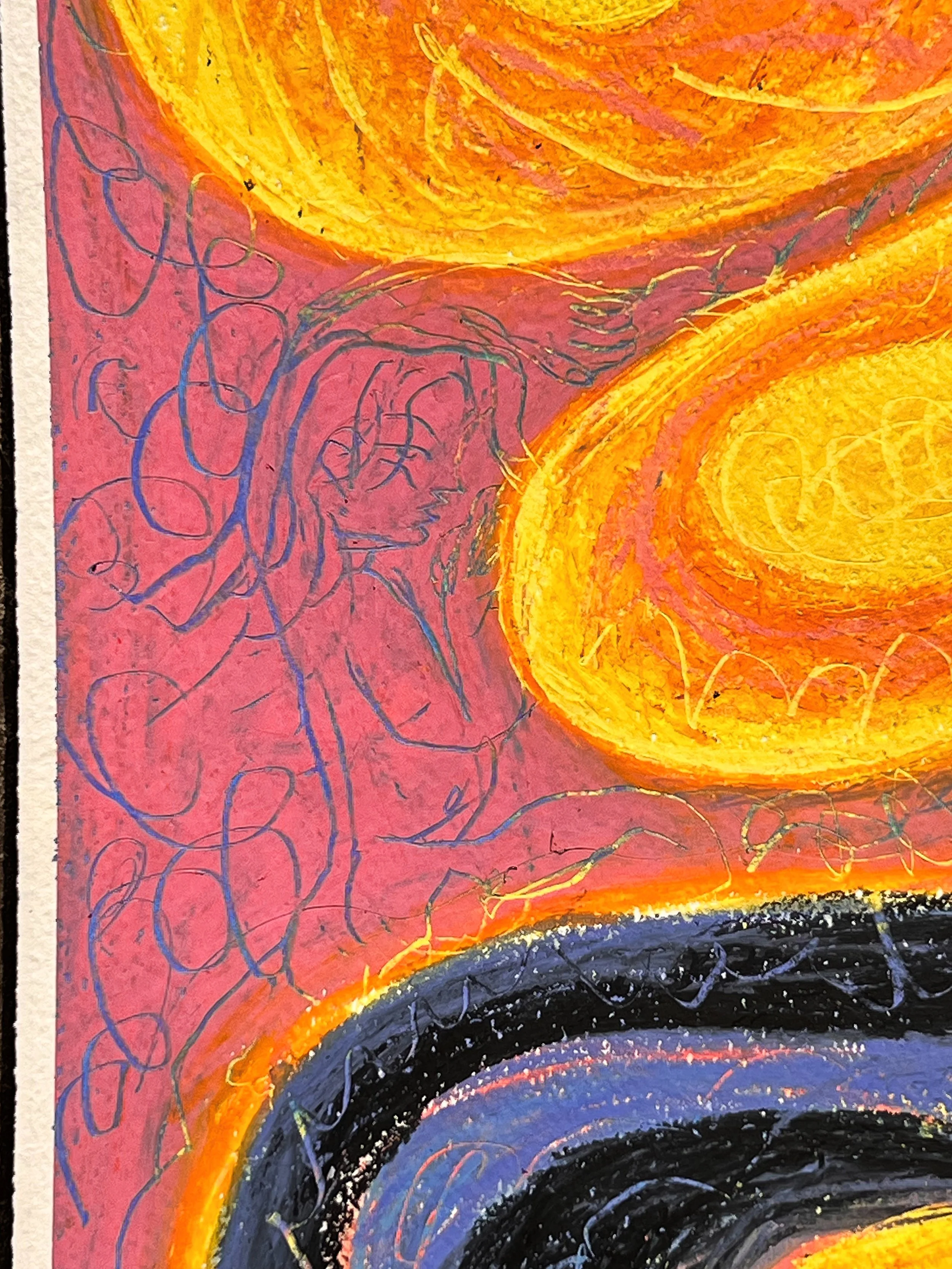
Anaïs Maar’s painting strikes at first glance with its profound clarity. Burning nuances spread like magma across each canvas lights drawn from the depths slowly brought back into the open air. There is what we see and what we can only sense what bursts forth in the effusion of color and what remains deeply buried beneath the surface. A maar is a volcanic explosion crater often occupied by a lake. It is calm after the storm the muffled rumble of magma beneath still water. It is a painting of eruption and radiance a painting that burns and heals that irradiates and consoles. Like volcanic soil it is both dangerous and fertile paradoxical. Echoing this strategy Anaïs’s painting is intimately dual beneath its colorful joyful playful and often grotesque appearance it confronts us with vulnerable threatened figures. It is a painting of joy after pain a gentle and powerful eruption a call to vulnerability. “For when I am weak then I am strong”.
Armand Camphuis, French critic and curator
It's a work of flame where striped passions come alive with strength. There's something dreamlike, alive, and sacrificial about it. In interacting with Anaïs, there's a refusal of the dreamlike, preferring instead the mythological term. It's a story about reality. The living consists of this human, plant, and animal fauna and flora in acrobatic and perilous intertwining. The sun beats down. Blood and flesh flow from the palette. A Mediterranean tauroctony. The work on color is a work of density, of vibrancies. Having had the chance to watch her work, I noticed that the brush acted as a blade, held firmly and swept across the wall or canvas with breadth. Vendetta blade in pocket. She finishes the job. It's a clue to the crime.
And always her physical distance from the image in a challenging stance. This step back is visible in everyday life and in the work. The pastel as a sensation of skin and the light as a burst of feeling, to use her exact terms. She is an artist whose figuration has been built on her life, her human experiences. Looking closer at each piece and passage, one can guess the hard shaping and forging of this personality.
Adrien Da Silva Tracanelli, gallery owner, for Artsy
📷 ©Edouard de Pelleport